
Tank size and how many
A small rooftop tank is not a large ground reservoir, and some homes have both. We ask the capacity and the count, because that decides the time and the water used to rinse.
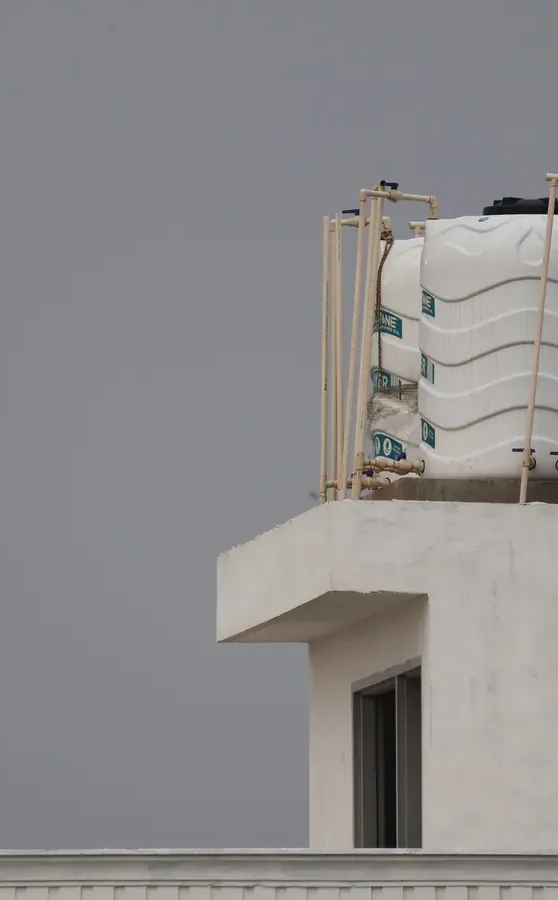
A storage tank is not just a container; it is where your drinking and washing water sits still for days. Sediment settles on the floor, a slick biofilm grows on the walls where light and warmth reach, and a poorly sealed lid lets dust and insects in. None of that clears itself. The water leaving the tank is only as clean as the tank it left.
You usually taste or see it before you think of the tank. If one of these fits, it is overdue.
Fine sediment at the bottom of a glass left standing, or scale in the kettle faster than normal, is material carried out of the tank floor.
A milky or yellowish tint from the tap, especially first thing in the morning, points to disturbed sediment or growth on the walls.
An earthy or stale taste is almost always biofilm on the tank walls. Filters at the tap treat the symptom; the tank is the source.
If dust, insects or leaves gather at the cover, the seal is letting them in, and what reaches the lid reaches the water below it.
Run a hand near the waterline inside and it feels slippery. That is biofilm, and it keeps regrowing until the wall is scrubbed and disinfected.
If you cannot remember, it has been too long. A tank feeding a lived-in home needs cleaning on a regular cycle, not once and forgotten.
The second list is the one that prevents disputes, it is usually in small print, or not written at all.
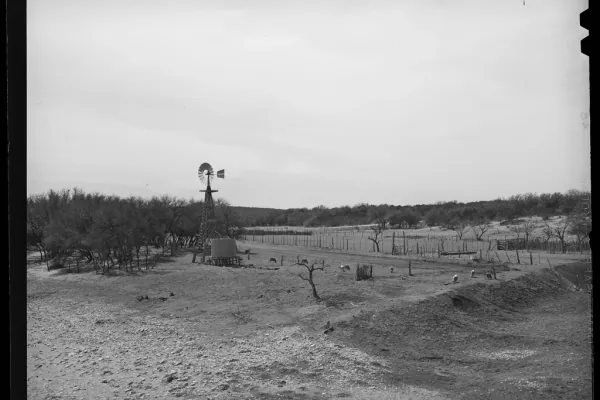
The tank type, its material and the state of the lid and inlets, so we know what we are dealing with.
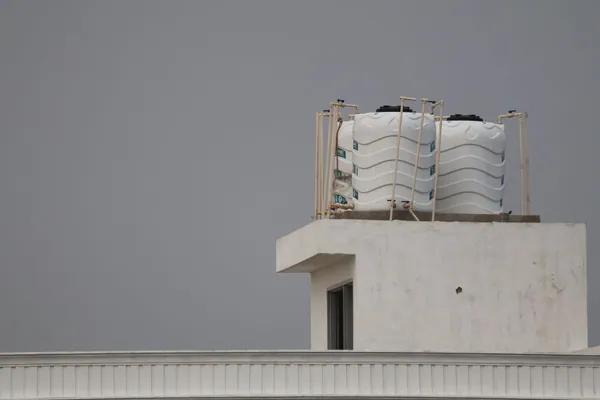
The tank is emptied completely, because cleaning around standing water moves the dirt instead of taking it out.
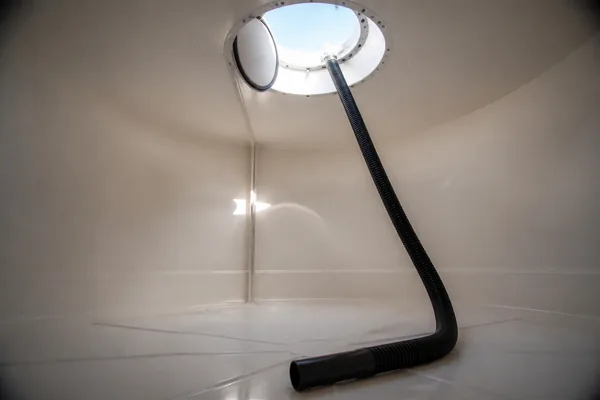
The settled layer at the bottom is sucked out rather than stirred, so it does not return with the refill.

Algae and the slick film are worked off the walls and corners by hand, where a rinse never reaches.
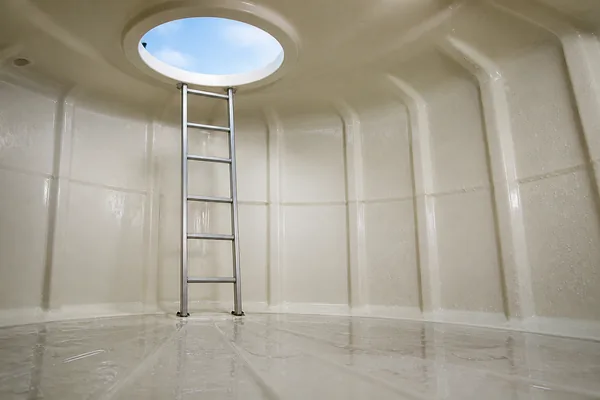
With a disinfectant approved for drinking water, left for the full contact time and then rinsed off.
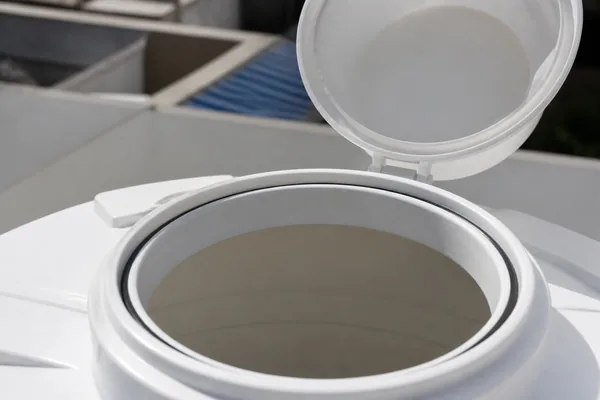
A rinse clears the disinfectant, and the lid and inlets are checked before the tank is filled again.
If your case is one of these, we say so at the inspection, not after payment. Where a crack or a failing lid is the real problem, we tell you plainly, because cleaning a leaking tank only buys a few clean days.
The order protects the water. Skip the scrub and the disinfectant treats nothing; skip the rinse and residue reaches your tap. This is the sequence, and it does not get shortened.
The supply into the tank is shut and the tank is drained completely. You cannot clean a floor you cannot see, and half-empty leaves the worst layer untouched.
The sludge on the floor is scooped and pumped out first. If it is stirred into water instead, it just spreads back over everything when the tank refills.
The biofilm on the walls is physically scrubbed off. Disinfectant kills what it touches, but it cannot reach through a film, so the film has to go first.
With the walls and floor clean, a disinfectant made for drinking-water storage is applied and given time to act on every surface.
The disinfectant and any loosened residue are rinsed down and pumped out, so the first tank of water after us is not carrying it.
We check the cover seal and inlet before refilling, so dust and insects stay out, then start the refill while you watch it run clear.
We do not publish a fixed figure, because cases genuinely differ. These are the factors we ask about, so you know where your job sits before you call.
A small rooftop tank is not a large ground reservoir, and some homes have both. We ask the capacity and the count, because that decides the time and the water used to rinse.
A thin settled layer clears quickly; years of sludge takes longer to scoop and pump. The difference is real work on the tank floor.
A tank on a regular cycle is not one left for years. The neglected one often needs more scrubbing and more rinsing, and we say so before we start.
A tank with a wide hatch at ground level is easier than a tight rooftop unit with a small opening. Access changes the time, not the care.
Cleaning more than one tank, or booking with another service on the same trip, costs less than separate visits, because travel and setup are counted once.
Send the tank size, how many you have, and where they sit on WhatsApp, and you get the price and an estimated duration before you commit to anything.
It is a fair question, and a tank looks simple to rinse. Here is the real difference, not the marketing one.
Pumps to clear sludge, scrubbing to remove biofilm, and disinfectant meant for potable storage. This is water you drink, so it is not a job for a hose and a rag.
We send a team, not one person, so a tank is drained, cleaned, disinfected and refilled in a single visit rather than left open for days.
We look at the lid seal and inlet, because a tank that got dirty fast usually has a way in. We would rather fix the reason than clean the same tank again in a month.
Nothing is closed until the tank is refilling and you have seen the water run clean. If something is off, it is put right before we leave, at the price we agreed.
Photographs from real jobs carried out by the crew.
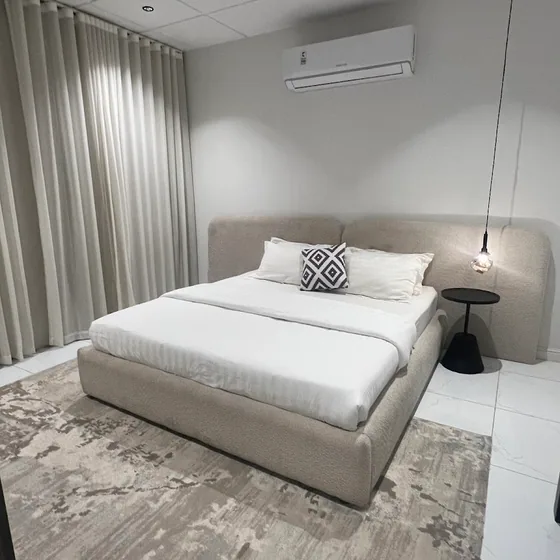

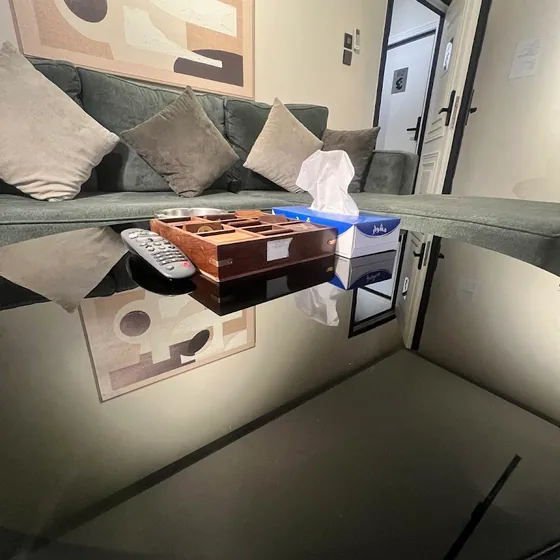
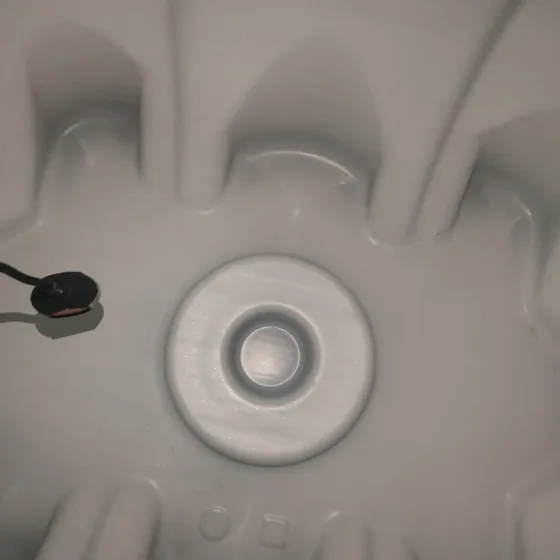
The commitment is simple enough to actually keep: we do not leave until the tank is disinfected, refilling, and you have seen it for yourself.
We look at the job and agree the figure before any work begins, and nothing is added to it afterwards. If the scope changes during the visit we stop and ask you before carrying on.
At the end of the visit we walk the place with you. Anything you point at is redone in the same visit, not booked for another one, and at no extra cost.
We arrive when we said we would. If that becomes impossible you hear it before the appointment rather than after, because waiting without knowing how long is worse than a delay you were told about.
Everything we offer in this category, in a single visit if you need more than one.














The crew and its equipment travel to you, and the price does not change with the district.
Four steps, and none of them commits you to paying before you have seen the price.
WhatsApp or a call. One photo is usually enough.
In writing, before you commit to anything. You approve it, or we adjust it.
At the agreed time, with everything the job needs.
A walk-through before we leave. The job is not closed until you are satisfied.
Send the tank size, how many, and where they sit, and you get the price and an available slot. Work does not start before you approve the number.