
The right gear for drinking water
Pumps to clear sludge, scrubbing to remove biofilm, and disinfectant meant for potable storage.
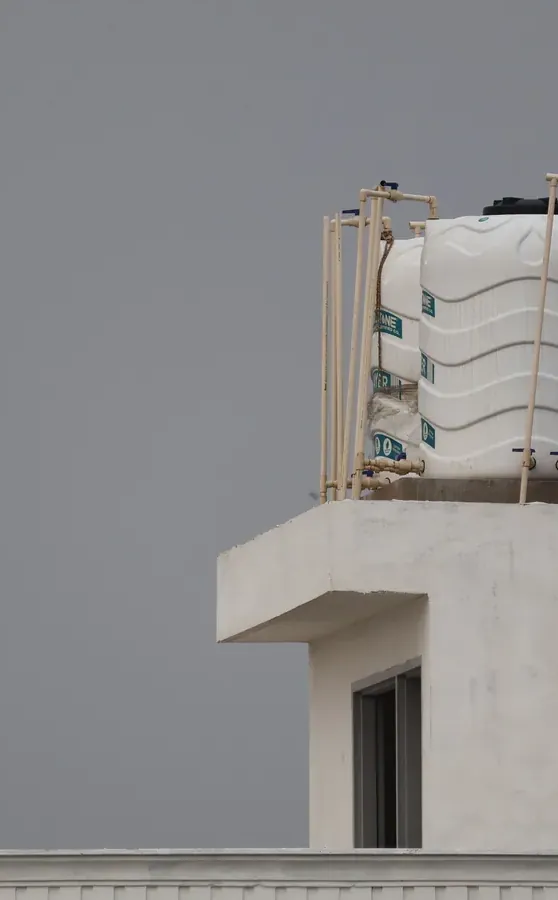
Al Marsa is a very new district in far south Jeddah near the coast, with building still ongoing and vacant plots between scattered homes. Most tanks are new but temporary pipework carries construction sand and dust. The first homes to occupy the district receive water carrying debris from building sites and construction roads all around.
The first water into a new villa tank here carries grey sand and construction dust, and within a week the water runs cloudy despite the tank being brand new. For the method itself, see our guide to water tank cleaning.
Building is active in the area, and temporary pipes carry sand and dust. A new tank receives dirty water from day one. Early cleaning is essential before sand settles thick at the bottom.
The tank itself is clean and new, but the pipes and external water sources are filthy. Dust from unpaved streets and building sites enters under doors and through cracks in the walls.
As long as building continues, water grows cloudy fast. Regular cleaning is far more necessary here than in completed stable neighbourhoods where no work disturbs the ground.
A very new development district in south Jeddah near the coast, a subdivision still in its early phases with many building projects in and around the area and open plots between scattered residences.
Inspection of the new tank: we check it is clean outside, the lid seals tight, and pipes are connected properly so construction sand cannot leak back into the tank.
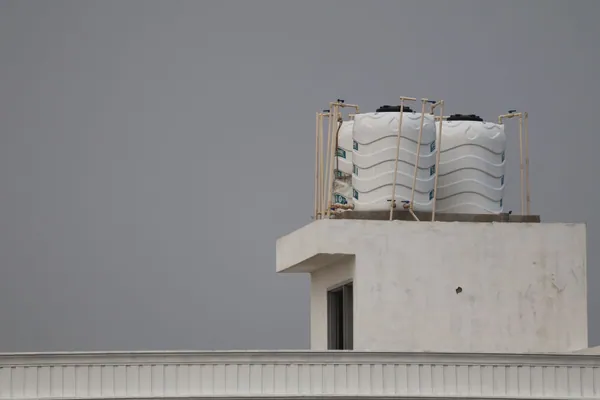
Draining removes water carrying sand from building sites, and pumping may be quick because the tank is new and the pipes are new.
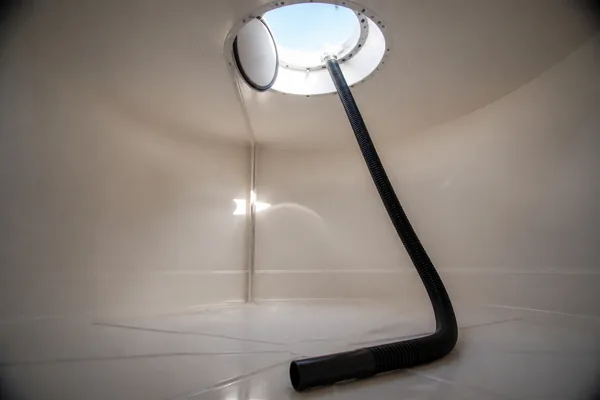
Sediment vacuumed from the floor removes sand and grey dust from building work that has settled despite the tank being new.
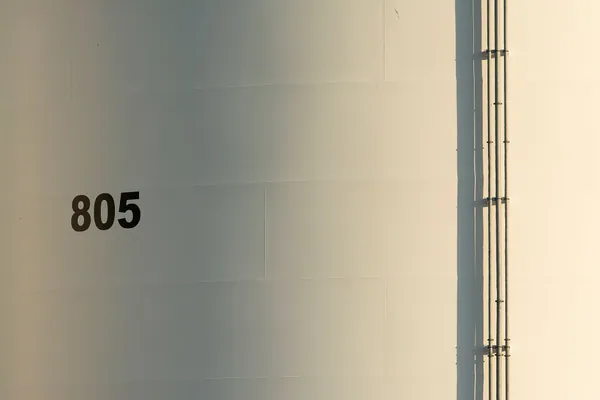
Scrubbing removes any thin layer of sand or dust that has coated the inside walls of the new tank.
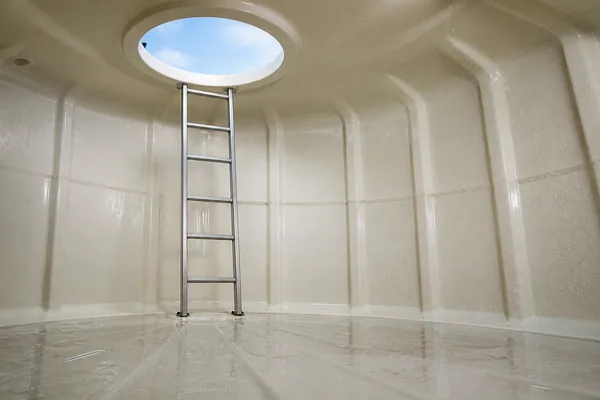
Disinfection kills any bacteria that may grow from moisture and the construction environment around the district.
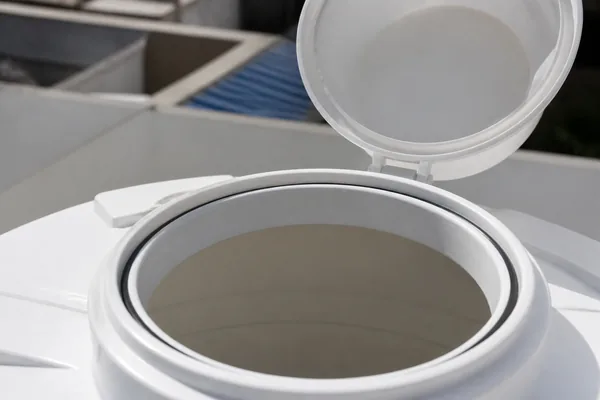
Final rinse and lid check ensure the water is clear, and the seal is tight so no new sand can enter from the building roads around.
The supply into the tank is shut and the tank is drained completely.
The sludge on the floor is scooped and pumped out first.
The biofilm on the walls is physically scrubbed off.
With the walls and floor clean, a disinfectant made for drinking-water storage is applied and given time to act on every surface.
The disinfectant and any loosened residue are rinsed down and pumped out, so the first tank of water after us is not carrying it.
We check the cover seal and inlet before refilling, so dust and insects stay out, then start the refill while you watch it run clear.
Pumps to clear sludge, scrubbing to remove biofilm, and disinfectant meant for potable storage.
We send a team, not one person, so a tank is drained, cleaned, disinfected and refilled in a single visit rather than left open for days.
We look at the lid seal and inlet, because a tank that got dirty fast usually has a way in.
Nothing is closed until the tank is refilling and you have seen the water run clean.
Photographs from real jobs carried out by the crew.












The commitment is simple enough to actually keep: we do not leave until the tank is disinfected, refilling, and you have seen it for yourself.
Al Marsa sits in far south Jeddah on Al Lith Road on one side and the Ring Road on the other, close to Jeddah Axial Road. We reach each villa from temporary streets drawn on the subdivision plan, and rooftop tanks sit away from the construction projects surrounding the area.
We provide these in Al Marsa too, and more than one can share a single visit.



