
The right gear for drinking water
Pumps to clear sludge, scrubbing to remove biofilm, and disinfectant meant for potable storage.
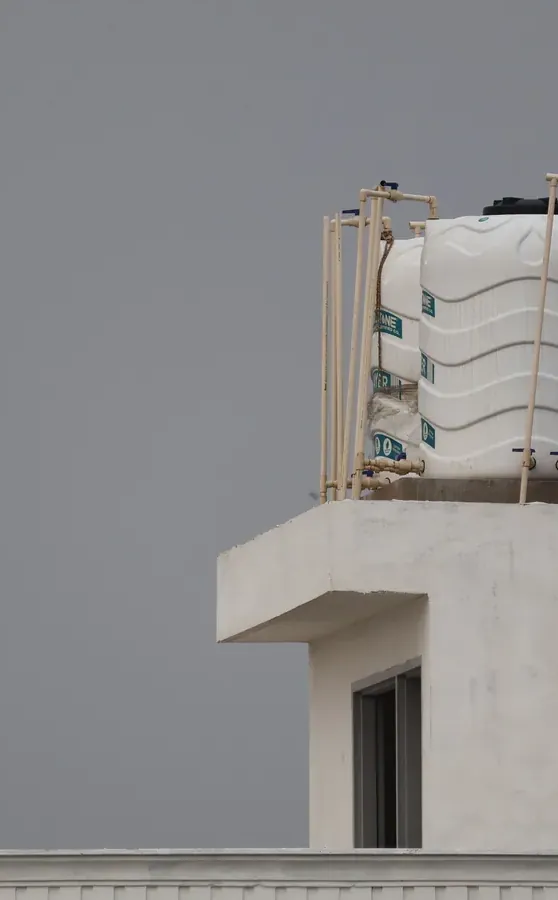
Abhur North sits on the Red Sea coast, and the high humidity and salt air leave a faint salt film on glass and fabrics year round. Algae grows quickly on tank walls where light and warmth reach them. Cleaning here needs a team that knows how to remove stubborn algae without leaving salt residue after the final rinse, because the coastal environment accelerates both.
Tanks near the Corniche need cleaning more frequently than inland areas, because salt spray and humidity speed up algae formation on the internal walls and increase the mineral content of any residual water. For the method itself, see what water tank cleaning involves.
The combination of salt air and persistent humidity creates ideal conditions for green algae to spread across tank walls where light penetrates. Surface cleaning does not remove it; the algae returns within weeks. Full drainage, manual scrubbing of the walls and floor, and thorough disinfection are the only way to clear it completely and keep it clear for longer.
Salt spray settles on every exposed surface in the coastal zone, and if the tank is not rinsed thoroughly with fresh water after disinfection, salt residue appears in the first water. We rinse multiple times until the outflow runs clear and free of salt taste, so the water that leaves the tank is safe and palatable from the start.
Exposed tank covers take the full force of sea salt and wind, and may allow seawater spray to seep in around the edges. We inspect every seal and hinge before handover, and ensure the lid sits completely tight so salt spray and dust cannot enter during storage and use.
The coastal setting on Sharm Obhur combines modern villas and resorts with year-round high humidity and salt-laden air that accelerates algae growth and sediment buildup inside storage tanks.
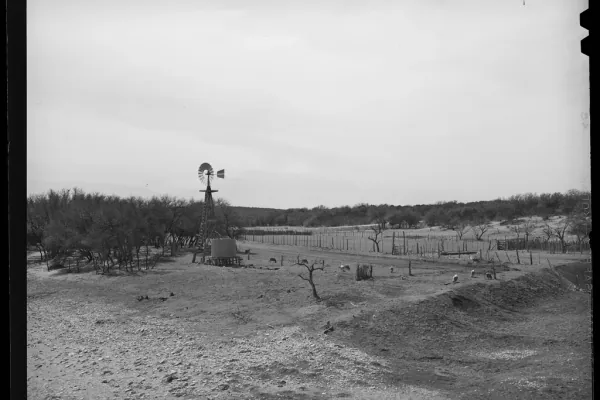
The tank near the Corniche may hold green algae on the walls before we drain it, and we inspect it closely with strong light to judge the depth of buildup before we start.
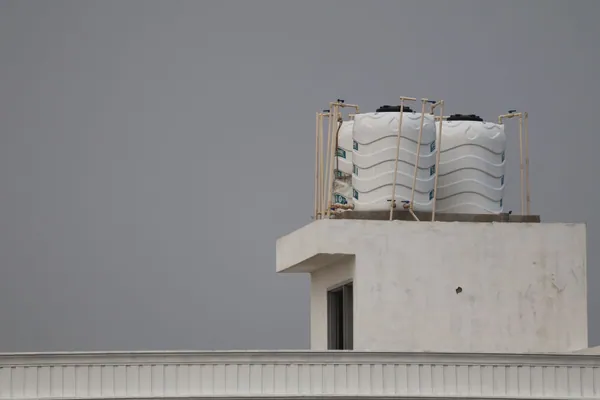
Full drainage is essential because salt-laden water and deeply rooted algae do not clear with scrubbing alone; they need complete emptying first.
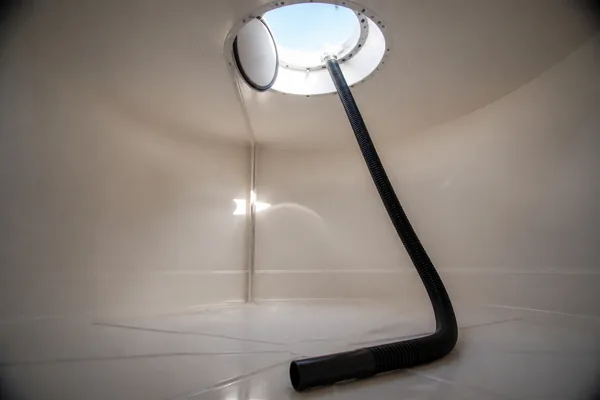
Sediment removal from the floor is harder here because salt leaves stubborn hard deposits, so we work by hand after vacuuming to ensure no salt grains remain in the crevices and corners.

Scrubbing the walls takes longer in coastal areas because algae is anchored deep in the layers of paint or concrete, not just on the surface.
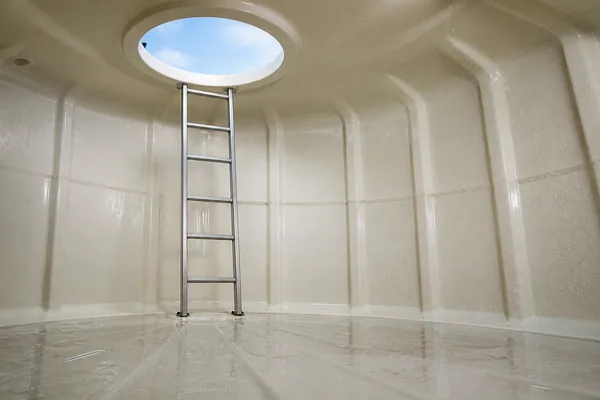
Disinfection is more critical here than inland because high humidity and salt have already created a rich environment for bacteria and viruses alongside the visible algae.
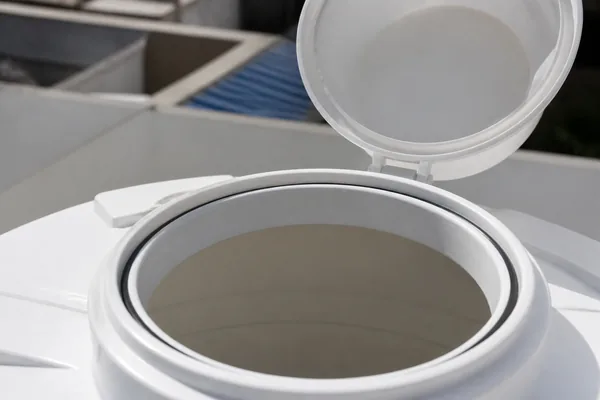
The final inspection includes clearing salt and grit from the lid itself and sealing it tightly so no sea spray or dust can enter the tank during storage.
The supply into the tank is shut and the tank is drained completely.
The sludge on the floor is scooped and pumped out first.
The biofilm on the walls is physically scrubbed off.
With the walls and floor clean, a disinfectant made for drinking-water storage is applied and given time to act on every surface.
The disinfectant and any loosened residue are rinsed down and pumped out, so the first tank of water after us is not carrying it.
We check the cover seal and inlet before refilling, so dust and insects stay out, then start the refill while you watch it run clear.
Sharm Obhur and North Obhur Beach mark the coastal boundary clearly, and access routes from Prince Abdullah Al Faisal Street make it straightforward for our team and equipment to reach the rooftop tanks on villas and resorts facing the water.
Pumps to clear sludge, scrubbing to remove biofilm, and disinfectant meant for potable storage.
We send a team, not one person, so a tank is drained, cleaned, disinfected and refilled in a single visit rather than left open for days.
We look at the lid seal and inlet, because a tank that got dirty fast usually has a way in.
Nothing is closed until the tank is refilling and you have seen the water run clean.
Photographs from real jobs carried out by the crew.












The commitment is simple enough to actually keep: we do not leave until the tank is disinfected, refilling, and you have seen it for yourself.
North Jeddah is largely newer villa districts and compounds around Obhur and inland from it. Homes here tend to have marble or porcelain floors, large windows and a garden or courtyard, so the routine is set by what comes in from outside: fine sand carried on sandals, and sprinkler spray that dries to a chalky ring on tiles. Near the creek and the coast, sea air leaves a faint salt film on glass and on outdoor cushions, which stiffens fabric. Curtains and upholstery in these open plan rooms catch the dust that settles overnight.
We provide these in Abhur North too, and more than one can share a single visit.



