
The right gear for drinking water
Pumps to clear sludge, scrubbing to remove biofilm, and disinfectant meant for potable storage.
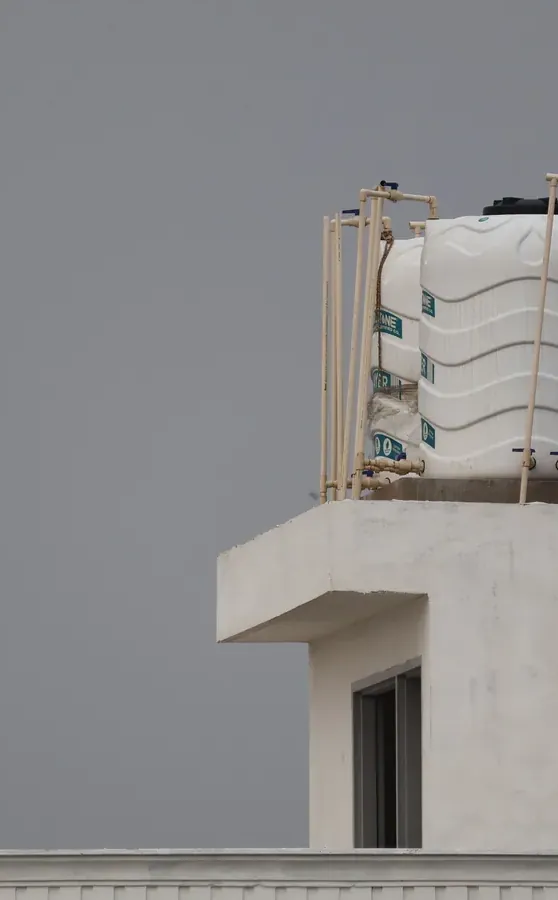
Al Hijaz is a mixed-use district where shops and restaurants occupy the ground floor and apartments fill the storeys above. The tank serves flats and businesses together, consumption varies throughout the day, water pressure fluctuates, and this means heavier sediment and cleaning that must account for heavy, uneven use. The water quality depends on managing a tank that faces constant demand spikes.
Shops and restaurants on the ground floor draw water heavily and at fixed times of day, which lifts the total load on the tank and creates sediment layers faster than domestic use alone would. For the method itself, see how we approach water tank cleaning.
Shops and restaurants use water at high intensity and on a fixed schedule. This causes continuous disturbance inside the tank and stirs up settled matter, leading to rapid accumulation of solids on the floor. Disinfection needs to be stronger to prevent regrowth in a tank under constant stress.
One tank serves multiple flats and multiple businesses, so any cleaning delay or problem affects everyone. The initial inspection must be precise because water pressure varies and consumption is unpredictable.
Although the district is relatively new, metal fittings and old supply lines inside tanks can leave rust stains, especially if the tank has not been cleaned regularly since installation.
Al Hijaz is one of the newer residential areas in east Jeddah, lying between the University of Jeddah Road and Wadi Al Ghawla. Relatively new apartment buildings line a regular grid with shops and small businesses at street level.
The team checks the tank and assesses pressure and consumption patterns, confirming that the gauge reading reflects use by both the shops and the flats combined.
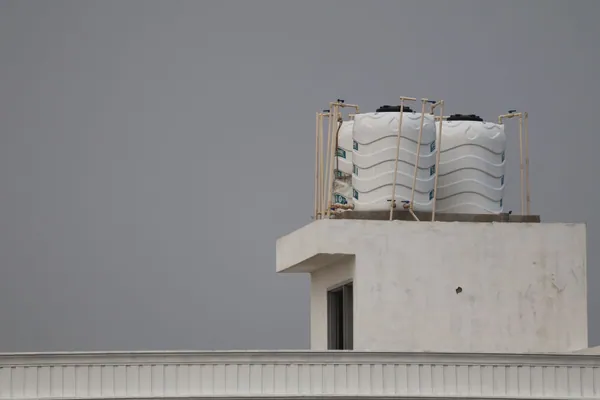
Full drainage takes longer here because the tank may be larger and serves higher consumption, with heavier and more plentiful sediment to remove.
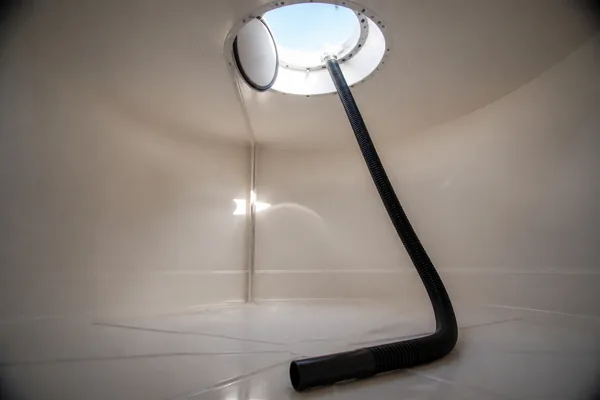
Sediment vacuuming focuses on removing the heavy layer of settled matter from the floor, which builds up rapidly under high commercial use.
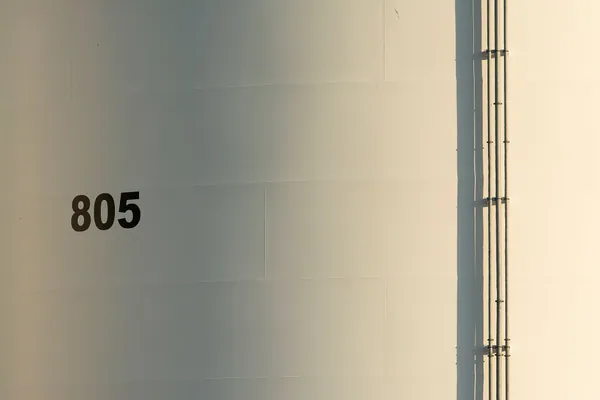
Scrubbing covers all interior walls to clear biofilm and algae that grow faster in tanks with high water throughput.
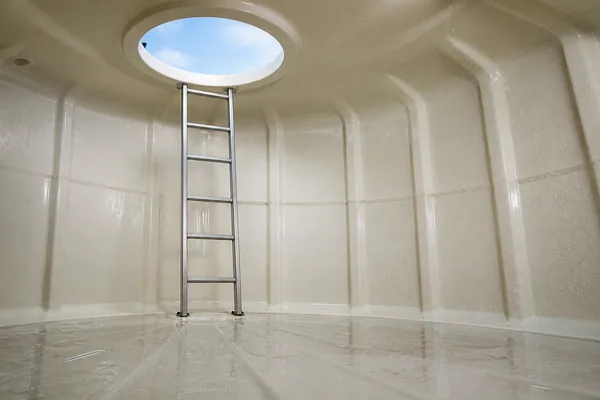
Disinfection takes extra time because sediment ratios are higher and surfaces need complete coverage before the final rinse.
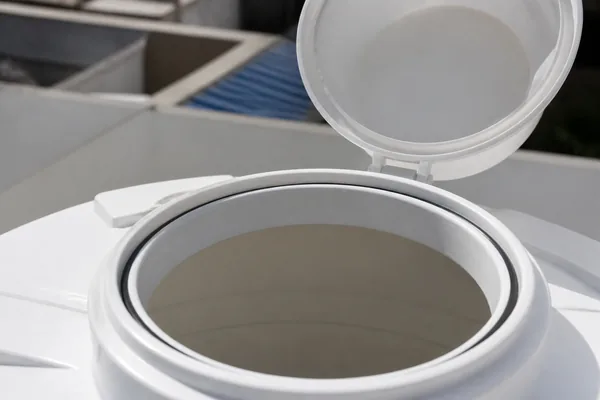
Final rinse and pressure testing ensure water returns cleanly and at even pressure to all floors and shop units.
The supply into the tank is shut and the tank is drained completely.
The sludge on the floor is scooped and pumped out first.
The biofilm on the walls is physically scrubbed off.
With the walls and floor clean, a disinfectant made for drinking-water storage is applied and given time to act on every surface.
The disinfectant and any loosened residue are rinsed down and pumped out, so the first tank of water after us is not carrying it.
We check the cover seal and inlet before refilling, so dust and insects stay out, then start the refill while you watch it run clear.
Tanks in Al Hijaz lie near University of Jeddah Road and Wadi Al Ghawla, and the team reaches them via the main roads and streets that run through the district.
Pumps to clear sludge, scrubbing to remove biofilm, and disinfectant meant for potable storage.
We send a team, not one person, so a tank is drained, cleaned, disinfected and refilled in a single visit rather than left open for days.
We look at the lid seal and inlet, because a tank that got dirty fast usually has a way in.
Nothing is closed until the tank is refilling and you have seen the water run clean.
Photographs from real jobs carried out by the crew.












The commitment is simple enough to actually keep: we do not leave until the tank is disinfected, refilling, and you have seen it for yourself.
East Jeddah lies furthest from the sea and closest to the open ground and hills beyond the ring roads, so the air is drier and the dust is coarser and paler than on the coast. It comes in under doors and settles on every flat surface overnight, making sofas, mattresses and curtains the heaviest part of the routine. Floors are mostly ceramic tile in the apartment districts and marble in the villa areas, both scratched by grit that is mopped rather than swept. Roof tank water leaves a grey film of sediment in baths and basins.
We provide these in Al Hijaz too, and more than one can share a single visit.



