
The right gear for drinking water
Pumps to clear sludge, scrubbing to remove biofilm, and disinfectant meant for potable storage.
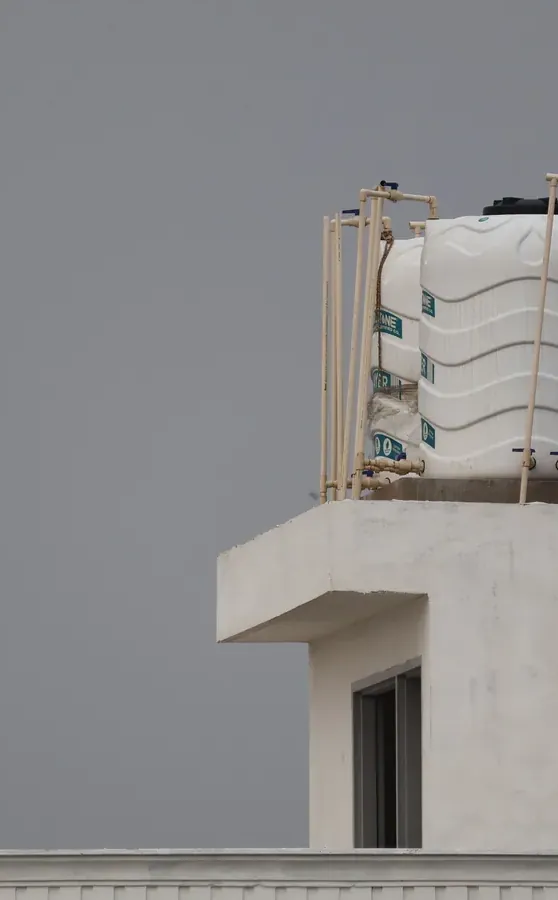
Al Naseem is a mixed district in central Jeddah where residential blocks and villas sit alongside busy commercial streets full of shops. Tanks here carry heavier sediment loads from minerals, soot and dust that drift from shops, restaurants and main roads.
Tanks here carry more white scale and dissolved minerals because water passes through old pipework before reaching the tank, and street dust from main roads settles faster. For the method itself, see the full water tank cleaning page.
In central Jeddah, old pipework carries iron and scale deposits, so water entering the tank brings these minerals which settle on the floor as a hard grey layer that takes strong suction to remove.
Ground floor shops and restaurants release cooking grease into the air, and this enters via ventilation and settles on the water surface in the tank. Fine dust from busy main roads accumulates rapidly.
Jeddah water is naturally hard, but in central areas with shops, bakeries and old bathrooms, scale deposits build up fast on tank walls and need vigorous scrubbing to shift.
Stretches between Prince Majid Road and Haramain Road with villas and residential blocks alongside crowded commercial streets with shops beneath, home to health centres, mosques and parks.
Tank inspection in central Jeddah focuses on white scale deposits and the grey mineral layer on the floor.
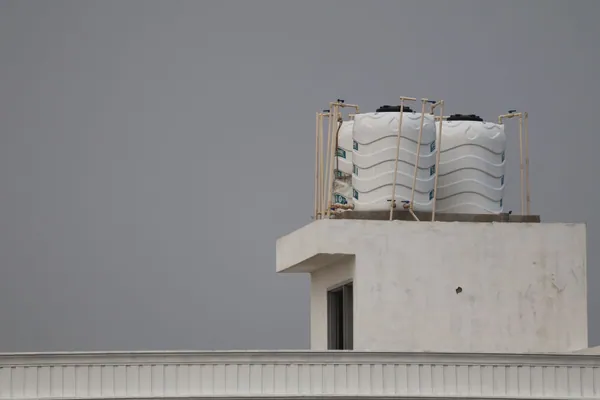
Draining usually reveals discoloured water because minerals and sediment have settled and mixed with it.
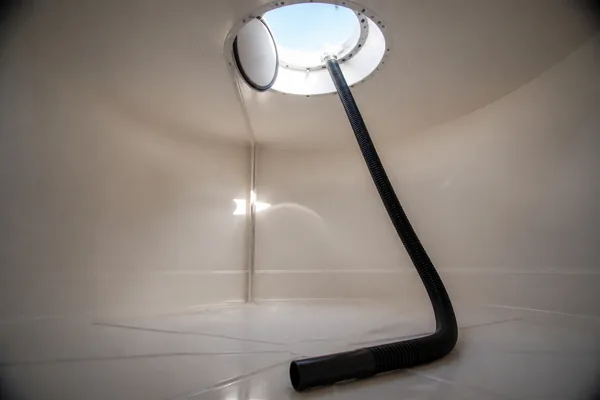
Sediment removal takes longer in Al Naseem because layers are compacted and stuck to the floor.
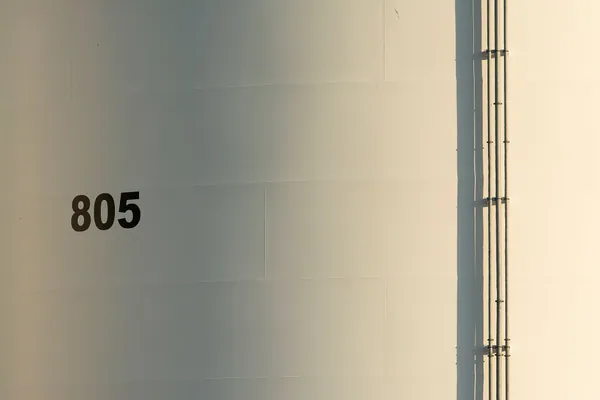
Wall scrubbing must be vigorous to remove scale and cooking grease film from the interior surface.
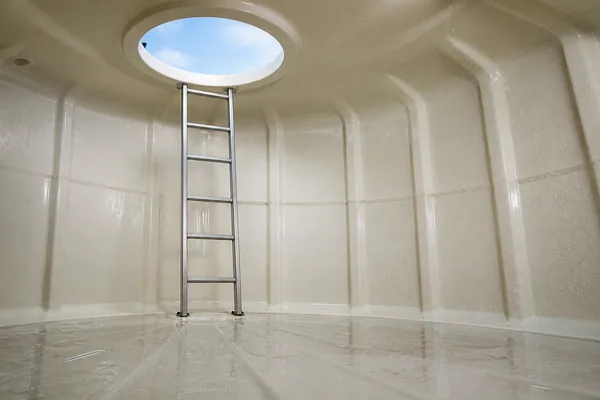
Disinfection is especially important because sediment and minerals may carry accumulated bacteria.
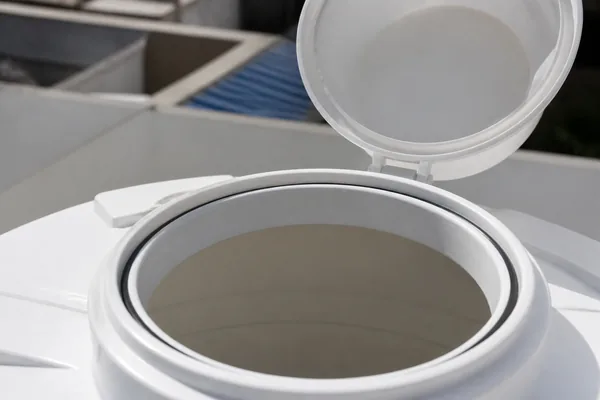
Final rinsing needs repeating to remove mineral and scale traces from walls and floor.
The supply into the tank is shut and the tank is drained completely.
The sludge on the floor is scooped and pumped out first.
The biofilm on the walls is physically scrubbed off.
With the walls and floor clean, a disinfectant made for drinking-water storage is applied and given time to act on every surface.
The disinfectant and any loosened residue are rinsed down and pumped out, so the first tank of water after us is not carrying it.
We check the cover seal and inlet before refilling, so dust and insects stay out, then start the refill while you watch it run clear.
Mixed district: shops at street level with homes above them
In a mixed central district, shops and main roads mean more sediment and constant mineral deposits: the tank needs special care and cleaning must be more frequent than in purely residential areas away from the centre.
Pumps to clear sludge, scrubbing to remove biofilm, and disinfectant meant for potable storage.
We send a team, not one person, so a tank is drained, cleaned, disinfected and refilled in a single visit rather than left open for days.
We look at the lid seal and inlet, because a tank that got dirty fast usually has a way in.
Nothing is closed until the tank is refilling and you have seen the water run clean.
Photographs from real jobs carried out by the crew.












The commitment is simple enough to actually keep: we do not leave until the tank is disinfected, refilling, and you have seen it for yourself.
Central Jeddah is the old heart of the city: Al Balad with its coral stone houses, and the dense apartment quarters around it with shops beneath the flats. Floors here are often terrazzo or older ceramic tile, worn smooth and easily stained by cooking grease that drifts up from the street. Older kitchens and bathrooms carry heavy scale on taps and around drains, and pipework in the older blocks leaves rust marks in basins. Rugs and curtains take on the fine black dust of the main roads, so they need washing more often than elsewhere.
We provide these in Al Naseem too, and more than one can share a single visit.



