
The right gear for drinking water
Pumps to clear sludge, scrubbing to remove biofilm, and disinfectant meant for potable storage.
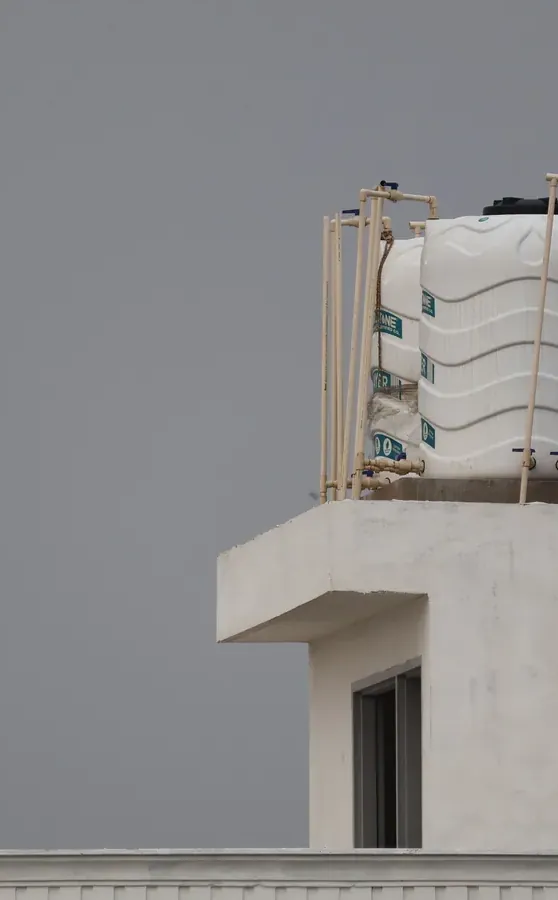
Al Murjan is a small coastal district on the north corniche with low density villas and apartments facing the sea. Salt and humidity encircle the tank year round. Sea salt deposits on walls and lids, and the constant moisture accelerates algae growth in standing water. The tank here faces a climate that no inland tank encounters, where salt corrosion and biological growth are both rapid.
Coastal tanks here need cleaning more frequently than any other district because of unrelenting salt deposits and humidity that accelerates both corrosion and algae growth. For the method itself, see the full water tank cleaning page.
Sea air carries salt particles that settle on the tank, cover and pipes. Salt reacts with metals and causes rapid corrosion and rust. Inside the walls, salt accumulates as a thick white layer. When we clean, we remove this salt before it causes permanent structural damage to the tank itself and the piping connected to it.
Very high coastal humidity combined with moderate year round temperatures creates ideal conditions for algae spores and anaerobic bacteria. Standing water in the tank does not remain clean for long. Algae growth is many times faster here than in inland areas, often visible within weeks of a previous cleaning.
Coastal air carries not just salt particles but fatty salts and organic compounds from the sea. These penetrate small cracks in pipes and settle as a sticky layer on the tank floor, making removal more difficult and requiring more aggressive scrubbing than simple mineral deposits inland would demand.
The district faces the sea directly with very high humidity and air saturated with sea salt particles throughout the year.
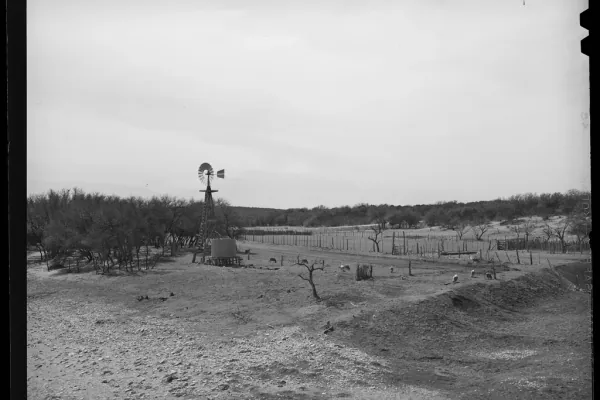
Initial inspection reveals a thick white layer of salt deposits on every surface and red rust visible beneath, showing continuous exposure to the salt air environment.
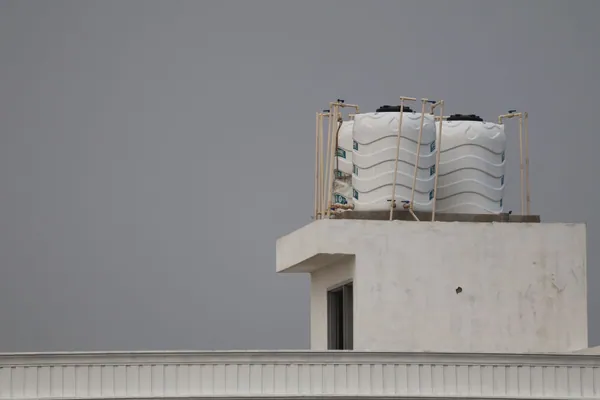
Full drainage is critical because standing water masks the sticky layer of fatty salts and organic compounds from the sea that have settled on the floor.
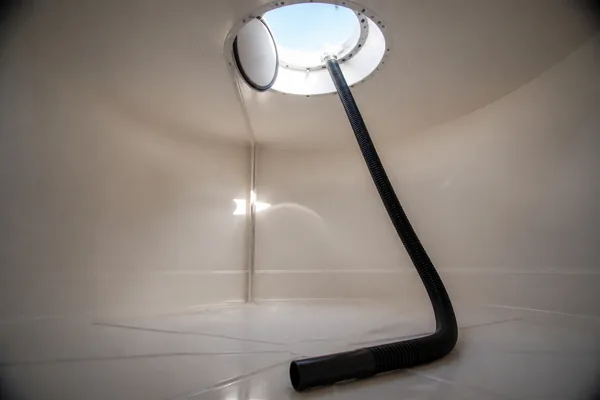
Sediment removal extracts a mix of white salt crusts, red rust and organic compounds from the marine air that have accumulated and bonded on the floor.
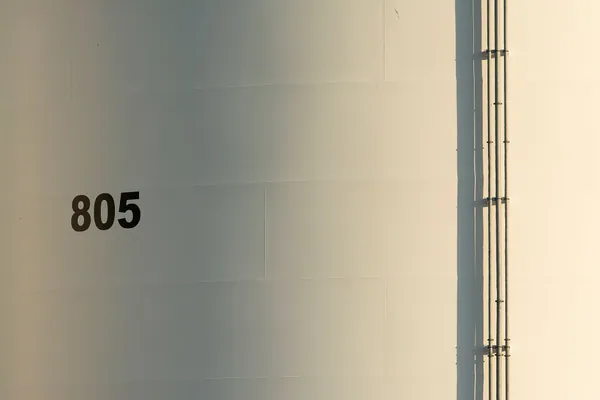
Wall scrubbing concentrates on removing white salt layers and red rust underneath with care not to damage the tank interior, which requires specialised technique in coastal tanks.
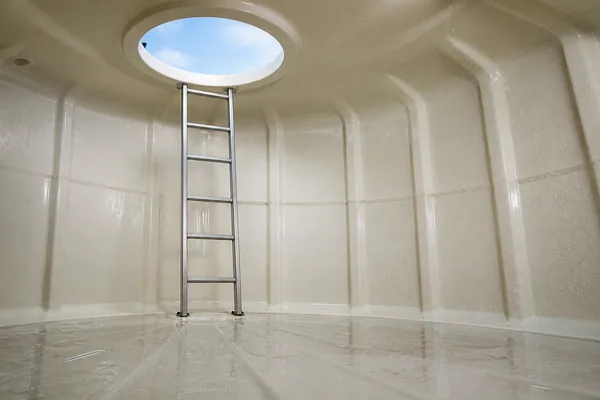
Disinfection must be thorough because the salt and humidity environment favours dangerous anaerobic bacteria that multiply rapidly and must be killed completely.
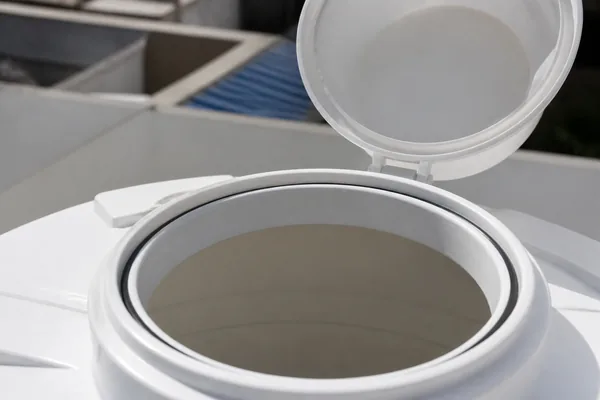
Cover, pipes and all connections are inspected for actual corrosion damage or holes that allow sea salt water ingress from outside, not just deposits on the surface.
The supply into the tank is shut and the tank is drained completely.
The sludge on the floor is scooped and pumped out first.
The biofilm on the walls is physically scrubbed off.
With the walls and floor clean, a disinfectant made for drinking-water storage is applied and given time to act on every surface.
The disinfectant and any loosened residue are rinsed down and pumped out, so the first tank of water after us is not carrying it.
We check the cover seal and inlet before refilling, so dust and insects stay out, then start the refill while you watch it run clear.
Pumps to clear sludge, scrubbing to remove biofilm, and disinfectant meant for potable storage.
We send a team, not one person, so a tank is drained, cleaned, disinfected and refilled in a single visit rather than left open for days.
We look at the lid seal and inlet, because a tank that got dirty fast usually has a way in.
Nothing is closed until the tank is refilling and you have seen the water run clean.
Photographs from real jobs carried out by the crew.












The commitment is simple enough to actually keep: we do not leave until the tank is disinfected, refilling, and you have seen it for yourself.
West Jeddah faces the sea along the Corniche, and the flats and towers along it live with salt in the air all year. Salt settles on glass as a haze that plain water spreads rather than removes, and it works into balcony railings, outdoor fabric and the metal of window frames. Indoors, humidity keeps carpets and curtains slightly damp, so they hold odours and dust longer than in drier districts, and bathroom grout and shower glass show scale quickly. Wooden floors and doors swell a little in the wetter months.
We provide these in Al Murjan too, and more than one can share a single visit.



