
The right gear for drinking water
Pumps to clear sludge, scrubbing to remove biofilm, and disinfectant meant for potable storage.
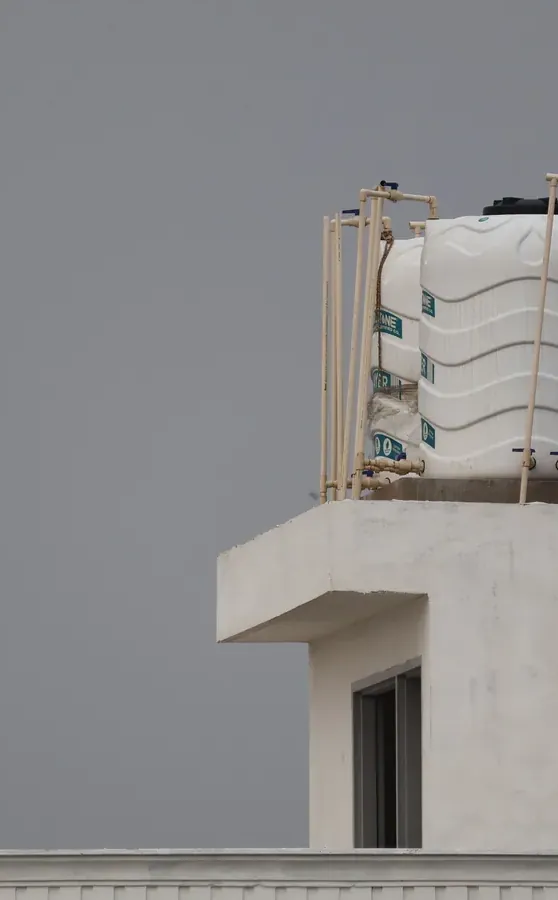
Mishrifah is a central Jeddah district crossed by Madinah Road, King Fahd Road and Prince Majid Road, an apartment neighbourhood with residential blocks, repeated floors and shared entrances. Tanks here are large and serve many families, and sediment and contamination build rapidly in the high residential density where water use is constant and heavy.
Shared tanks in Mishrifah buildings serve over a hundred residents per tower, so sediment accumulation is fast and disinfection must be rigorous. For the method itself, see what water tank cleaning involves.
Mishrifah apartment buildings contain large shared tanks that serve dozens of flats across many floors. The team works with substantial systems and complex pipe networks that need care and expertise.
Daily consumption is heavy and water use intense in every flat, speeding sediment build-up. Disinfection becomes more critical in an environment where so many people depend on the same water source.
Shutting off water to a shared tank affects every resident. Coordination with building management and speed of work are essential to minimise inconvenience across a crowded building.
Bounded by Palestine Street to the south and Gharnatah Road to the north, Makarona Road runs through it lined with shops and restaurants, and the district holds Al Maghrabi Hospital and several medical complexes.
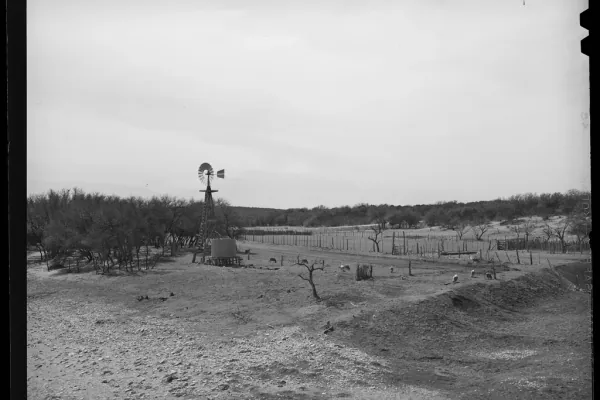
Large tank is opened and inspected to estimate sediment depth and the duration needed for a full clean.
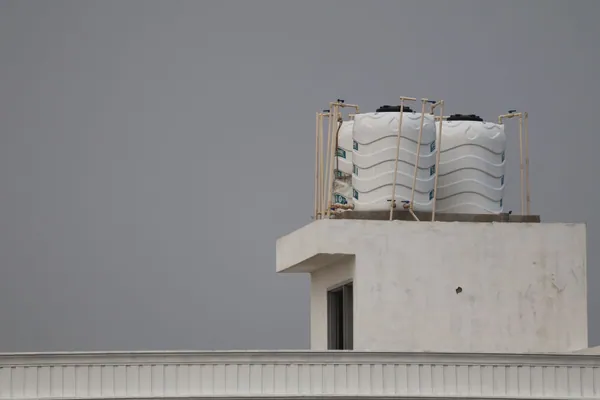
Old water is pumped out with powerful equipment to a safe discharge point, coordinated with building management.
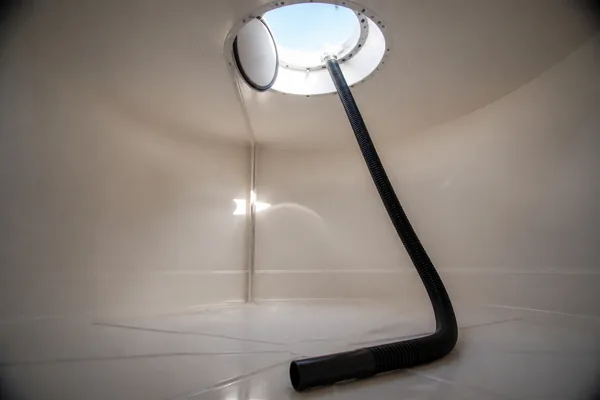
Heavy sediment on the floor of a large tank is vacuumed with industrial equipment that handles the volume and depth.
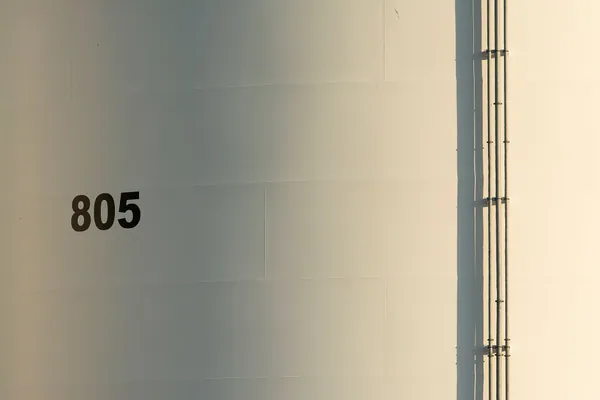
Tank walls and floor are scrubbed methodically with firm brushes to ensure complete coverage of the large internal surface.
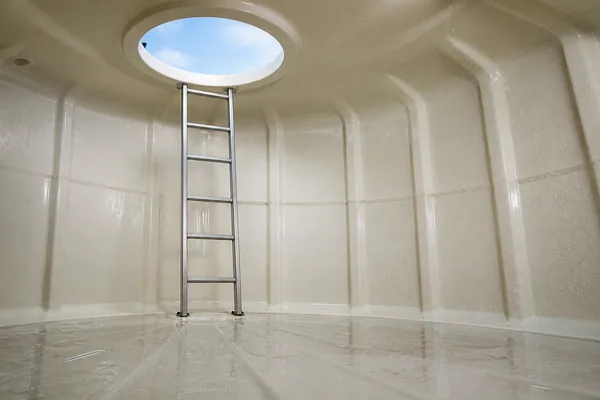
Disinfection is rigorous because the tank serves hundreds of residents and water safety is a collective responsibility.
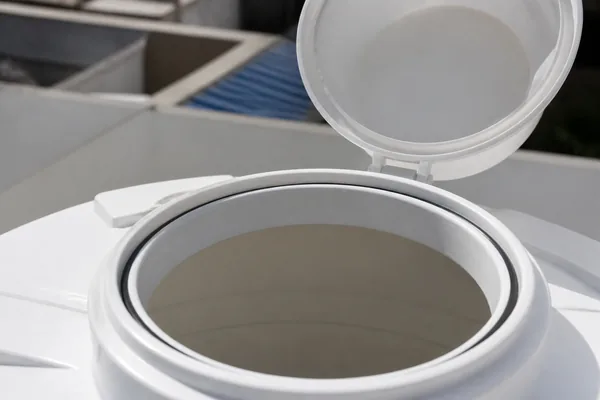
Final rinse is intensive and lid and all openings are checked before refilling in the presence of a building representative.
The supply into the tank is shut and the tank is drained completely.
The sludge on the floor is scooped and pumped out first.
The biofilm on the walls is physically scrubbed off.
With the walls and floor clean, a disinfectant made for drinking-water storage is applied and given time to act on every surface.
The disinfectant and any loosened residue are rinsed down and pumped out, so the first tank of water after us is not carrying it.
We check the cover seal and inlet before refilling, so dust and insects stay out, then start the refill while you watch it run clear.
Pumps to clear sludge, scrubbing to remove biofilm, and disinfectant meant for potable storage.
We send a team, not one person, so a tank is drained, cleaned, disinfected and refilled in a single visit rather than left open for days.
We look at the lid seal and inlet, because a tank that got dirty fast usually has a way in.
Nothing is closed until the tank is refilling and you have seen the water run clean.
Photographs from real jobs carried out by the crew.












The commitment is simple enough to actually keep: we do not leave until the tank is disinfected, refilling, and you have seen it for yourself.
Apartment district: residential blocks, repeated floors and shared entrances
An apartment district means the shared tank is a collective responsibility with high consequence if contaminated. One problem affects dozens of families, so disinfection must be thorough and the team must work closely with building management to coordinate timing and speed.
We provide these in Mishrifah too, and more than one can share a single visit.



