
The right gear for drinking water
Pumps to clear sludge, scrubbing to remove biofilm, and disinfectant meant for potable storage.

Water tanks in Al Corniche face challenges unique to coastal Jeddah. Year-round salt air and high humidity accelerate the growth of biofilm on walls and encourage algae to spread faster than in inland districts. The cleaning approach here differs significantly from tanks in the interior neighbourhoods of the city.
Tanks in Al Corniche need more frequent attention than interior quarters: salt air and humidity speed the decay of metal surfaces and protective coatings on exposed pipework. For the method itself, see what water tank cleaning involves.
The salty humid coastal environment creates ideal conditions for algae and fungal growth on tank walls. Stagnant water inside the tank reacts with salt particles carried on sea breezes, increasing the speed of scale buildup and sediment layering far faster than in sheltered inland locations.
Metal tanks in Al Corniche rust rapidly due to salt air exposure. Even the tank lid corrodes quickly, and joints and edges become vulnerable points for rust and slow leaks. The combination of moisture, salt and metal creates conditions where decay happens continuously.
Coastal air humidity means the tank never fully dries, even after rinsing. Condensation on internal surfaces returns quickly, leaving a perpetually damp environment that supports microbial colonies and biofilm layers that reform within days of cleaning.
The coastal humidity and salt spray of Al Corniche encourage algae and microbes to colonise tank walls far more rapidly than in districts further inland away from the sea.

Coastal tanks need lid inspection before draining: even small openings or surface rust allow salt spray to penetrate the tank quickly once work begins.
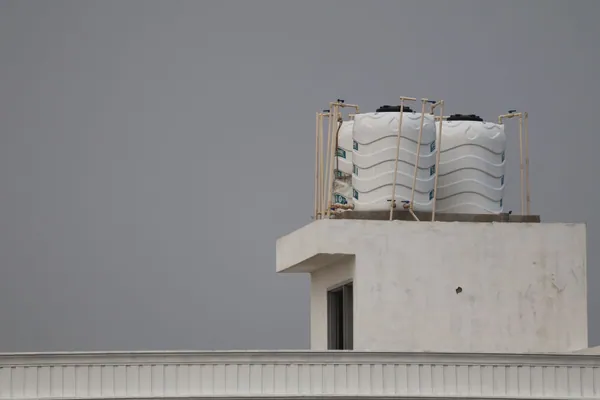
Full drainage is essential here: water sitting with salt content deposits on the floor far faster than in inland areas, layering sediment rapidly.
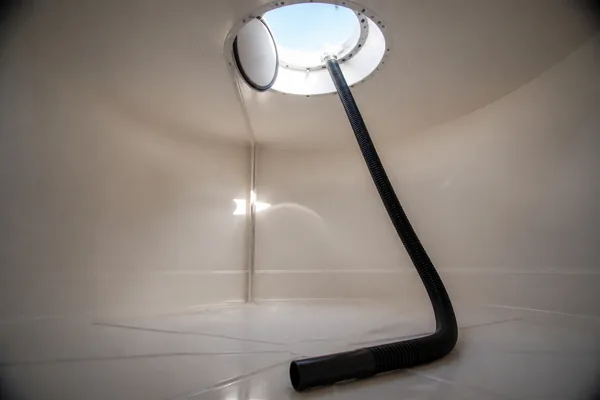
Sediment in Al Corniche contains algal layers and salt deposits, so careful suction is needed to lift each layer without leaving residue that will regrow.

Wall scrubbing focuses on corners and seams where salt and slow corrosion accumulate faster than on flat surfaces exposed to open air.
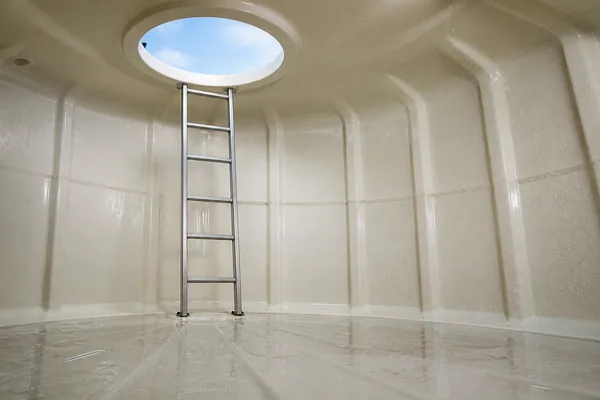
Disinfection in coastal zones takes longer: high humidity means the disinfectant needs extended contact time to work at full strength in damp conditions.
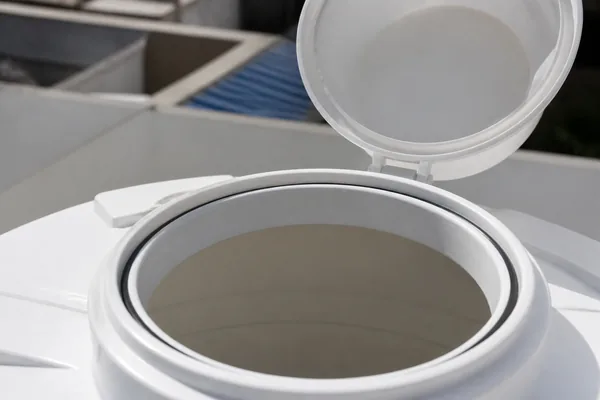
Final rinse must be thorough: any salt residue or disinfectant traces left behind will show in water over time under high coastal humidity.
The supply into the tank is shut and the tank is drained completely.
The sludge on the floor is scooped and pumped out first.
The biofilm on the walls is physically scrubbed off.
With the walls and floor clean, a disinfectant made for drinking-water storage is applied and given time to act on every surface.
The disinfectant and any loosened residue are rinsed down and pumped out, so the first tank of water after us is not carrying it.
We check the cover seal and inlet before refilling, so dust and insects stay out, then start the refill while you watch it run clear.
Pumps to clear sludge, scrubbing to remove biofilm, and disinfectant meant for potable storage.
We send a team, not one person, so a tank is drained, cleaned, disinfected and refilled in a single visit rather than left open for days.
We look at the lid seal and inlet, because a tank that got dirty fast usually has a way in.
Nothing is closed until the tank is refilling and you have seen the water run clean.
Photographs from real jobs carried out by the crew.












The commitment is simple enough to actually keep: we do not leave until the tank is disinfected, refilling, and you have seen it for yourself.
Coastal area: high humidity and salt air through the year
Coastal areas mean the tank faces continuous salt pressure and humidity: regular inspection and cleaning are essential to prevent the rapid rusting and accelerated biological growth that the coastal environment continuously promotes.
We provide these in Al Corniche too, and more than one can share a single visit.



