
The right gear for drinking water
Pumps to clear sludge, scrubbing to remove biofilm, and disinfectant meant for potable storage.
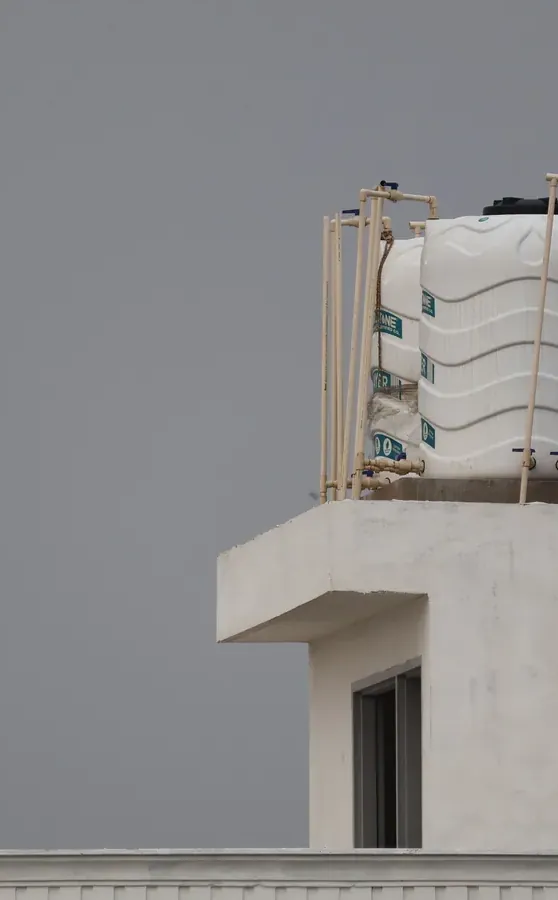
Al Mawj is a new development in far south Jeddah, a land subdivision with villas still under construction and foundations still being dug. Tanks here are new but construction dust covers them constantly, and water clouds on first use because sediment from the building site has already settled. The district is still very much a building site.
Villas are brand new and tanks are new too, but excavation dust and concrete mixers settle on every surface and the water runs cloudy on first draw from construction site sediment. For the method itself, see our water tank cleaning service in detail.
Foundations are being dug, concrete mixers are running and trucks move soil constantly. Dust rises in every direction and empty villas next to occupied homes mean construction dust enters all tanks regardless of location.
The subdivision has gaps between newly subdivided plots, and wind stirs bare earth dust and lifts it onto rooftop tanks. Surrounding villas collect dust from multiple directions at once.
The tanks are new but pipes run from an older city network and carry sediment and sand from aged pipes. A new tank does not solve the problem of old water lines delivering old water into it.
Al Mawj is the southernmost of this cluster of far south Jeddah subdivisions, a new land subdivision on the regional Al Lith Road, with ongoing construction and vacant plots among newly subdivided villa plots.
Initial inspection finds thick construction dust on the floor of the new tank and a grey layer coating the walls.
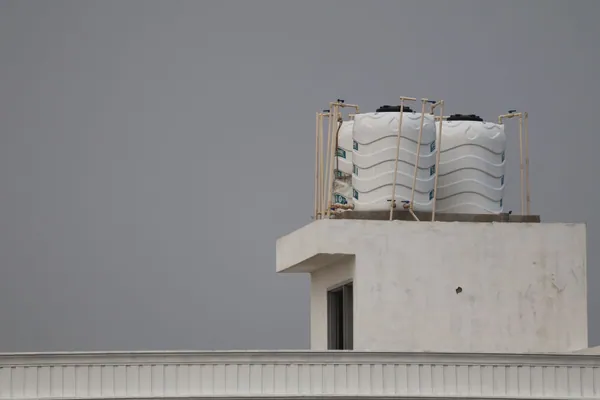
Full drainage is essential because construction dust is heavy and has accumulated from installation day onwards.
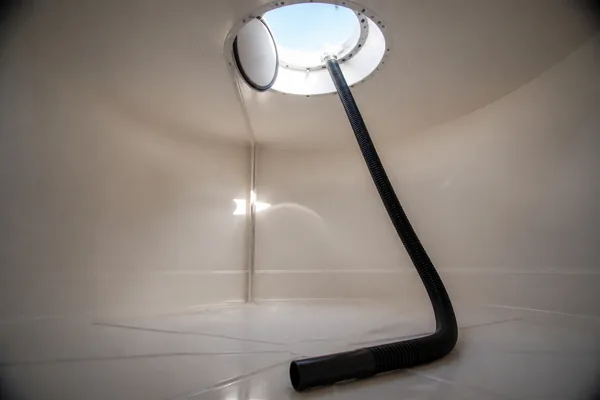
Vacuuming focuses on removing all building dust from floor and walls, and may need repeated passes.
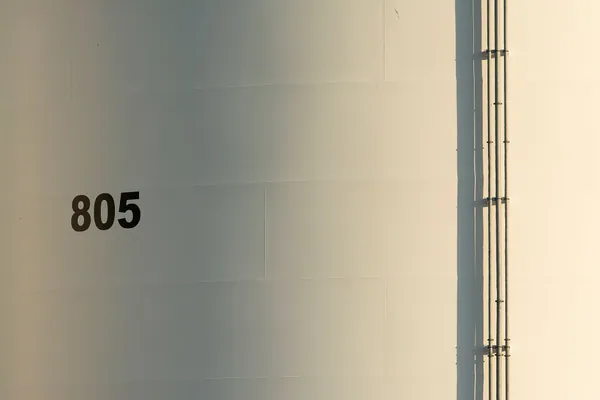
Manual scrubbing removes the grey layer of dry dust that has stuck to the walls from the building site.
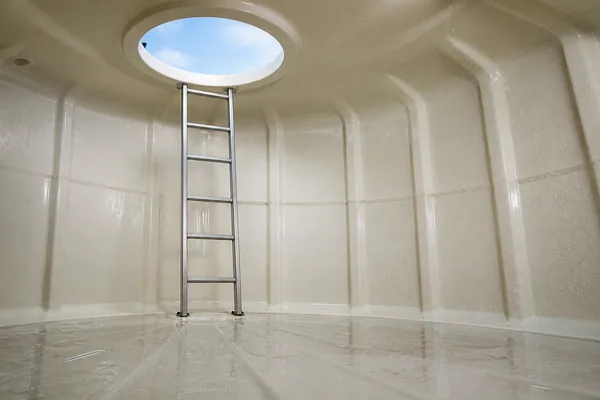
Disinfection needs high concentration because of dust and bacteria from freshly excavated ground.
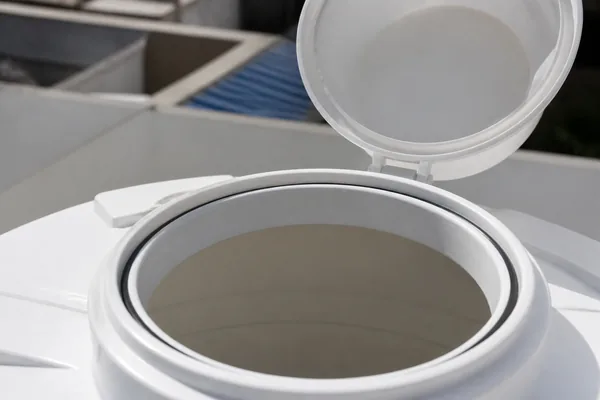
The final check ensures the lid is absolutely tight and protected from the ongoing construction dust.
The supply into the tank is shut and the tank is drained completely.
The sludge on the floor is scooped and pumped out first.
The biofilm on the walls is physically scrubbed off.
With the walls and floor clean, a disinfectant made for drinking-water storage is applied and given time to act on every surface.
The disinfectant and any loosened residue are rinsed down and pumped out, so the first tank of water after us is not carrying it.
We check the cover seal and inlet before refilling, so dust and insects stay out, then start the refill while you watch it run clear.
Pumps to clear sludge, scrubbing to remove biofilm, and disinfectant meant for potable storage.
We send a team, not one person, so a tank is drained, cleaned, disinfected and refilled in a single visit rather than left open for days.
We look at the lid seal and inlet, because a tank that got dirty fast usually has a way in.
Nothing is closed until the tank is refilling and you have seen the water run clean.
Photographs from real jobs carried out by the crew.












The commitment is simple enough to actually keep: we do not leave until the tank is disinfected, refilling, and you have seen it for yourself.
New development: ongoing construction and vacant plots between the homes
In a new development like Al Mawj, tanks are new but ongoing construction dust covers them quickly. Empty neighbouring villas and active building sites lift construction dust continuously across the whole district.
We provide these in Al Mawj too, and more than one can share a single visit.



