
The right gear for drinking water
Pumps to clear sludge, scrubbing to remove biofilm, and disinfectant meant for potable storage.
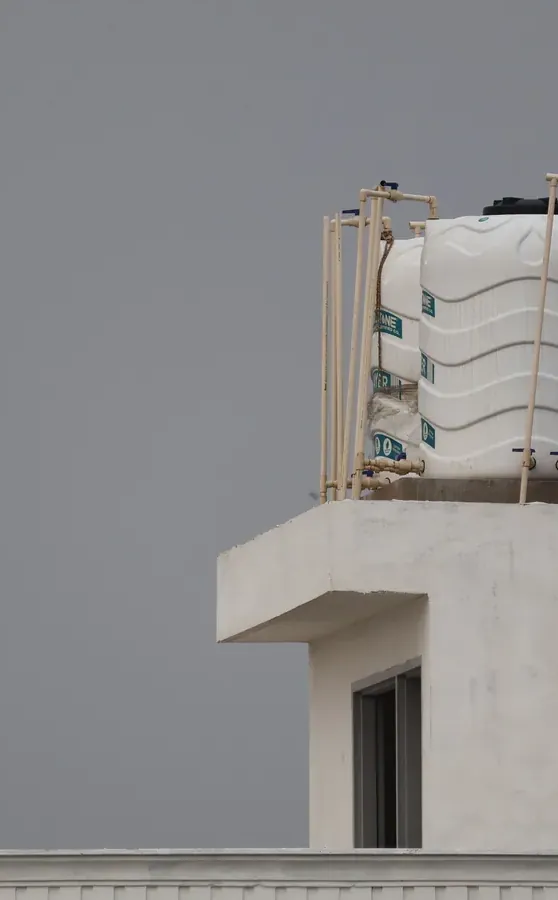
Al Sahel is a coastal strip on the western edge of south Jeddah near Al Saif Corniche on the Red Sea. Humidity is high year-round and salt air leaves faint salt films on glass and outdoor fabrics. Tanks here suffer from rapid mould and algae because of persistent moisture. Garden irrigation water seeps into soil and continuously raises humidity around the tank. Cleaning here must be deeper and more frequent than in inland districts.
Tanks in Al Sahel need cleaning much more often than inland areas because humidity and salt accelerate algae and mould growth several times faster. For the method itself, see what water tank cleaning involves.
Al Sahel sits near the Red Sea and the air is salty year-round. Salt settles on glass, fabric and the outside of tanks. Inside, high humidity causes rapid mould and demands strong disinfection because the mould returns quickly if not killed at the root.
Most homes in Al Sahel have a garden or courtyard. Daily irrigation raises soil moisture and air humidity around the tank. This accelerates algae growth dramatically and makes disinfection necessary every few weeks to keep water safe.
South Jeddah on the coast sees very high humidity in certain months. Black mould colonises tank walls rapidly. Regular cleaning and stronger disinfection are necessary to keep water safe for drinking, and waiting between cleans is not an option here.
An emerging coastal residential area close to the Red Sea. Air is salty and humidity remains high throughout the year. Homes have gardens and courtyards where daily irrigation is routine.
The tank check in Al Sahel reveals black mould on walls and salt stains on the upper inside surfaces where humidity condenses and salt crystals form.
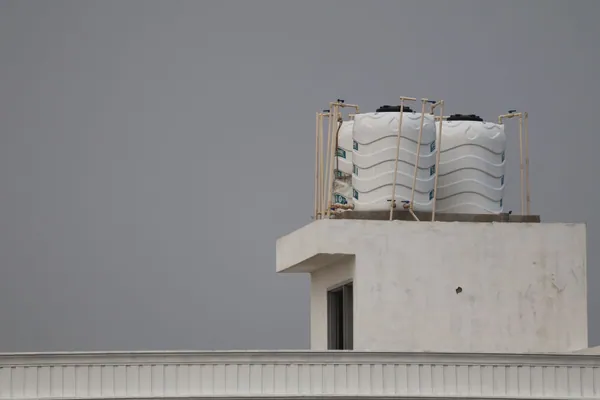
Draining removes water that has accumulated suspended salt particles and mould fragments for weeks without treatment or circulation.
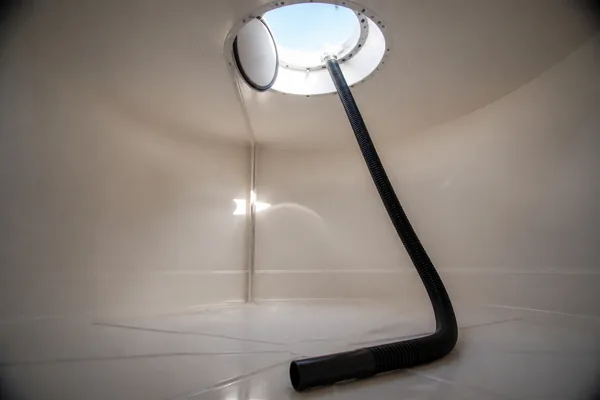
Vacuuming removes algae, mould and sandy sediment mixed with moisture from the surrounding soil and irrigation seepage.
Scrubbing removes stubborn black and green mould stains that adhere firmly to damp tank walls and do not come away without vigorous hand work.
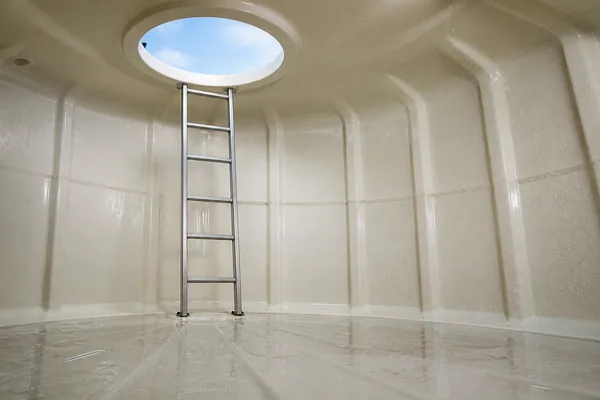
Disinfection in a coastal zone must be strong to kill fungi and bacteria that multiply rapidly in high humidity, and must be powerful enough to inhibit regrowth for a reasonable interval.
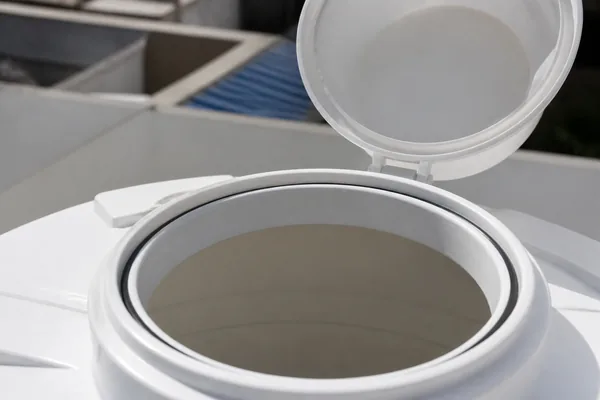
Lid and seal inspection checks that no salt-laden air or seepage from surrounding moisture enters the tank, and that the cover sits tight.
The supply into the tank is shut and the tank is drained completely.
The sludge on the floor is scooped and pumped out first.
The biofilm on the walls is physically scrubbed off.
With the walls and floor clean, a disinfectant made for drinking-water storage is applied and given time to act on every surface.
The disinfectant and any loosened residue are rinsed down and pumped out, so the first tank of water after us is not carrying it.
We check the cover seal and inlet before refilling, so dust and insects stay out, then start the refill while you watch it run clear.
Coastal area: high humidity and salt air through the year
Coastal area means persistent high humidity and salt in the air. The tank needs cleaning and disinfection more frequently because local conditions accelerate algae and mould growth much faster than any other district in Jeddah, and mould returns quickly if not eliminated completely.
Pumps to clear sludge, scrubbing to remove biofilm, and disinfectant meant for potable storage.
We send a team, not one person, so a tank is drained, cleaned, disinfected and refilled in a single visit rather than left open for days.
We look at the lid seal and inlet, because a tank that got dirty fast usually has a way in.
Nothing is closed until the tank is refilling and you have seen the water run clean.
Photographs from real jobs carried out by the crew.












The commitment is simple enough to actually keep: we do not leave until the tank is disinfected, refilling, and you have seen it for yourself.
South Jeddah runs from the port and the industrial city down towards Al Khumrah, and homes here sit between the sea and the heavy goods roads. The dust is darker and oilier than in the north, a mix of diesel soot and workshop grit, and it clings to net curtains, window sills and the tops of kitchen cupboards. Floors in the older low rise housing are often plain cement or ceramic tile that darkens where soot is walked in. Humidity from the coast adds mildew in bathrooms and a musty smell in stored fabrics.
We provide these in Al Sahel too, and more than one can share a single visit.



