
The right gear for drinking water
Pumps to clear sludge, scrubbing to remove biofilm, and disinfectant meant for potable storage.
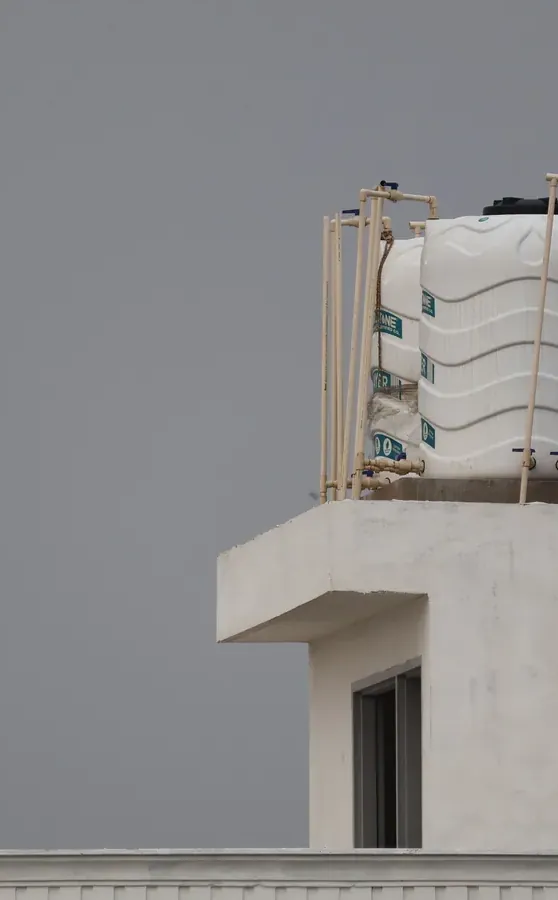
Al Mahamid is a mixed district on Jeddah's eastern edge where dry air and coarser dust settle faster than on the coast, and roof tanks collect heavier sediment. The old pipework means water arrives at the tank already carrying deposits from pipes that have not been renewed in decades. Internal cleaning is the only way to remove what the pipes bring, because the sediment does not dissolve in the dry air; it accumulates.
Tanks on exposed rooftops in Al Mahamid collect dust and debris far faster than in protected neighbourhoods or those closer to the sea, particularly during the summer months when the air is driest. For the method itself, see what water tank cleaning involves.
Pipework in Al Mahamid is older than most Jeddah districts, and water arrives at the tank already loaded with sediment from the pipes themselves. Cleaning the interior removes what the pipes deliver, but the problem runs deeper than surface washing. The tank is drained completely so the team can reach the floor, and sediment that has compacted there is removed by hand.
East Jeddah sits closer to open ground and the hills beyond the ring roads, so the air is drier and the dust is coarser and paler in colour. It creeps in under doors and settles on every roof surface overnight. Exposed roof tanks in Al Mahamid collect more than neighbourhoods on the coast, and low humidity means sediment does not dissolve; it compacts and adheres to the tank walls.
Al Mahamid is mixed use: food shops at street level and apartments or villas above them share one tank. Coordination is more complex because shops open early and residents sleep late, and their water needs are different. The tank is drained and water stops for everyone together, so the work requires careful scheduling and a full team arriving ready to work fast.
East Jeddah is drier and dustier than the coast, with coarse dust that creeps in under doors and settles on every roof surface overnight. Tank sediment is heavier and more persistent than in humid coastal districts, and the grey film left by roof tank water in baths and basins is thicker.
Exposed tanks in Al Mahamid collect far more dust and debris than sheltered neighbourhoods, so inspection starts by opening the lid and assessing the volume of sediment and the condition of the walls.
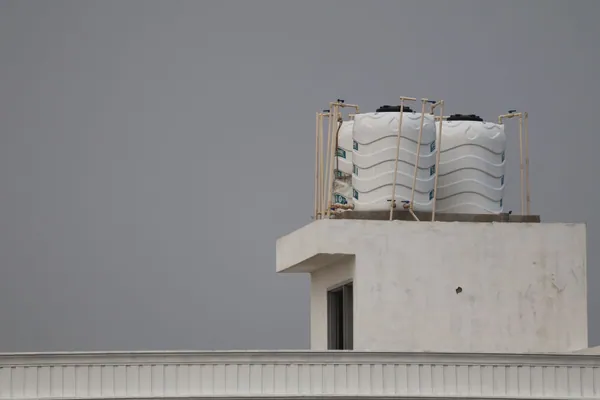
Flats and shops share one tank, so drainage requires a time agreed with everyone before the outlet is closed and the pump switched off.
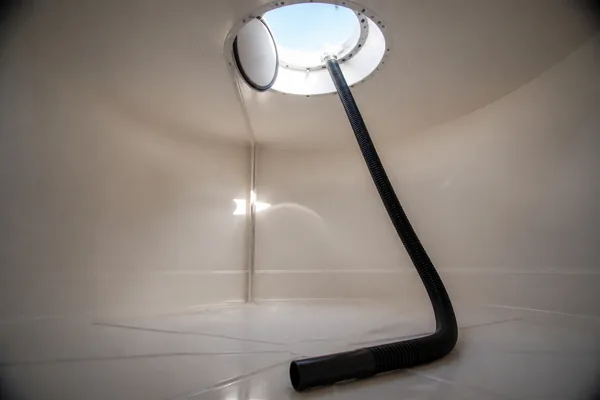
Sediment in Al Mahamid is heavier than in coastal districts because coarse dry dust settles quickly, so vacuuming takes longer and the tank floor is cleaned twice.
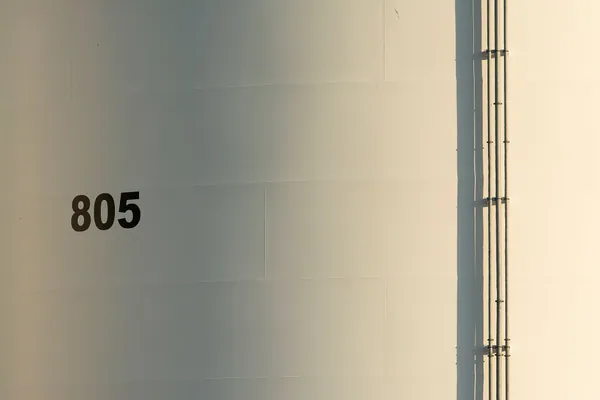
Tank walls and floor are covered in a layer of dust and compacted sediment, and manual scrubbing removes every layer because old concrete tanks crack if high-pressure water is used.
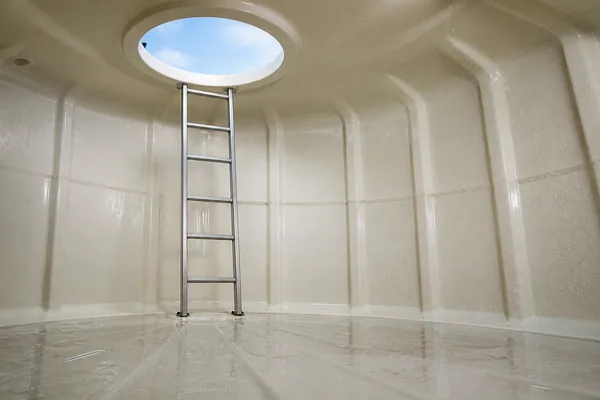
Disinfectant kills microorganisms and algae, then the final rinse removes any disinfectant residue before the tank is refilled.
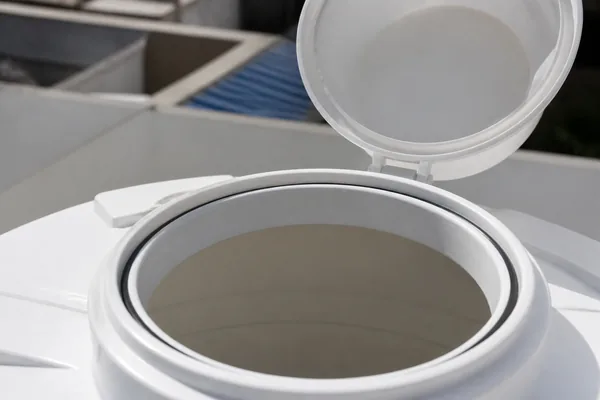
The lid is checked during the visit because broken or exposed lids are the primary cause of contamination returning within weeks of cleaning.
The supply into the tank is shut and the tank is drained completely.
The sludge on the floor is scooped and pumped out first.
The biofilm on the walls is physically scrubbed off.
With the walls and floor clean, a disinfectant made for drinking-water storage is applied and given time to act on every surface.
The disinfectant and any loosened residue are rinsed down and pumped out, so the first tank of water after us is not carrying it.
We check the cover seal and inlet before refilling, so dust and insects stay out, then start the refill while you watch it run clear.
Mixed district: shops at street level with homes above them
Al Mahamid is mixed use: food shops at ground level depend on clean water for food and drink preparation, and the homes above share the tank for drinking and washing alike.
Pumps to clear sludge, scrubbing to remove biofilm, and disinfectant meant for potable storage.
We send a team, not one person, so a tank is drained, cleaned, disinfected and refilled in a single visit rather than left open for days.
We look at the lid seal and inlet, because a tank that got dirty fast usually has a way in.
Nothing is closed until the tank is refilling and you have seen the water run clean.
Photographs from real jobs carried out by the crew.












The commitment is simple enough to actually keep: we do not leave until the tank is disinfected, refilling, and you have seen it for yourself.
East Jeddah lies furthest from the sea and closest to the open ground and hills beyond the ring roads, so the air is drier and the dust is coarser and paler than on the coast. It comes in under doors and settles on every flat surface overnight, making sofas, mattresses and curtains the heaviest part of the routine. Floors are mostly ceramic tile in the apartment districts and marble in the villa areas, both scratched by grit that is mopped rather than swept. Roof tank water leaves a grey film of sediment in baths and basins.
We provide these in Al Mahamid too, and more than one can share a single visit.



