
The right gear for drinking water
Pumps to clear sludge, scrubbing to remove biofilm, and disinfectant meant for potable storage.
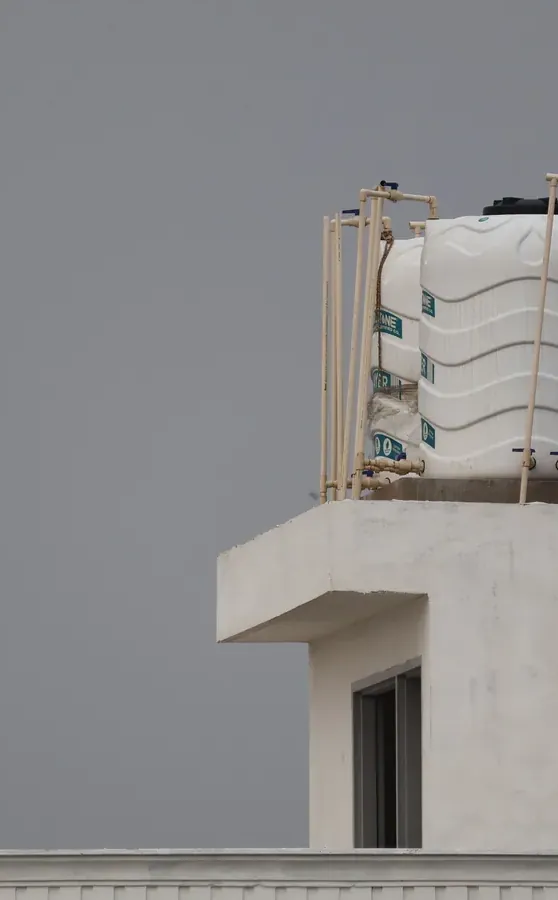
Al Hamra is an upmarket established district on the Red Sea seafront, where apartment towers and hotels stand alongside villas across a dense residential area. Tanks here sit in different locations: low on villa roofs and high on tower blocks, and each location requires a team that can reach the tank safely, drain it without disturbing neighbours, and work efficiently on crowded rooftops where there is little room to move.
Tanks in the high-rise towers here are deeper than in villas and require a team that moves safely on narrow rooftops and knows how to avoid sending water or tools down onto the homes below when draining. For the method itself, see what water tank cleaning involves.
The tall residential blocks in Al Hamra mean the tank sits on a height and is hazardous to reach. A team must climb with heavy equipment safely and must never allow tools or water to fall on homes below, and must never enter a flat to access the roof. We access from the basement or street level with proper planning and equipment.
In closely packed residential buildings water lines from one tank may serve multiple flats, or drain lines may be shared between separate tanks. We inspect all pipework before we drain to ensure we do not disturb a neighbour's water system, and we alert you to any shared connection that may be affected.
Proximity to the sea and high humidity mean the water in the tank changes rapidly: salt taste emerges, algae smell develops, water turns cloudy. Full cleaning with strong disinfection is more critical here than in inland districts, and the final rinse must be thorough to clear every trace of salt and biological growth.
Al Hamra overlooks the Red Sea directly with high residential density in closely packed apartments and villas. Coastal humidity and salt-laden air are persistent year round, accelerating algae growth and mineral buildup inside storage tanks.
In the upmarket district on the Corniche, the tank may hold thick combined deposits of salt and algae, so we inspect closely with strong light to measure the depth of buildup.
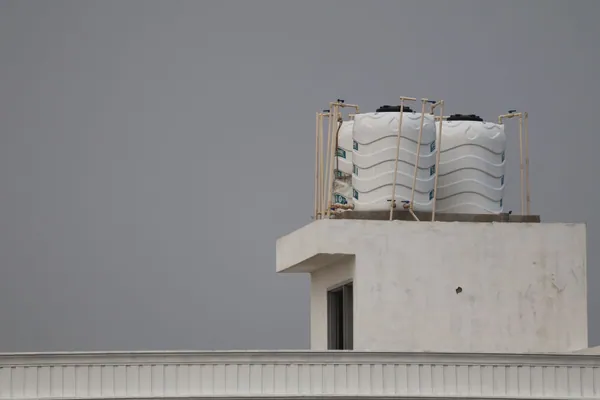
Draining a high-rise tower tank requires safe drainage from the roof without water flowing onto homes below, so we run a long hose and collect water in a portable tank.
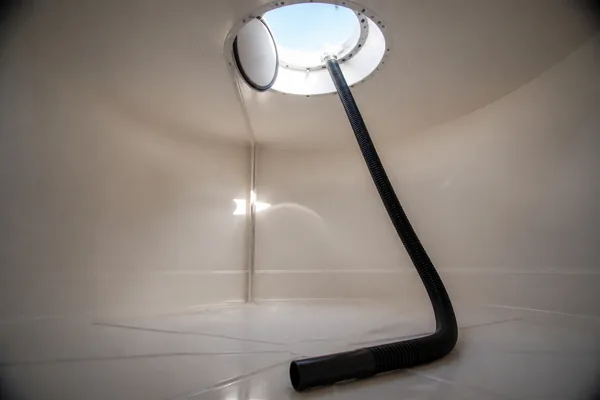
Sediment removal from the tank floor is harder on high towers because we work on a narrow exposed rooftop and may need several passes to ensure no residue remains in the crevices.
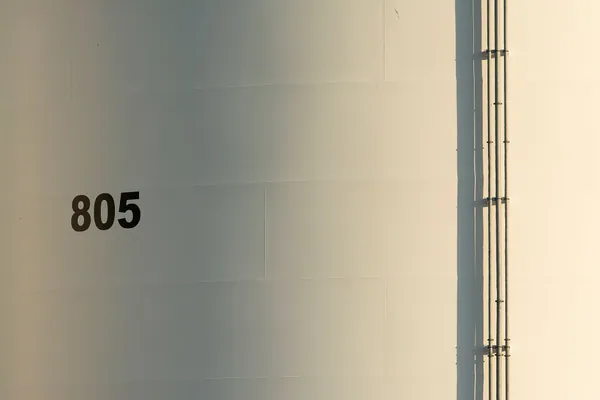
Scrubbing the walls and floor takes considerable time here because salt and algae are rooted deep, so we work with two people at once to cover all surfaces thoroughly.
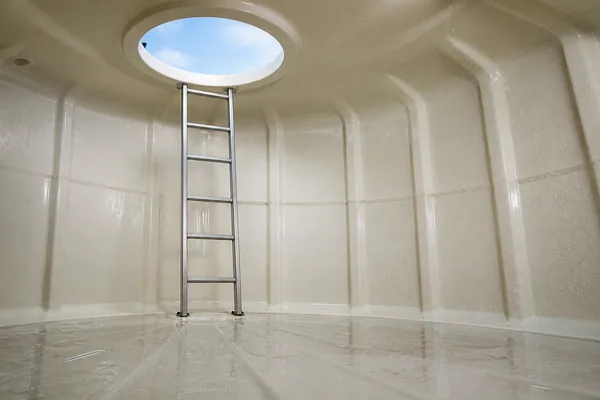
Disinfection is particularly strong here because humidity and salt have already created a rich environment for bacteria, and we use a certified disinfectant approved for drinking water use.
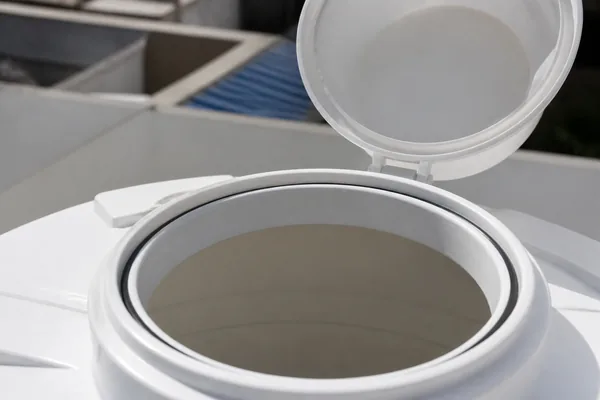
The final rinse takes considerable time on towers because we must ensure no salt taste, no odour and no algae residue remains before we hand the tank over clean and ready.
The supply into the tank is shut and the tank is drained completely.
The sludge on the floor is scooped and pumped out first.
The biofilm on the walls is physically scrubbed off.
With the walls and floor clean, a disinfectant made for drinking-water storage is applied and given time to act on every surface.
The disinfectant and any loosened residue are rinsed down and pumped out, so the first tank of water after us is not carrying it.
We check the cover seal and inlet before refilling, so dust and insects stay out, then start the refill while you watch it run clear.
Pumps to clear sludge, scrubbing to remove biofilm, and disinfectant meant for potable storage.
We send a team, not one person, so a tank is drained, cleaned, disinfected and refilled in a single visit rather than left open for days.
We look at the lid seal and inlet, because a tank that got dirty fast usually has a way in.
Nothing is closed until the tank is refilling and you have seen the water run clean.
Photographs from real jobs carried out by the crew.












The commitment is simple enough to actually keep: we do not leave until the tank is disinfected, refilling, and you have seen it for yourself.
Coastal area: high humidity and salt air through the year
The coastal environment in Al Hamra means the tank faces direct sea salt exposure and persistent high humidity, so salt and algae deposits accumulate faster than in inland areas. Regular cleaning every six months instead of annually is necessary to keep the water safe and clean.
We provide these in Al Hamra too, and more than one can share a single visit.



