
The right gear for drinking water
Pumps to clear sludge, scrubbing to remove biofilm, and disinfectant meant for potable storage.
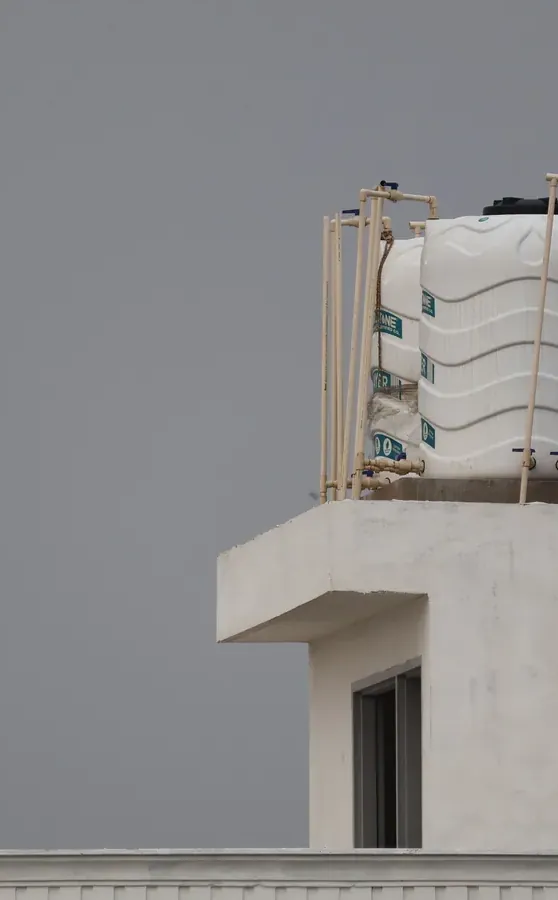
Water tanks in Al Wadiyah reflect the district's continuous building work. Vacant plots sit between homes, construction machinery operates around the corner, and dirt roads are still being improved. Sand and cement from nearby projects reach the tank before the paint dries on newly built walls, turning water grey from the first week of occupancy.
Brand new tanks in Al Wadiyah fill with fine sand and cement before weeks have passed since handover: even the newest homes suffer grey discoloured water. For the method itself, see the full water tank cleaning page.
Al Wadiyah is actively developing, and newly installed or newly built tanks often sit surrounded by ongoing construction projects. Excavators, concrete mixers and lorries disturb sand from desert soil. This dust is not the fine urban kind; it is coarse sand that clogs pipes and settles rapidly as a layer on the tank floor.
New homes in Al Wadiyah sometimes come with sealed tanks never opened, or tanks holding stagnant water from construction weeks. Even a brand new tank fills with sand and cement from building phases. First cleaning is essential before the water is truly safe to use.
Vacant land around a new villa means exposed soil and desert winds carry sand from all directions. Rooftop tanks or rear yard tanks receive desert sand directly. Even drains and pipework allow sand to enter through weak seal points, so protection from one side is not enough.
Al Wadiyah is a new development under Jeddah's Taybah sub-municipality, and ongoing construction activity nearby means industrial dust and exposed ground continuously expose tanks to building pollutants.
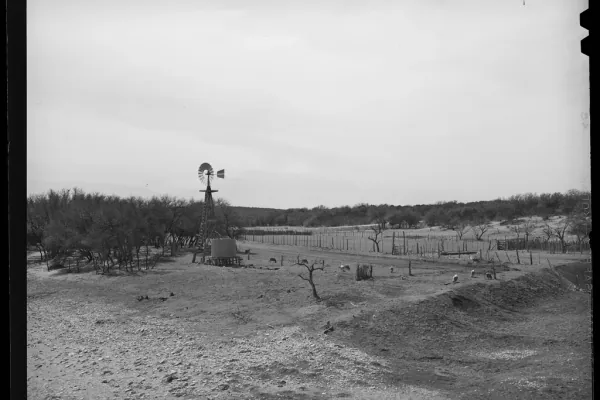
Inspection of new tanks in Al Wadiyah focuses on construction debris: dried cement and sand may accumulate on the floor even if the tank looks clean from outside.
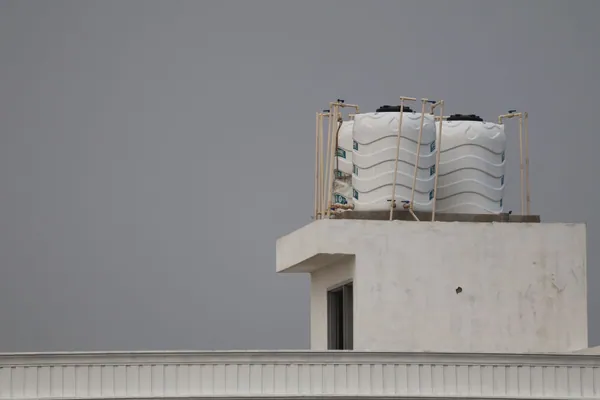
Complete drainage reveals the true condition: water may be grey or brown, with a layer of fine sand visible on the floor after emptying.
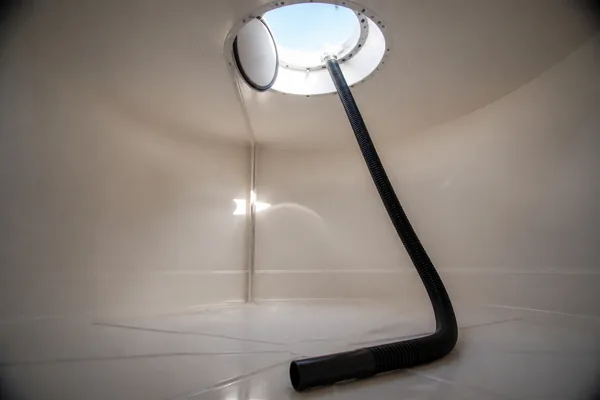
Deposits here are sandy rather than mineral: strong suction must remove every grain of sand and fine particle without leaving traces that will resettle.
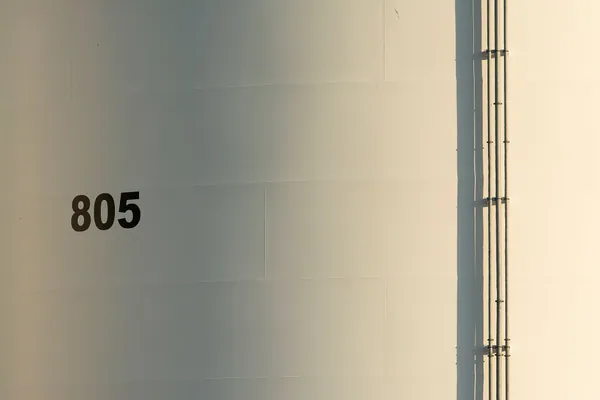
Wall scrubbing targets dried cement removal: any building residue on walls must be eliminated completely as it promotes rapid algal growth in damp conditions.
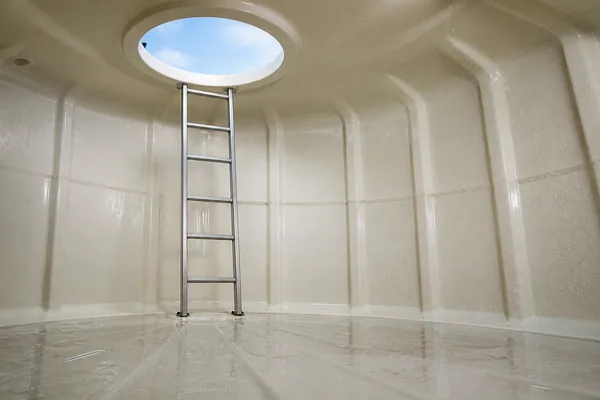
Disinfection in new tanks is crucial: humid conditions and dust from construction encourage rapid microbe growth, so full disinfection ensures clean water from a newly cleaned tank.
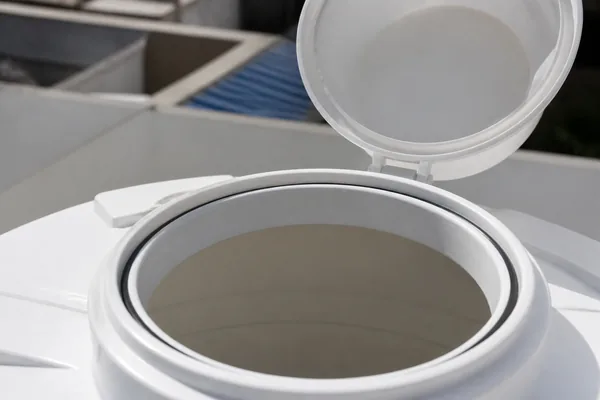
Final rinse must be thorough: any sand or cement residue will appear immediately in water the moment a tap opens in the newly occupied villa.
The supply into the tank is shut and the tank is drained completely.
The sludge on the floor is scooped and pumped out first.
The biofilm on the walls is physically scrubbed off.
With the walls and floor clean, a disinfectant made for drinking-water storage is applied and given time to act on every surface.
The disinfectant and any loosened residue are rinsed down and pumped out, so the first tank of water after us is not carrying it.
We check the cover seal and inlet before refilling, so dust and insects stay out, then start the refill while you watch it run clear.
Pumps to clear sludge, scrubbing to remove biofilm, and disinfectant meant for potable storage.
We send a team, not one person, so a tank is drained, cleaned, disinfected and refilled in a single visit rather than left open for days.
We look at the lid seal and inlet, because a tank that got dirty fast usually has a way in.
Nothing is closed until the tank is refilling and you have seen the water run clean.
Photographs from real jobs carried out by the crew.












The commitment is simple enough to actually keep: we do not leave until the tank is disinfected, refilling, and you have seen it for yourself.
New development: ongoing construction and vacant plots between the homes
New development districts mean the tank faces continuous pressure from sand, cement and desert dust: early cleaning and frequent maintenance are essential during active construction, and additional tank protection such as screens or improved seals may be needed to prevent pollutants from a developing district entering the water supply.
We provide these in Al Wadiyah too, and more than one can share a single visit.



