
The right gear for drinking water
Pumps to clear sludge, scrubbing to remove biofilm, and disinfectant meant for potable storage.
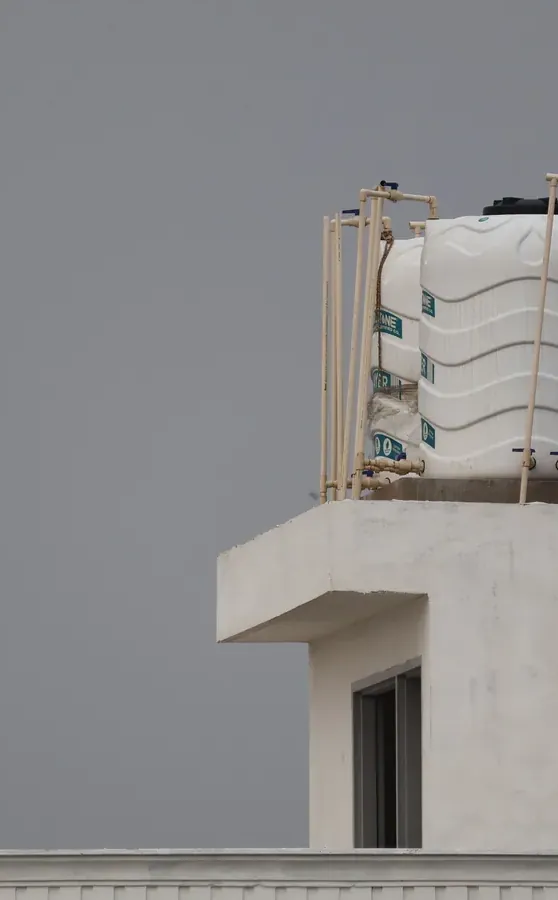
Al Aqeeq is a subdivision within the Obhur Al Shamaliyah development in north Jeddah, where modern villas sit among vacant plots and half finished streets, with building still under way around each villa. New tanks are sealed better, but fine beach sand enters through every small vent and seam, faint salt air leaves a thin deposit on walls, and moisture from the nearby coast feeds black mould in tank corners fast.
New villas here have large gardens with watering systems, and fine sand enters the tank with every fill cycle. Water can turn cloudy quickly despite the tank and villa both being brand new. For the method itself, see our water tank cleaning service in detail.
Building continues around the villas, raising dust daily and leaving bare soil. Fine sand enters the tank with every irrigation cycle and every refill. A brand new sealed tank cannot keep it out, and sediment settles fast despite the villa not yet being occupied.
Obhur is very close. Salt air leaves a pale deposit on walls and glass, enters the tank on wind and sprinkler mist. High sea moisture keeps tank walls damp constantly, and black mould colonises tank corners at an accelerated rate.
Brand new villas have modern metal gaskets and seals, but salt air from the sea may corrode them quickly. Seals can weaken within six months of exposure to very high salt humidity.
A new district within a recent urban extension still under development, modern villas with ongoing building work, location very close to the coast with persistent high humidity and faint salt air.
Inspecting a new tank focuses on seals, walls and the lid; smooth walls may trap fine sand in tank corners.
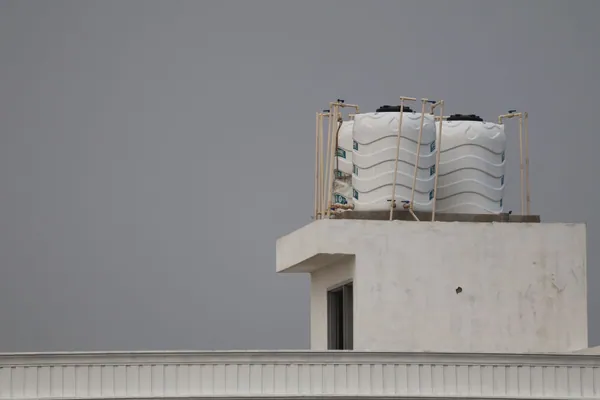
Complete draining; water in a new villa may be cloudy with sand and salt even after a week of refilling.
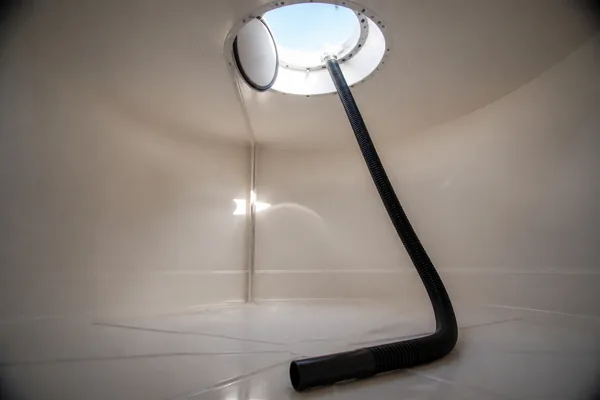
Sediment is fine sand and faint salt, so vacuum extraction is gentle to avoid stirring sand particles, and a soft rinse may be needed for the floor.

Hand scrubbing is thorough but gentler than in soot heavy areas. Smooth porcelain walls do not trap grease but may hold faint salt and black mould.
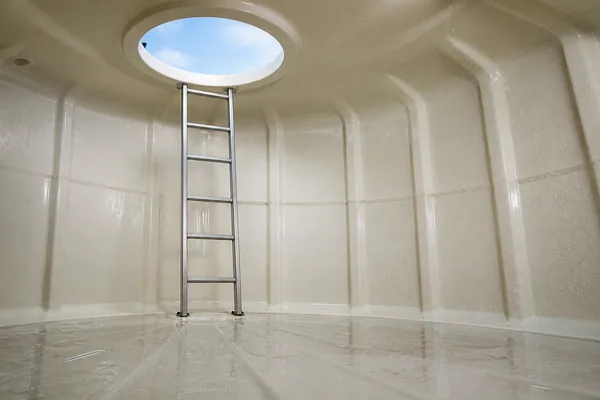
Disinfection is essential because high moisture promotes mould fast. The final rinse removes salt and mould residue.
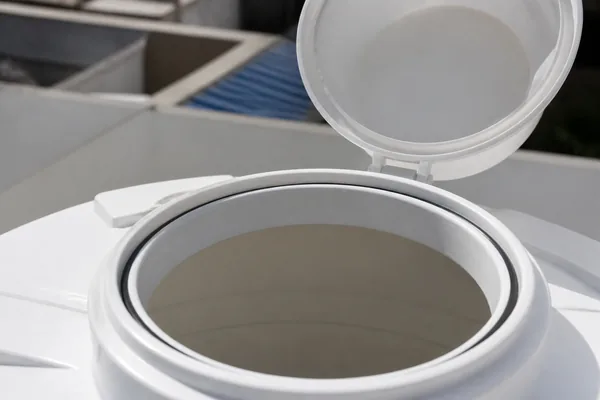
Lid and seals are inspected carefully; sea humidity may corrode metal quickly, and additional sealant or protective covering may be recommended.
The supply into the tank is shut and the tank is drained completely.
The sludge on the floor is scooped and pumped out first.
The biofilm on the walls is physically scrubbed off.
With the walls and floor clean, a disinfectant made for drinking-water storage is applied and given time to act on every surface.
The disinfectant and any loosened residue are rinsed down and pumped out, so the first tank of water after us is not carrying it.
We check the cover seal and inlet before refilling, so dust and insects stay out, then start the refill while you watch it run clear.
Pumps to clear sludge, scrubbing to remove biofilm, and disinfectant meant for potable storage.
We send a team, not one person, so a tank is drained, cleaned, disinfected and refilled in a single visit rather than left open for days.
We look at the lid seal and inlet, because a tank that got dirty fast usually has a way in.
Nothing is closed until the tank is refilling and you have seen the water run clean.
Photographs from real jobs carried out by the crew.












The commitment is simple enough to actually keep: we do not leave until the tank is disinfected, refilling, and you have seen it for yourself.
New development: ongoing construction and vacant plots between the homes
Ongoing building combined with a coastal location means a new tank faces significant environmental pressure from the start. Modern villas here need more frequent cleaning than similar villas in inland neighbourhoods.
We provide these in Al Aqeeq too, and more than one can share a single visit.



