
The right gear for drinking water
Pumps to clear sludge, scrubbing to remove biofilm, and disinfectant meant for potable storage.
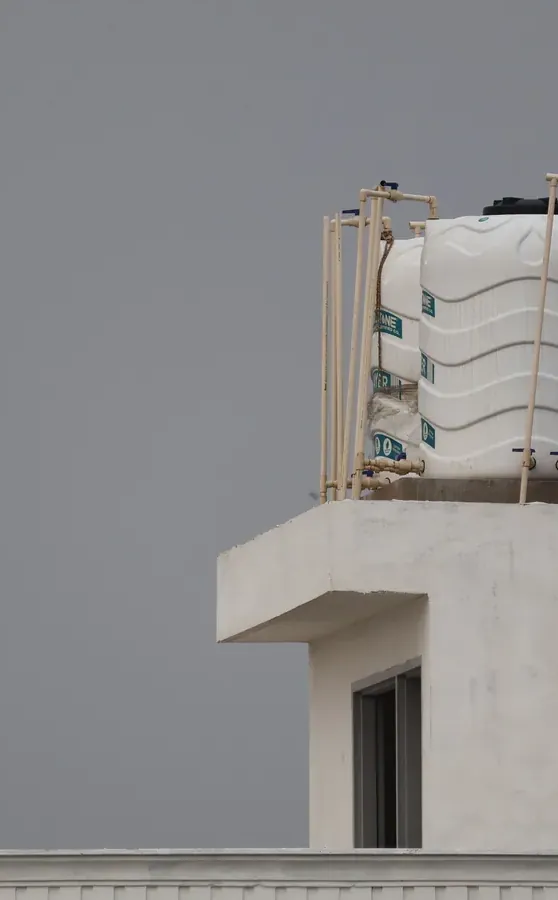
Al Barakah is a new residential subdivision in south Jeddah with modern villas and new tanks, but its location between the sea and heavy transport routes brings dark diesel dust and salt. Ongoing construction around the district and vacant plots raise the particulate load in the air, and the new tanks become visibly fouled within months.
New tanks in Al Barakah need cleaning within just one year of construction, because dark diesel dust from the roads and sea salt combined with ongoing site work accumulate very fast. For the method itself, see what water tank cleaning involves.
South Jeddah combines diesel soot from heavy roads with coastal moisture and salt. This mixture leaves dark, sticky sediment on the tank floor that does not wash away easily.
Open land, building work and excavation around Al Barakah lift fine dust and sand. This enters tanks even where lids are fitted reasonably tight.
A brand new tank begins spotless, so any dust particle shows clearly. Within months in a polluted location, water turns brown or grey and residents notice at once.
Al Barakah is split by Al Lith Road into two sections, surrounded by open land and incomplete spaces. The south Jeddah location between sea and heavy routes means thicker, oilier dust than northern areas.
Before draining, we check the tank, lids and seals, because coastal moisture and salt cause metal corrosion and slow leaks.
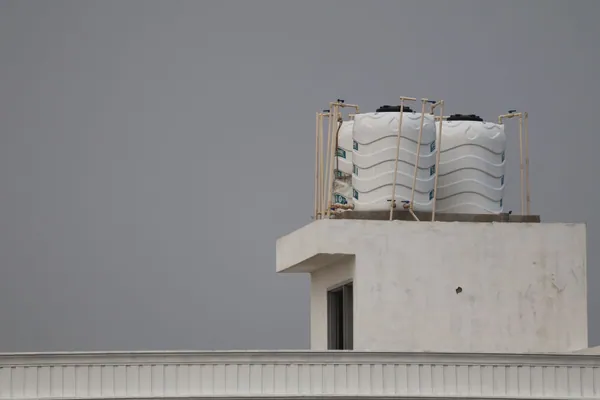
Draining a tank in Al Barakah reveals dark sticky sediment from the mix of diesel, salt and construction dust.
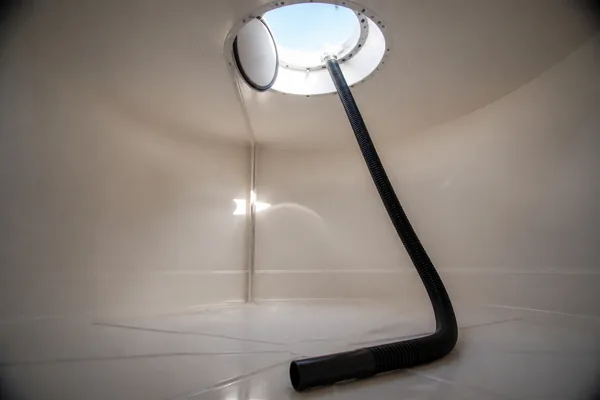
Sediment from a polluted location like Al Barakah does not rinse easily. We use strong suction and repeated scrubbing.
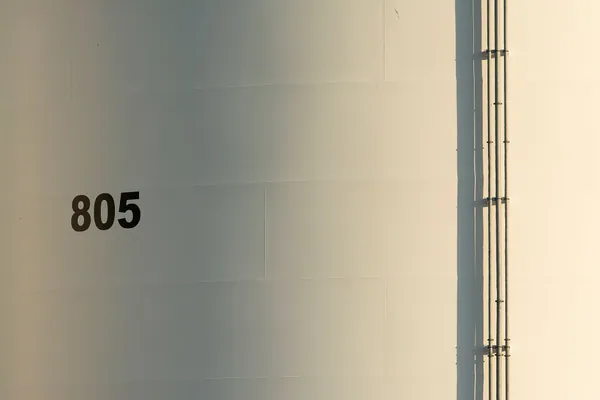
Walls and floor are scrubbed hard to remove the mould and algae that form from sea humidity and heat.
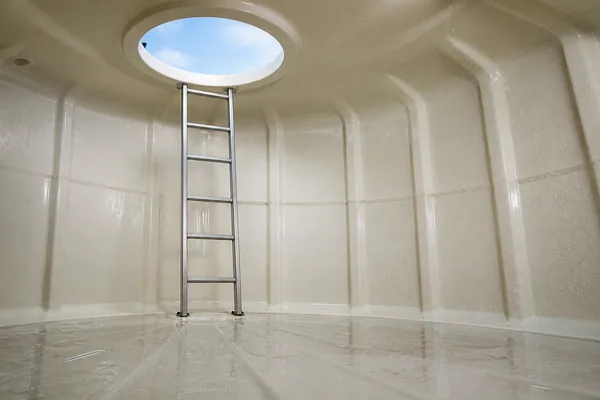
Disinfection after scrubbing stops mould and algae returning, and this is essential in a damp district like Al Barakah.
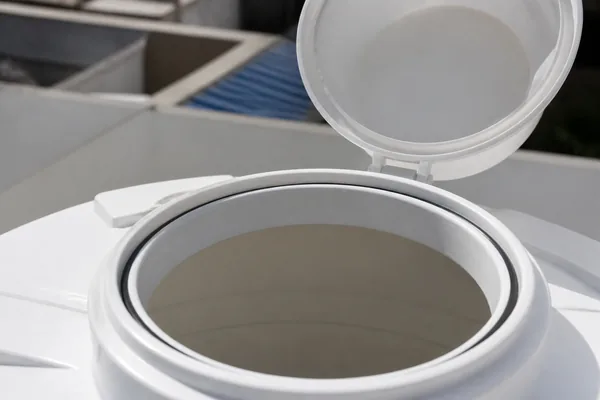
We inspect the lid for cracks and corrosion, because salt and moisture accelerate deterioration and allow dust to seep in.
The supply into the tank is shut and the tank is drained completely.
The sludge on the floor is scooped and pumped out first.
The biofilm on the walls is physically scrubbed off.
With the walls and floor clean, a disinfectant made for drinking-water storage is applied and given time to act on every surface.
The disinfectant and any loosened residue are rinsed down and pumped out, so the first tank of water after us is not carrying it.
We check the cover seal and inlet before refilling, so dust and insects stay out, then start the refill while you watch it run clear.
Villas in Al Barakah reach easily from Al Lith Road and 60th Street, which run through and around the district and give clear access to tank locations from major routes.
Pumps to clear sludge, scrubbing to remove biofilm, and disinfectant meant for potable storage.
We send a team, not one person, so a tank is drained, cleaned, disinfected and refilled in a single visit rather than left open for days.
We look at the lid seal and inlet, because a tank that got dirty fast usually has a way in.
Nothing is closed until the tank is refilling and you have seen the water run clean.
Photographs from real jobs carried out by the crew.












The commitment is simple enough to actually keep: we do not leave until the tank is disinfected, refilling, and you have seen it for yourself.
South Jeddah runs from the port and the industrial city down towards Al Khumrah, and homes here sit between the sea and the heavy goods roads. The dust is darker and oilier than in the north, a mix of diesel soot and workshop grit, and it clings to net curtains, window sills and the tops of kitchen cupboards. Floors in the older low rise housing are often plain cement or ceramic tile that darkens where soot is walked in. Humidity from the coast adds mildew in bathrooms and a musty smell in stored fabrics.
We provide these in Al Barakah too, and more than one can share a single visit.



