
The right gear for drinking water
Pumps to clear sludge, scrubbing to remove biofilm, and disinfectant meant for potable storage.
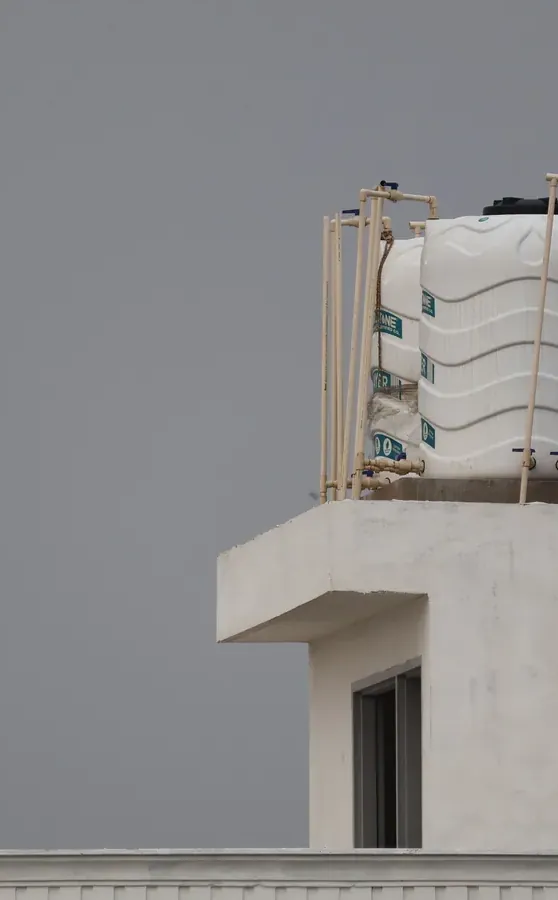
Al Quraiyat is an old popular quarter in south Jeddah with high residential density. Tanks sit on rooftops of crowded apartment buildings between the sea and the heavy goods roads. Tanks here suffer from coastal humidity and diesel soot from trucks, and with many flats drawing water fast, sediment builds up just as quickly. The darker, oilier dust differs from ordinary sediment.
Tanks in Al Quraiyat carry darker, oilier deposits than other quarters because diesel soot settles on the water surface forming a layer that sticks hard to the walls. For the method itself, see our water tank cleaning service in detail.
Al Quraiyat sits between the port and industrial zones with heavy truck routes passing through. Fine black diesel soot carries burnt oil residue, enters the tank through gaps, and leaves a stubborn oily layer on walls that plain rinsing cannot remove.
Al Quraiyat is close to the sea so humidity is high year round. Oily soot traps moisture on tank walls, and mildew smell develops even in a sealed tank. The combination of salt air and oil fumes creates odours that simple cleaning does not reach.
Al Quraiyat flats are crowded and families use water quickly, so the tank empties fast and refills fast. Less time for sediment to settle means particles stay suspended longer, and the cycle repeats constantly.
Al Quraiyat lies between Al Thaalibah to the west and the Nazlah quarters to the east, between the sea on one side and heavy truck routes on the other.
The tank in Al Quraiyat carries a black oily film on walls from soot, not ordinary brown sediment. The smell is strong and the oil sticks hard.
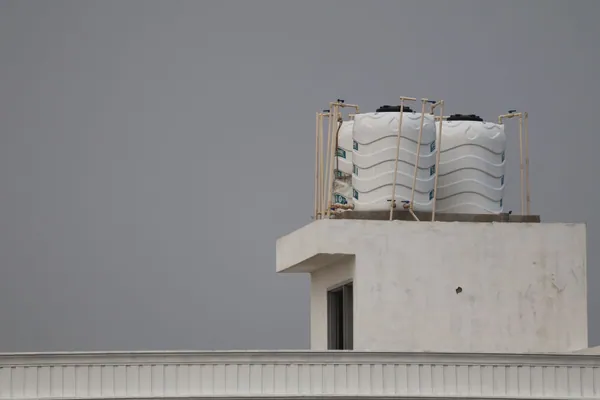
Draining takes extra time because water volume is high from many flats, and shared drainage means the tank is always full. The soot and silt make water slightly heavier.
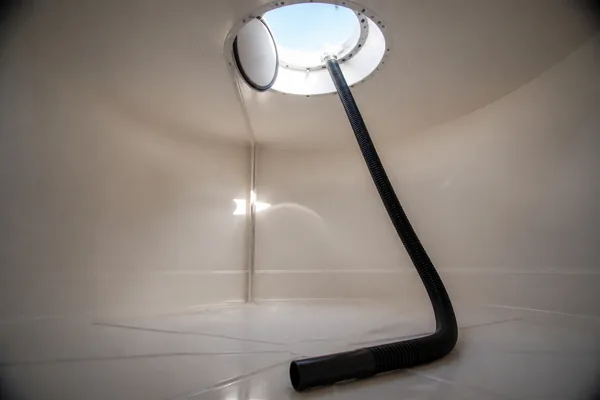
Sediment is a mix of soot, oil, dust and salt from coastal humidity. Soot will darken water again soon after draining if pipes are not cleaned separately.
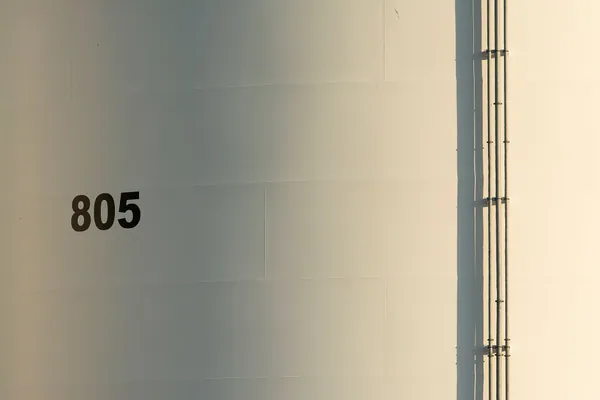
Walls and floor are scrubbed hard by hand because oily soot does not come off with plain water. Degreasing agents are needed and scrubbing must be thorough to remove the oily smell.
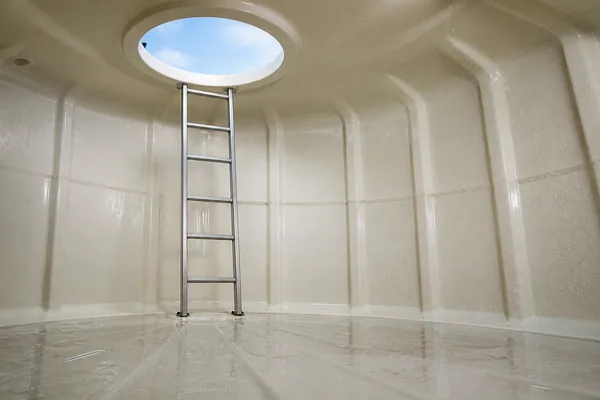
Disinfection is essential here because soot and humidity together foster strong bacterial growth. Chemicals must dwell longer to penetrate the oily smell and kill microbes hiding in soot residue.
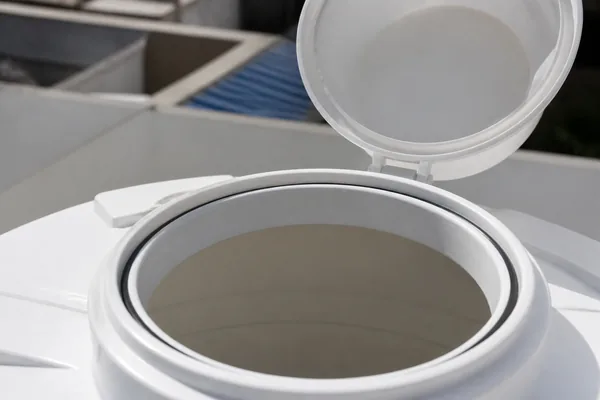
Final inspection confirms the smell is completely gone, water is clear with no tint, and the lid seals tight against soot and humidity from the street.
The supply into the tank is shut and the tank is drained completely.
The sludge on the floor is scooped and pumped out first.
The biofilm on the walls is physically scrubbed off.
With the walls and floor clean, a disinfectant made for drinking-water storage is applied and given time to act on every surface.
The disinfectant and any loosened residue are rinsed down and pumped out, so the first tank of water after us is not carrying it.
We check the cover seal and inlet before refilling, so dust and insects stay out, then start the refill while you watch it run clear.
We reach the tank via King Khalid Road or Al Falah Street, which border the quarter. The College of Telecommunications and Electronics is nearby and helps us locate the exact building. Houses are old and tightly packed, so a precise address is essential before we arrive.
Pumps to clear sludge, scrubbing to remove biofilm, and disinfectant meant for potable storage.
We send a team, not one person, so a tank is drained, cleaned, disinfected and refilled in a single visit rather than left open for days.
We look at the lid seal and inlet, because a tank that got dirty fast usually has a way in.
Nothing is closed until the tank is refilling and you have seen the water run clean.
Photographs from real jobs carried out by the crew.












The commitment is simple enough to actually keep: we do not leave until the tank is disinfected, refilling, and you have seen it for yourself.
South Jeddah runs from the port and the industrial city down towards Al Khumrah, and homes here sit between the sea and the heavy goods roads. The dust is darker and oilier than in the north, a mix of diesel soot and workshop grit, and it clings to net curtains, window sills and the tops of kitchen cupboards. Floors in the older low rise housing are often plain cement or ceramic tile that darkens where soot is walked in. Humidity from the coast adds mildew in bathrooms and a musty smell in stored fabrics.
We provide these in Al Quraiyat too, and more than one can share a single visit.



