
The right gear for drinking water
Pumps to clear sludge, scrubbing to remove biofilm, and disinfectant meant for potable storage.
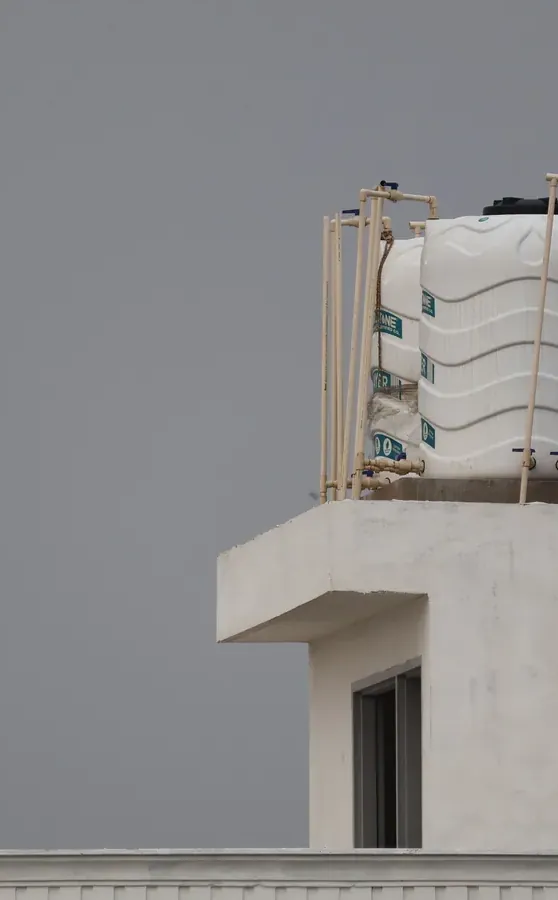
Al Zahra is a modern residential district in northwest Jeddah between King Abdulaziz Road and Hira Street, filled with contemporary villas and apartment blocks. Tanks sit on roofs and terraces under direct sun all day, which accelerates algae and bacterial growth and increases salt and mineral concentration as water evaporates. Cleaning is not optional here, it is essential.
Tanks on Al Zahra rooftops need intensive cleaning every three months due to heat and rapid evaporation concentrating contaminants. For the method itself, see what water tank cleaning involves.
Tanks exposed on rooftops heat to extreme temperatures in summer. This accelerates green and brown algae across every wall. Removal needs equipment reaching every corner and chemicals killing the microbes binding algae together.
Water evaporates fast from exposed tanks in heat, leaving salt and minerals concentrated on the floor and walls. Disinfection alone cannot remove these deposits; mechanical scrubbing and descaling agents are needed.
Sun and extreme heat cause expansion and contraction stress in metal and concrete tanks. This creates fine cracks that leak water or allow contaminants in. Tank exterior inspection for cracks is part of the job.
A modern district with tanks exposed on rooftops to direct sun and extreme heat. Exposed tanks heat rapidly, accelerating algae and organic contamination.
Pre-drain inspection checks for exterior cracks and leaks: rooftop tanks often hold far more sludge and algae than shaded underground tanks elsewhere.
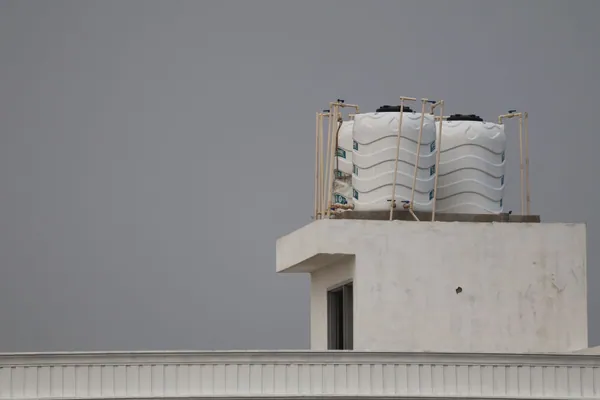
Draining rooftop tank water requires care: hot contaminated water produces steam, and discharge must run safely away from residents below.
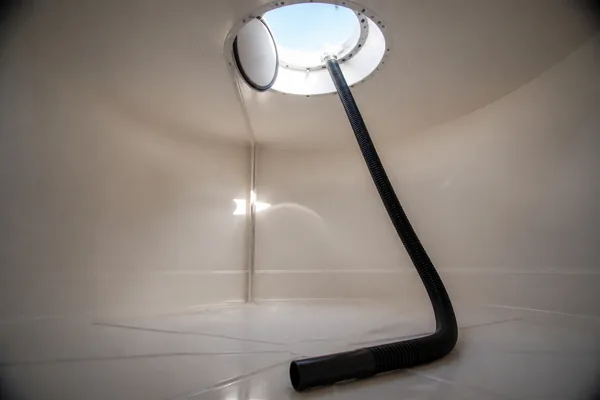
Sediment vacuuming from sun-exposed tanks usually reveals thick layers of dead algae and accumulated mineral salts.

Wall scrubbing with stiff brushes removes green and brown algae and biofilm slime causing foul water odour.
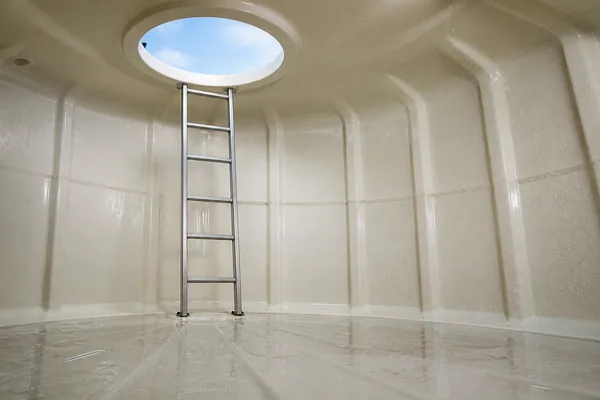
Post-scrubbing disinfection kills remaining bacteria and microbes bound to algae remnants; contact time must be longer for tanks experiencing extreme heat cycling.
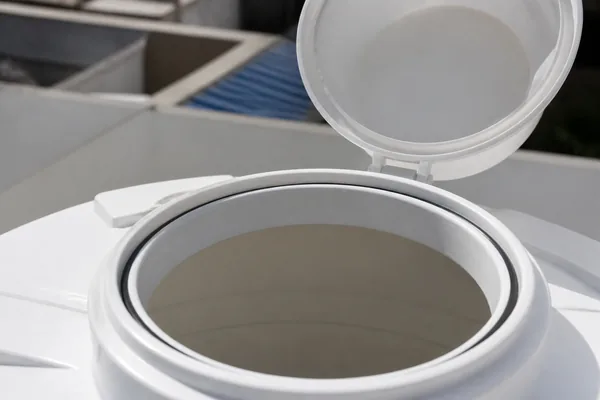
Lid and crack inspection is critical: broken lids are replaced and fine cracks sealed before the tank refills to prevent recontamination from airborne dust.
The supply into the tank is shut and the tank is drained completely.
The sludge on the floor is scooped and pumped out first.
The biofilm on the walls is physically scrubbed off.
With the walls and floor clean, a disinfectant made for drinking-water storage is applied and given time to act on every surface.
The disinfectant and any loosened residue are rinsed down and pumped out, so the first tank of water after us is not carrying it.
We check the cover seal and inlet before refilling, so dust and insects stay out, then start the refill while you watch it run clear.
Pumps to clear sludge, scrubbing to remove biofilm, and disinfectant meant for potable storage.
We send a team, not one person, so a tank is drained, cleaned, disinfected and refilled in a single visit rather than left open for days.
We look at the lid seal and inlet, because a tank that got dirty fast usually has a way in.
Nothing is closed until the tank is refilling and you have seen the water run clean.
Photographs from real jobs carried out by the crew.












The commitment is simple enough to actually keep: we do not leave until the tank is disinfected, refilling, and you have seen it for yourself.
West Jeddah faces the sea along the Corniche, and the flats and towers along it live with salt in the air all year. Salt settles on glass as a haze that plain water spreads rather than removes, and it works into balcony railings, outdoor fabric and the metal of window frames. Indoors, humidity keeps carpets and curtains slightly damp, so they hold odours and dust longer than in drier districts, and bathroom grout and shower glass show scale quickly. Wooden floors and doors swell a little in the wetter months.
We provide these in Al Zahra too, and more than one can share a single visit.



