
The right gear for drinking water
Pumps to clear sludge, scrubbing to remove biofilm, and disinfectant meant for potable storage.
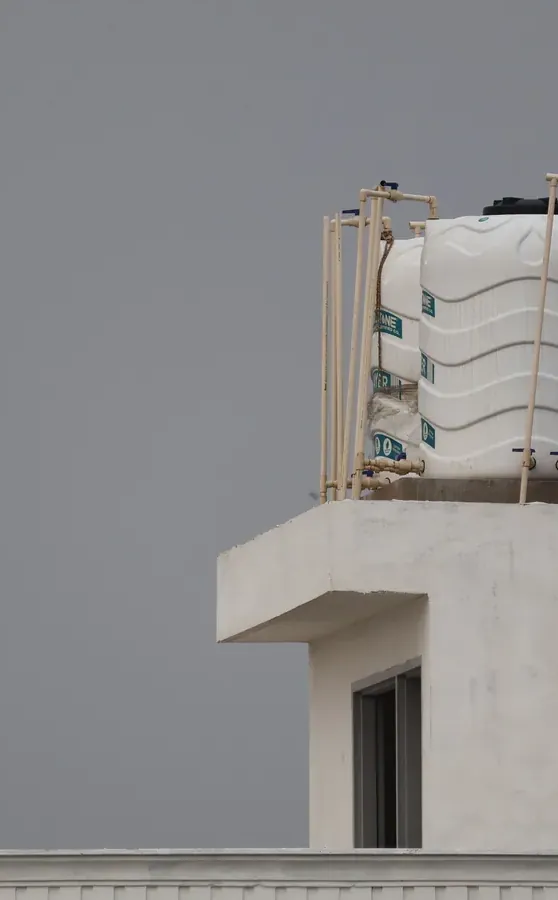
Al Najmah is a new residential development within the Jawharat Al Arous scheme in Obhur Al Shamaliyah, north Jeddah. Most villas here are recently completed and tanks are new, but ongoing construction and open ground around them mean fine sand dust finds its way in under even the newest lids. Tanks here need regular cleaning because dust penetrates new seals in this development phase.
Open ground and active construction around new villas means fine dust falls on rooftops constantly, and even new tank lids cannot keep all of it out. For the method itself, see our water tank cleaning service in detail.
The development is still being built out, and building sites and heavy equipment around villas mean dust enters tanks faster than in completed districts. Sand-based sediment accumulates quickly even in newly installed tanks.
Tanks here are relatively new and lids are upgraded, but these cannot stop fine dust entirely, especially during windy seasons. Regular cleaning keeps the tank fit despite the environmental conditions.
Villas are widely spaced with large gaps between them, so the team may need time to reach each tank. Planning in advance is essential to avoid delays.
A subdivision within the Jawharat Al Arous scheme with most land divided into residential plots for villa construction. Many surrounding areas are still under active building, with earth moving equipment and open trenches nearby.
The team inspects the tank and assesses the amount of sand sediment settled, and checks for any leakage in the lid seal.
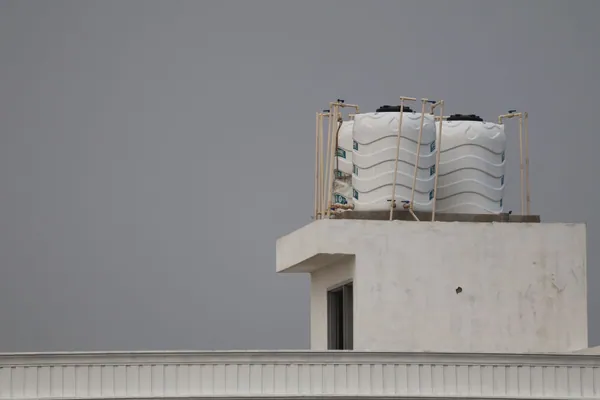
Drainage removes all old water and dust settled on the floor from the surrounding air and construction activity.
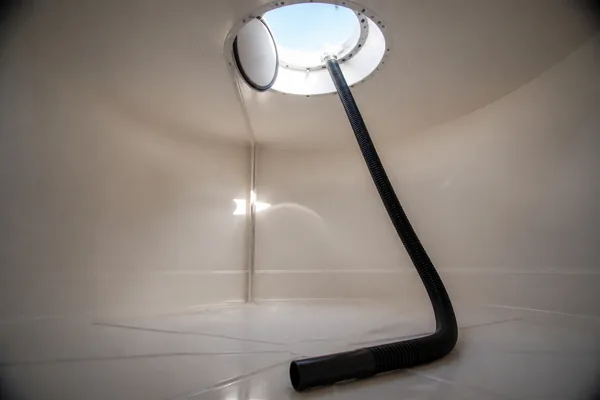
Sediment vacuuming focuses on removing fine sand deposits from the tank floor, particularly in new development areas.
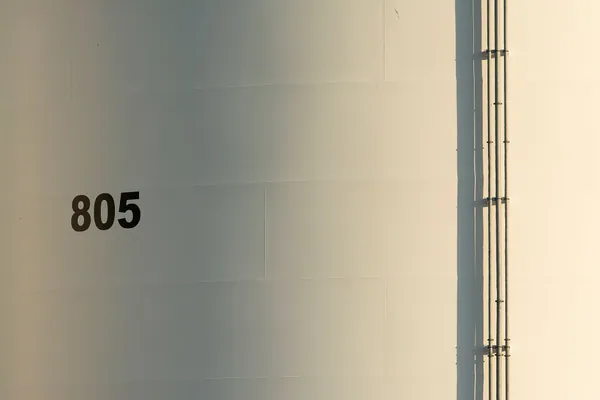
Scrubbing covers tank walls to clear any traces of dust and grit that have adhered to surfaces.
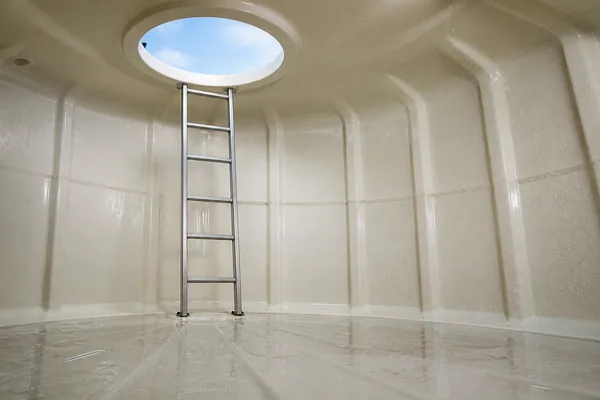
Disinfection follows complete cleaning, and the agent is safe for drinking water tanks and prevents bacterial regrowth.
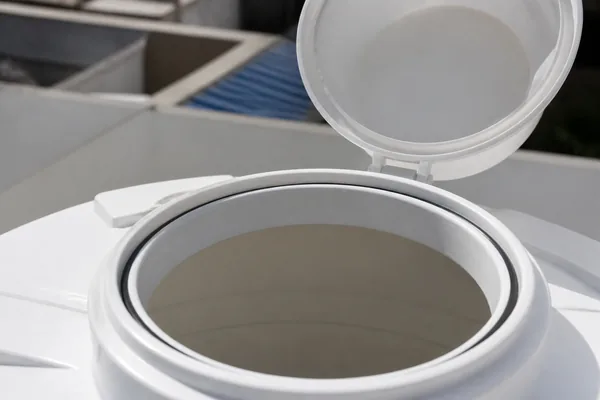
Final rinse and inspection confirm that the lid seals tightly and any openings that might allow dust ingress are addressed.
The supply into the tank is shut and the tank is drained completely.
The sludge on the floor is scooped and pumped out first.
The biofilm on the walls is physically scrubbed off.
With the walls and floor clean, a disinfectant made for drinking-water storage is applied and given time to act on every surface.
The disinfectant and any loosened residue are rinsed down and pumped out, so the first tank of water after us is not carrying it.
We check the cover seal and inlet before refilling, so dust and insects stay out, then start the refill while you watch it run clear.
Pumps to clear sludge, scrubbing to remove biofilm, and disinfectant meant for potable storage.
We send a team, not one person, so a tank is drained, cleaned, disinfected and refilled in a single visit rather than left open for days.
We look at the lid seal and inlet, because a tank that got dirty fast usually has a way in.
Nothing is closed until the tank is refilling and you have seen the water run clean.
Photographs from real jobs carried out by the crew.












The commitment is simple enough to actually keep: we do not leave until the tank is disinfected, refilling, and you have seen it for yourself.
North Jeddah is largely newer villa districts and compounds around Obhur and inland from it. Homes here tend to have marble or porcelain floors, large windows and a garden or courtyard, so the routine is set by what comes in from outside: fine sand carried on sandals, and sprinkler spray that dries to a chalky ring on tiles. Near the creek and the coast, sea air leaves a faint salt film on glass and on outdoor cushions, which stiffens fabric. Curtains and upholstery in these open plan rooms catch the dust that settles overnight.
We provide these in Al Najmah too, and more than one can share a single visit.



