
The right gear for drinking water
Pumps to clear sludge, scrubbing to remove biofilm, and disinfectant meant for potable storage.
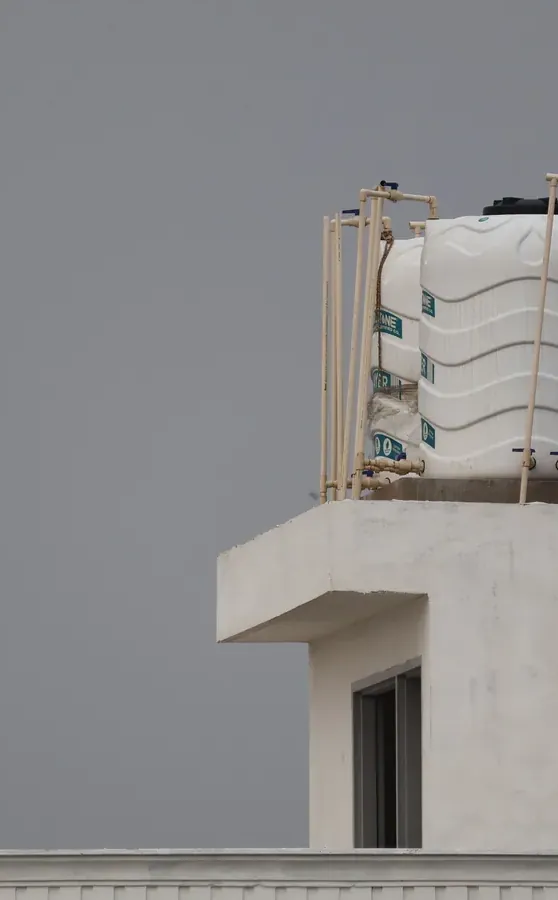
Al Rawasi is a mixed district with food shops at street level and homes stacked above them, often sharing one tank that serves both. The coarse dust of east Jeddah settles fast and thick in the base, and the water carries metallic rust from old shared pipes that connect many buildings.
Early morning water runs cloudy from shared tanks here, and grey sediment deposits settle fast on plastic tank walls in homes stacked above shops. For the method itself, see how we approach water tank cleaning.
The air here is drier and the dust coarser than it is on the coast, and it settles quickly at the bottom of the tank. Grey sediment fills basins and taps, leaving a brown film that does not clear with quick rinsing alone and must be scrubbed and vacuumed out.
The food business below uses tank water for cooking and cleaning, while flats above use it for drinking. Disinfection must be food-safe, and the timing must be coordinated with both the shop and the residents to avoid cutting water during trading hours.
The pipe network in the district is old, and water carries brown-red rust stains from corroded metal before it even enters the tank. Cleaning the tank alone does not fix pipes that keep rusting, and rust will return with the next refill.
A simple residential district in east Jeddah near valleys and hills, the air is drier and the coarse dust enters tanks quickly through doors and cracks.
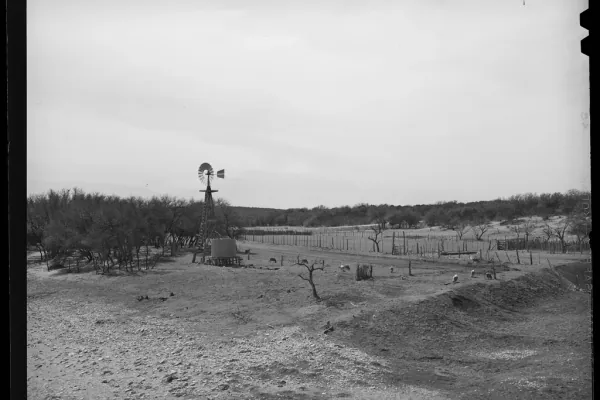
We check the plastic or concrete tank before draining and make sure the lid seals tightly; if not, dust enters the tank as fast as it was cleaned.
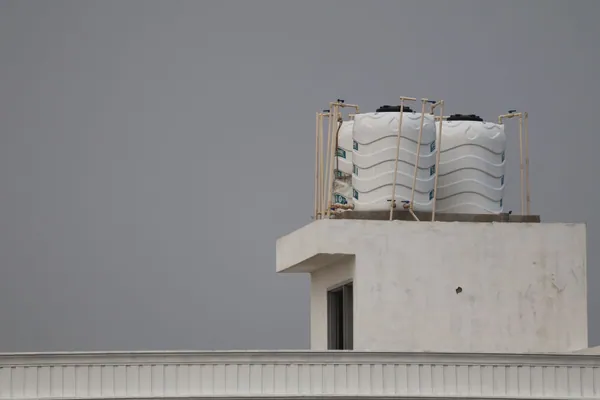
Full drainage is essential because the heavy grey sediment needs time to settle out of the water completely.
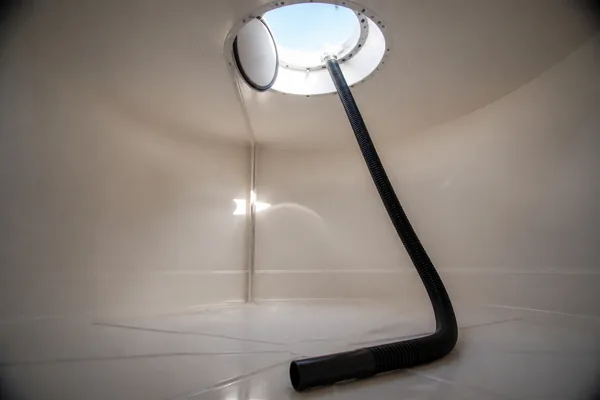
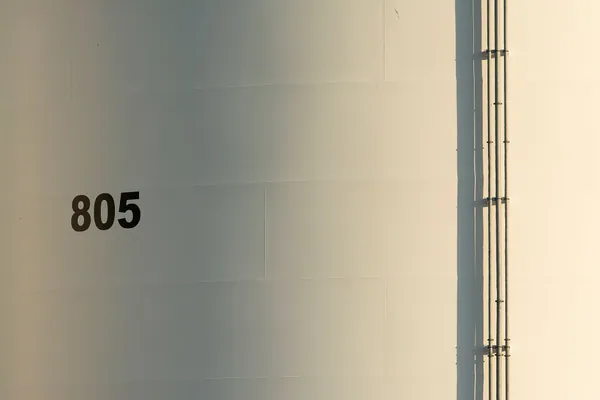
Grey sediment from east Jeddah dust clings to tank walls, and removing it requires powerful suction equipment and manual work.
Scrubbing the walls by hand removes the brown film that forms from sediment and old corroded pipes releasing particles into the water.
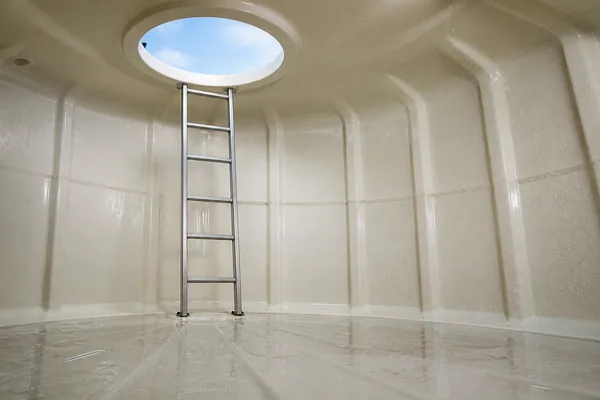
Disinfection must be food-safe because the shop below relies on clean water for cooking and food handling.
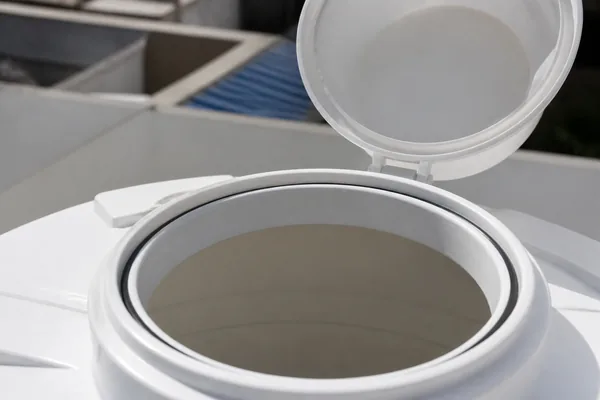
The final rinse must be thorough because the first water out may run cloudy, and the lid check ensures no dust can enter after we leave.
The supply into the tank is shut and the tank is drained completely.
The sludge on the floor is scooped and pumped out first.
The biofilm on the walls is physically scrubbed off.
With the walls and floor clean, a disinfectant made for drinking-water storage is applied and given time to act on every surface.
The disinfectant and any loosened residue are rinsed down and pumped out, so the first tank of water after us is not carrying it.
We check the cover seal and inlet before refilling, so dust and insects stay out, then start the refill while you watch it run clear.
Mixed district: shops at street level with homes above them
In a mixed district like Al Rawasi, the tank serves both a food business and residential homes. Cleaning must be food-safe, and coordination with both the shop and residents before work starts is essential so the shop does not lose water during service hours.
Pumps to clear sludge, scrubbing to remove biofilm, and disinfectant meant for potable storage.
We send a team, not one person, so a tank is drained, cleaned, disinfected and refilled in a single visit rather than left open for days.
We look at the lid seal and inlet, because a tank that got dirty fast usually has a way in.
Nothing is closed until the tank is refilling and you have seen the water run clean.
Photographs from real jobs carried out by the crew.












The commitment is simple enough to actually keep: we do not leave until the tank is disinfected, refilling, and you have seen it for yourself.
East Jeddah lies furthest from the sea and closest to the open ground and hills beyond the ring roads, so the air is drier and the dust is coarser and paler than on the coast. It comes in under doors and settles on every flat surface overnight, making sofas, mattresses and curtains the heaviest part of the routine. Floors are mostly ceramic tile in the apartment districts and marble in the villa areas, both scratched by grit that is mopped rather than swept. Roof tank water leaves a grey film of sediment in baths and basins.
We provide these in Al Rawasi too, and more than one can share a single visit.



