
The right gear for drinking water
Pumps to clear sludge, scrubbing to remove biofilm, and disinfectant meant for potable storage.
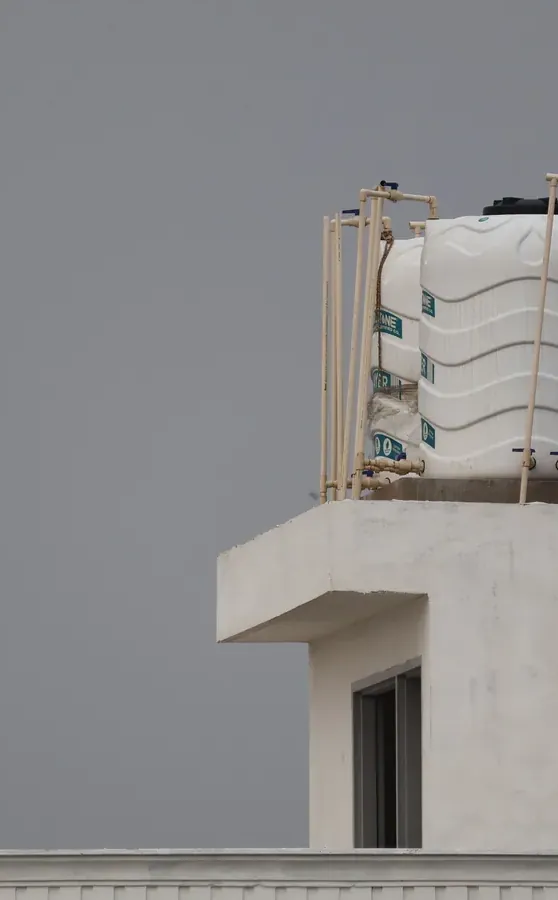
Ghulail is an old quarter in south Jeddah now undergoing full redevelopment after informal housing was cleared. The area now has vacant land, ongoing construction and mixed use. Tanks here face heavy construction dust, powdered material from excavations and demolition, and water carries thick grey particles mixed with black dust from construction machinery.
Tanks in Ghulail fill with thick sandy sediment mixed with black and grey construction dust. Water carries a thick grey colour from heavy building dust. For the method itself, see the full water tank cleaning page.
Ghulail is undergoing complete redevelopment with constant demolition and digging. Dust from construction and sand from excavation rises into the air and enters the tank through small gaps. The particles are larger and heavier than ordinary dust.
Excavators and dump trucks leave black soot in the air that mixes with sand. Water takes on a thick grey colour, sometimes with a tint of black in the first weeks of heavy digging.
Heavy material from excavation settles quickly on the tank floor, so sediment is very thick and deep compared to other quarters. It builds up to layers if the tank is not cleaned often.
Ghulail sits between Al Falah Road and the old quarantine site, the quarter is undergoing complete redevelopment with daily excavation and building. The ground is open with vacant plots between remaining homes.
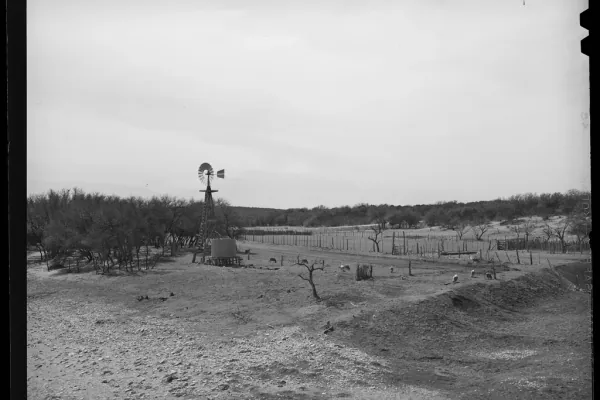
The tank in Ghulail carries heavy grey and black sediment from construction dust, not ordinary sand. Sediment is very thick and deep.
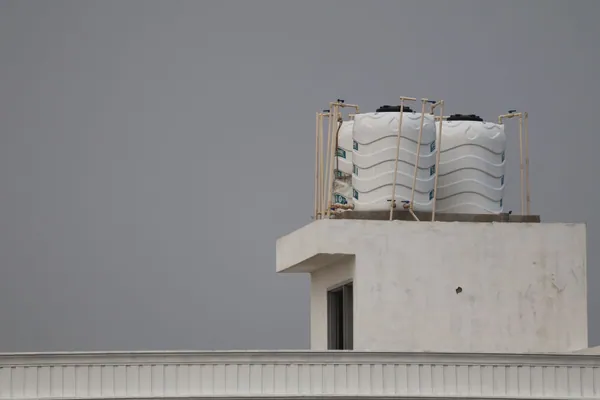
Draining is careful because heavy sediment may lodge in pipes. Water volume is high and shared drains may limit drainage speed.
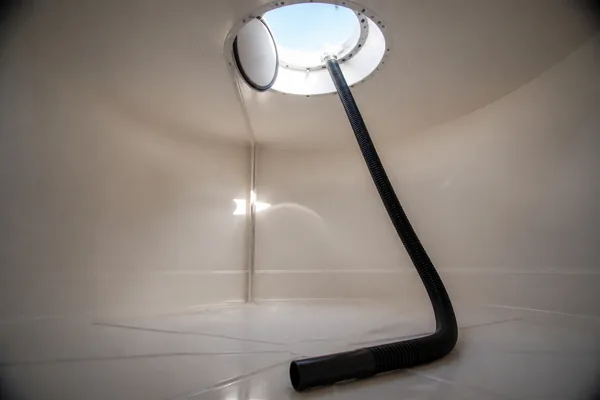
Sediment is a mix of heavy sand, black dust and powdered material from excavations, not pure. The weight is greater than sediment elsewhere.
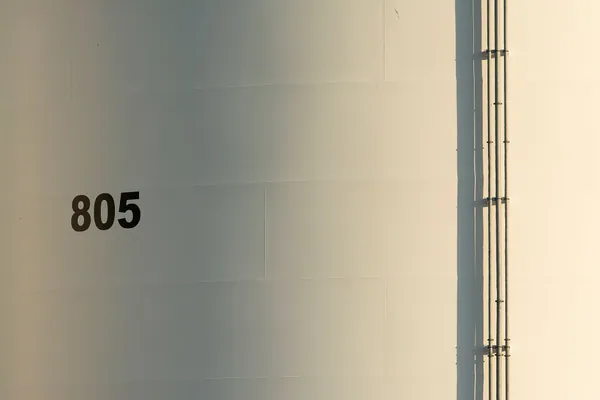
Walls and floor are scrubbed hard by hand because heavy sediment clings fiercely. The floor needs extra attention because sediment is deep and dense.
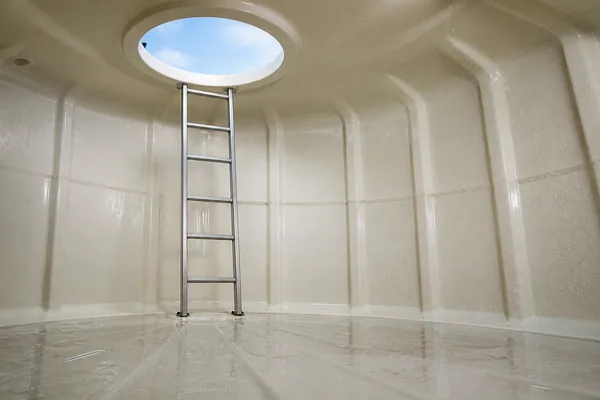
Disinfection is essential here because dust and moisture together foster strong bacterial growth. Chemicals must dwell longer to penetrate the thick sediment.
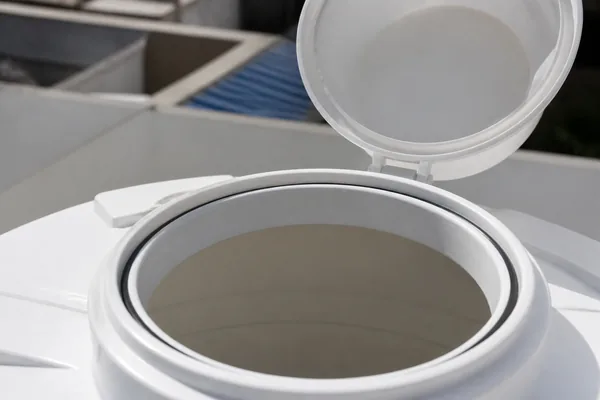
Final inspection confirms heavy sediment is completely gone, water is clear with no grey or black tint, and pipes are clear of dust.
The supply into the tank is shut and the tank is drained completely.
The sludge on the floor is scooped and pumped out first.
The biofilm on the walls is physically scrubbed off.
With the walls and floor clean, a disinfectant made for drinking-water storage is applied and given time to act on every surface.
The disinfectant and any loosened residue are rinsed down and pumped out, so the first tank of water after us is not carrying it.
We check the cover seal and inlet before refilling, so dust and insects stay out, then start the refill while you watch it run clear.
Ghulail sits about 1.5 km from Al Quraiyat and about 2 km from Al Nuzlah Yamaniyah.
Open in Google MapsPumps to clear sludge, scrubbing to remove biofilm, and disinfectant meant for potable storage.
We send a team, not one person, so a tank is drained, cleaned, disinfected and refilled in a single visit rather than left open for days.
We look at the lid seal and inlet, because a tank that got dirty fast usually has a way in.
Nothing is closed until the tank is refilling and you have seen the water run clean.
Photographs from real jobs carried out by the crew.












The commitment is simple enough to actually keep: we do not leave until the tank is disinfected, refilling, and you have seen it for yourself.
We reach the tank via Al Mahjar Street or Omar Al Mutawa Street, which define the area location. Al Falah Road runs north of the quarter. Ghulail is under development so addresses may be new or unclear; we need clear landmarks before we arrive.
We provide these in Ghulail too, and more than one can share a single visit.



