
The right gear for drinking water
Pumps to clear sludge, scrubbing to remove biofilm, and disinfectant meant for potable storage.
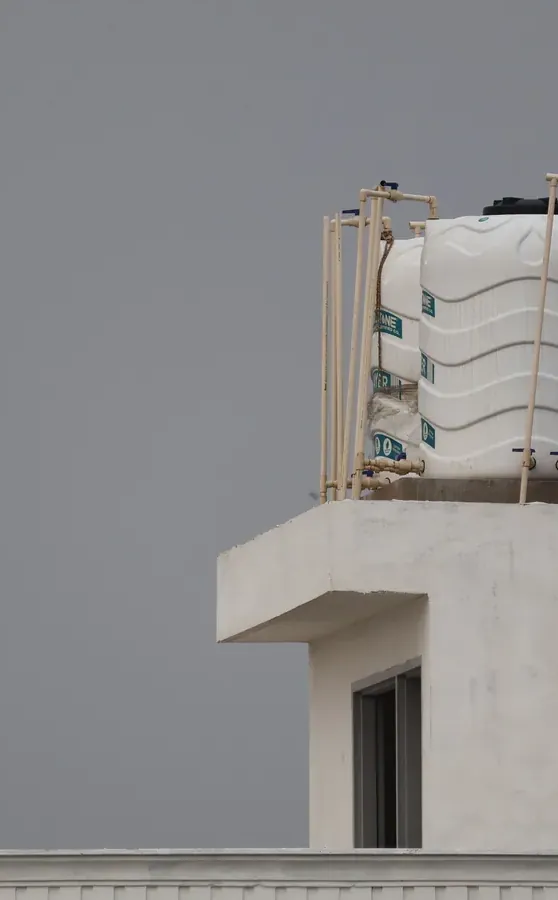
Wadi Mareekh is a new development. Construction is ongoing, vacant plots sit between villas and apartment blocks, and dust from excavations and building work fills the air. New tanks can be fouled before anyone moves in. The first water from a newly filled tank may run cloudy with construction debris.
Tanks in new villas here often contain construction dust and loose sand from neighbouring excavations, even if the villa itself is finished. For the method itself, see our water tank cleaning service in detail.
Excavations, foundations and building work release fine dust that travels to tanks even at a distance. Wet dust from damp excavations clings to tank walls and does not settle to the floor like dry particles do.
In new schemes, tanks may be filled with construction water before work is finished. Mixing sand, steel, cement and other building debris can enter the tank through the supply pipes themselves. The first cleaning is essential before residents move in.
In an area under construction, ground is often wet and unsettled. Moisture from nearby excavations causes slow leaks in older tanks and can make new tanks settle or shift with the unstable soil.
The area stretches along Palestine Street and King Abdullah Feeder Road, surrounded by building schemes, Al Taysir Park and the grand mosque. Excavation and foundation work is continuous across the neighbourhood.
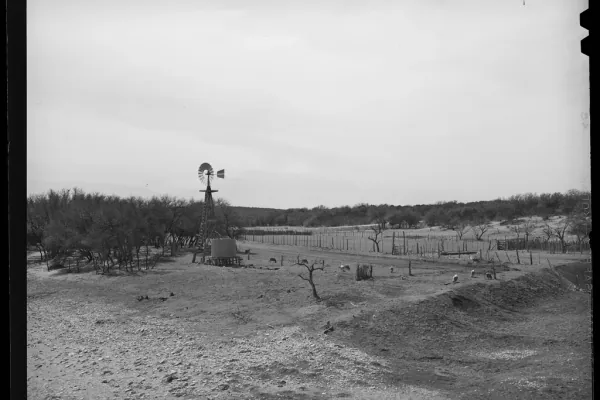
A new tank in a building scheme under construction may already be contaminated. We inspect carefully to establish contamination level before setting the cleaning plan.
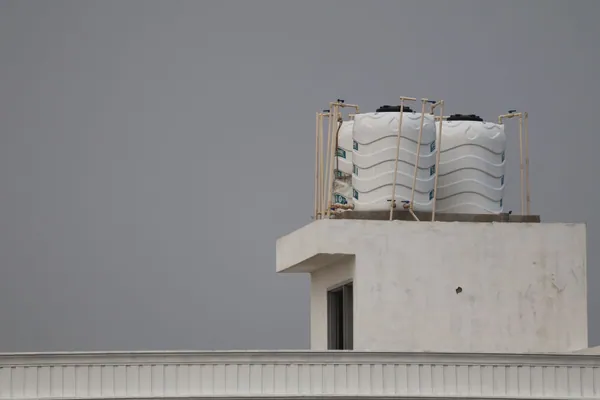
Full drainage is essential to remove all construction debris from the old water and heavy sediment that has settled on the floor.
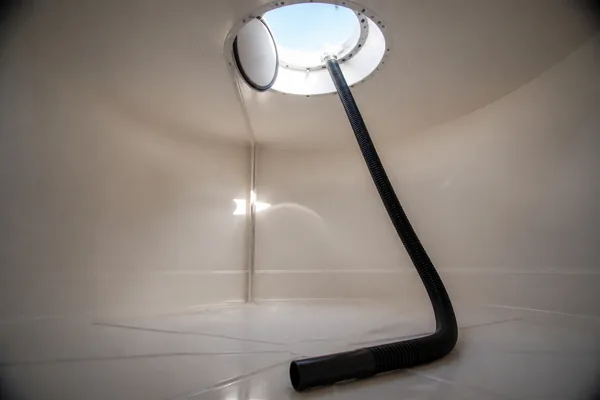
Construction sediment (sand, iron, cement) is heavy and clings to the floor. Strong vacuuming and continuous scrubbing are necessary here.
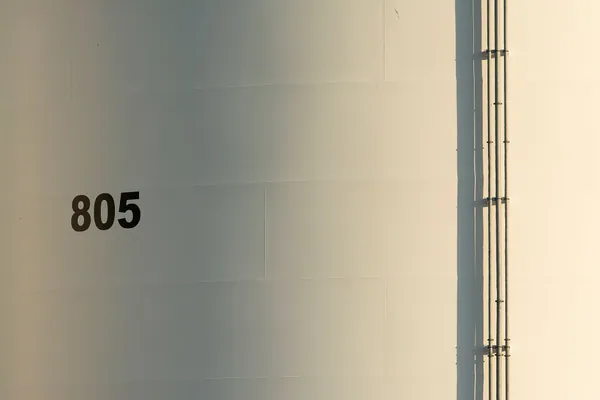
Hand scrubbing focuses on corners and upper walls where wet construction dust tends to collect and dry into a crust.
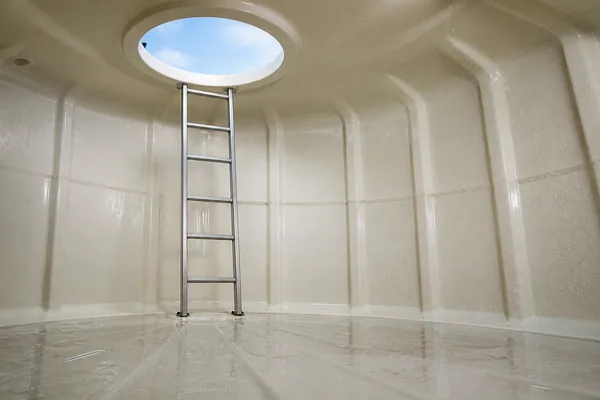
Disinfection after cleaning kills any bacteria from stagnant water and the high humidity typical of building sites.
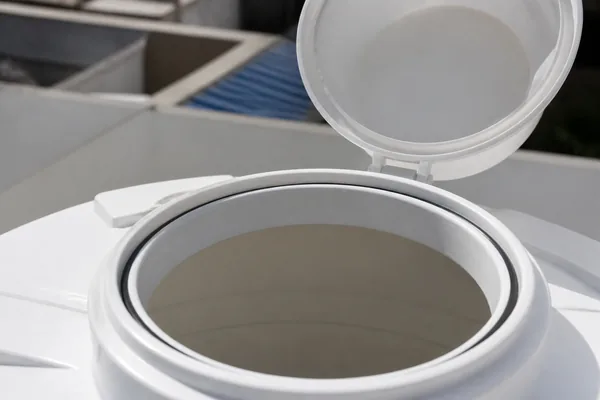
Final rinse includes careful checking of all pipes and outlets to ensure no sand or debris remains caught in corners or valve areas.
The supply into the tank is shut and the tank is drained completely.
The sludge on the floor is scooped and pumped out first.
The biofilm on the walls is physically scrubbed off.
With the walls and floor clean, a disinfectant made for drinking-water storage is applied and given time to act on every surface.
The disinfectant and any loosened residue are rinsed down and pumped out, so the first tank of water after us is not carrying it.
We check the cover seal and inlet before refilling, so dust and insects stay out, then start the refill while you watch it run clear.
New development: ongoing construction and vacant plots between the homes
In a new development under active construction, a new tank may be fouled before occupation by dust from excavations and building work. Cleaning and disinfection must be thorough because new residents depend on clean water from move-in day.
Pumps to clear sludge, scrubbing to remove biofilm, and disinfectant meant for potable storage.
We send a team, not one person, so a tank is drained, cleaned, disinfected and refilled in a single visit rather than left open for days.
We look at the lid seal and inlet, because a tank that got dirty fast usually has a way in.
Nothing is closed until the tank is refilling and you have seen the water run clean.
Photographs from real jobs carried out by the crew.












The commitment is simple enough to actually keep: we do not leave until the tank is disinfected, refilling, and you have seen it for yourself.
South Jeddah runs from the port and the industrial city down towards Al Khumrah, and homes here sit between the sea and the heavy goods roads. The dust is darker and oilier than in the north, a mix of diesel soot and workshop grit, and it clings to net curtains, window sills and the tops of kitchen cupboards. Floors in the older low rise housing are often plain cement or ceramic tile that darkens where soot is walked in. Humidity from the coast adds mildew in bathrooms and a musty smell in stored fabrics.
We provide these in Wadi Mareekh too, and more than one can share a single visit.



