
We test before we degrease
Testing the solution on a hidden spot is a step we treat as necessary, not optional.
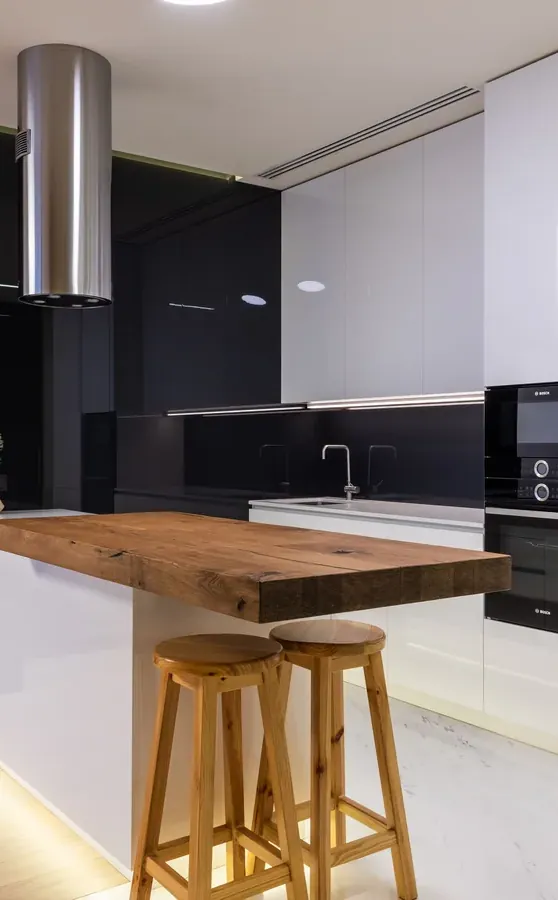
Al Rahmah is a new villa development spread across flat open ground south of Jeddah, with homes built gradually among large stretches of vacant land. This exposed terrain offers no natural wind protection, and diesel soot from nearby Al Lith Road carrying heavy goods traffic drifts into kitchens with little resistance. The grease here is not just cooking oil but a dark oily mixture that sticks harder and shows more visibly on new finishes.
The dust here is black and oily, a blend of diesel soot and workshop grit, with no buildings or vegetation to slow it down before it reaches kitchen surfaces. For the method itself, see the full kitchen cleaning page.
Al Lith Road carries constant heavy vehicle traffic, and the vacant land surrounding each villa offers no barrier to smoke and fumes. The grease accumulating in kitchens is not purely cooking oil but a dark, hard-to-remove blend of soot and oil mixed together. Degreasing must target these layered, stubborn deposits.
Without closely spaced buildings to break air flow, winds carry grit and soot directly into homes. Windows and vents collect a grey film quickly, cabinets blacken faster than in densely built districts, and kitchen floors show the dark dust load visibly within days of cleaning.
Brand new kitchens in Al Rahmah villas have polished cabinets, tile and counters that catch every speck. Black diesel soot appears instantly on these bright surfaces, making deep cleaning more frequent and more noticeable than in older districts where discolouration is less obvious.
Flat terrain with no natural hills to deflect wind, Al Lith Road with continuous heavy truck movement nearby, and internal streets still under development with incomplete services.
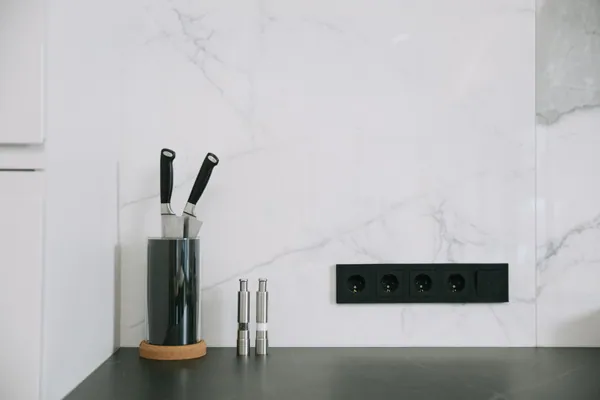
Cabinet fronts collect a black layer of oily diesel soot, not just cooking grease, so they need a stronger degreaser and extended contact time than in quieter areas.
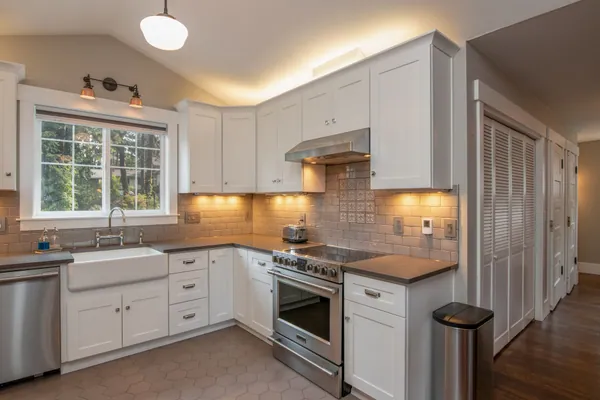
The extractor hood works hard pulling sooty air from outside, and the filter loads with heavy oily soot much faster than in residential areas away from main roads.
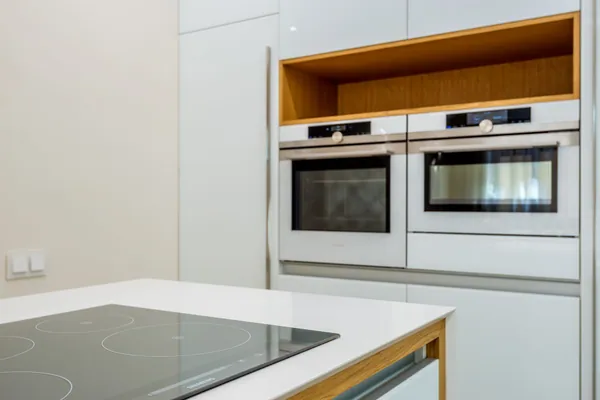
The stovetop and surrounding wall hold both cooking grease and soot that drifts in from outside, requiring attention to both sources and their combined buildup.
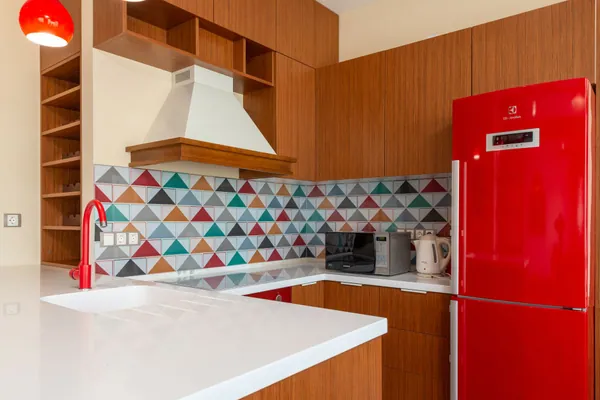
Tiles behind the hob darken with soot deposits that standard wiping will not shift, needing strong degreasing and thorough scrubbing to restore colour.
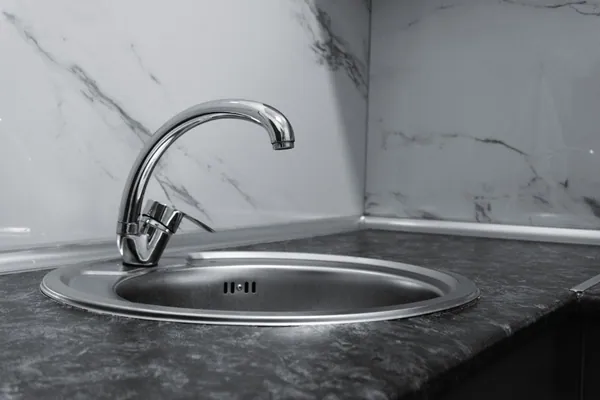
The sink and tap collect grey deposits of fine oily dust, not just food residue, requiring degreasing of the ceramic and metal surfaces both.
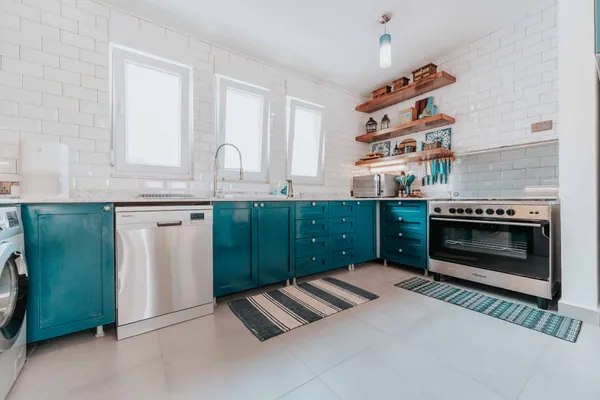
Floors accumulate black dust particles from the vacant land outside, with heavier deposits at corners and near openings where air currents deposit grit.
Painted cabinets, laminate, natural stone and stainless steel do not take the same degreaser.
We start high, the tops of cabinets and the hood, and work down to the floor.
The degreaser is put on the heavy areas and given time to break the oil down before it is wiped.
The metal filter carries the worst of the grease and is soaked and worked on its own, not just wiped in place, because a clogged filter puts the oil straight back into the air.
The burners, the tiled splash and the grout lines take focused work, since the grout darkens first and a flat wipe passes over it.
We go over the kitchen with you before the team leaves.
New development: ongoing construction and vacant plots between the homes
New villas in a young development mean bright, easy-to-clean surfaces at first, but the surrounding vacant land and nearby heavy road allow diesel soot to enter freely and show starkly, forcing more frequent and more visible deep cleaning cycles.
Testing the solution on a hidden spot is a step we treat as necessary, not optional.
We send a team, not a single worker.
The degreasers and tools come with the team.
If what the kitchen needs is a repair or pest treatment rather than a clean, we say so.
Photographs from real jobs carried out by the crew.












The commitment is simple enough to actually keep: we do not leave before you have seen the result and told us what you think of it.
South Jeddah runs from the port and the industrial city down towards Al Khumrah, and homes here sit between the sea and the heavy goods roads. The dust is darker and oilier than in the north, a mix of diesel soot and workshop grit, and it clings to net curtains, window sills and the tops of kitchen cupboards. Floors in the older low rise housing are often plain cement or ceramic tile that darkens where soot is walked in. Humidity from the coast adds mildew in bathrooms and a musty smell in stored fabrics.
We provide these in Al Rahmah too, and more than one can share a single visit.



