
We test before we degrease
Testing the solution on a hidden spot is a step we treat as necessary, not optional.
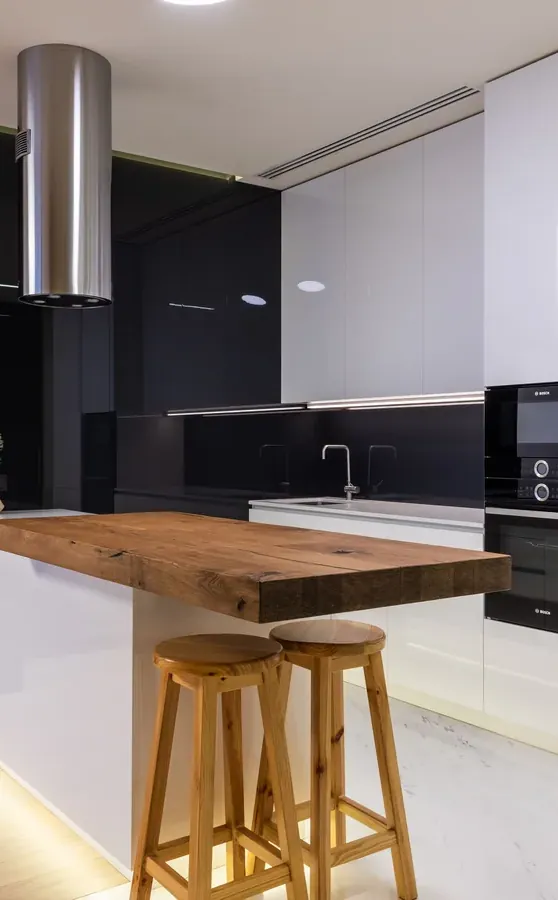
Al Aqeeq is a new subdivision north of Jeddah in the Obhur Al Shamaliyah area, with newly built villas on recently released land plots. New streets surround them and construction sites are still active nearby. Kitchens here are clean and modern but collect fine dust and sand from gardens and building works mixed with light cooking grease.
New villas with gardens fed by sprinkler systems leave white salt rings on the new tile and marble, different from grease stains and harder to predict. For the method itself, see what kitchen cleaning involves.
Homes are surrounded by vacant land and new gardens. Wind carries very fine sand in through windows and doors. This sand mixes with cooking grease and becomes very difficult to remove from surfaces.
New gardens are sprinkled with salt-heavy water from roof tanks. This water leaves white mineral rings on kitchen tile and floors that look like scale but are mostly salt deposits from the irrigation system.
Marble, porcelain and ceramic are all new and highly polished. Too strong a degreaser may damage the shine or leave visible streaks. Gentler products and longer soaking are better than strong chemicals and hard scrubbing.
The district is under active construction with vacant plots between the villas, and winds carry fine sand and dust from building sites and new landscaping.
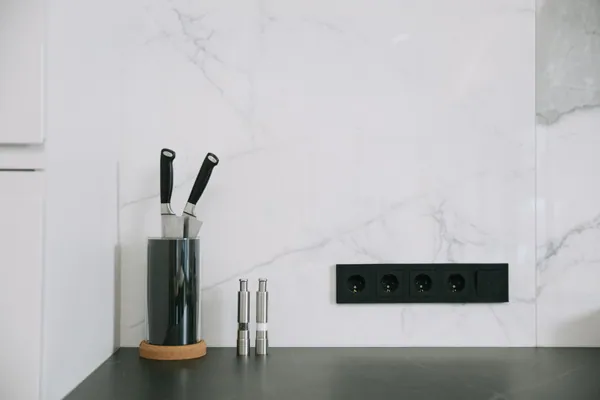
Cabinet fronts in new Al Aqeeq villas are polished and the surface is delicate. Grease is light but shows clearly on shiny surfaces.
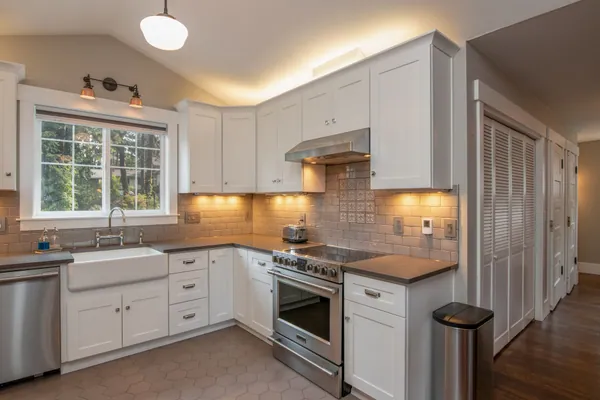
The hood is new and powerful, but first use may leave a smell from new machine oil. The filter may not perform at its best initially.
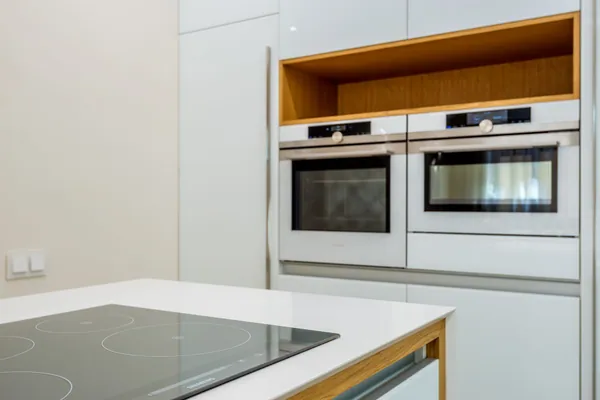
Oven and stovetop are new and polished, and may not discolour quickly, but once grease starts to build it becomes very hard to remove from the shiny surface.
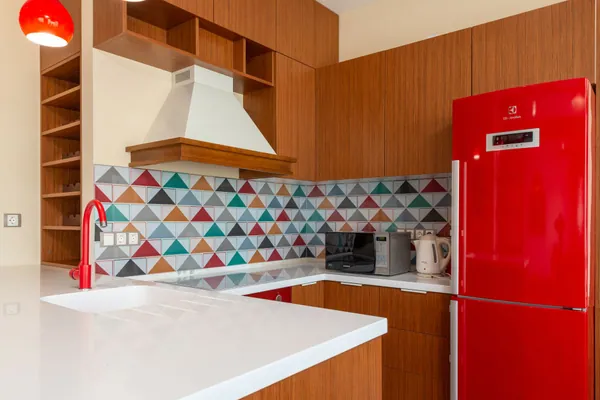
Tiles behind the hob are very shiny and polished, and white rings from sprinkler water show starkly against the smooth surface.
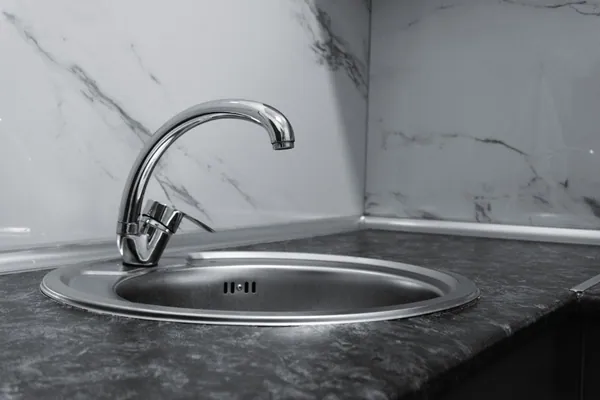
Taps are bright new stainless steel, and mineral deposits may leave visible marks even after careful removal.
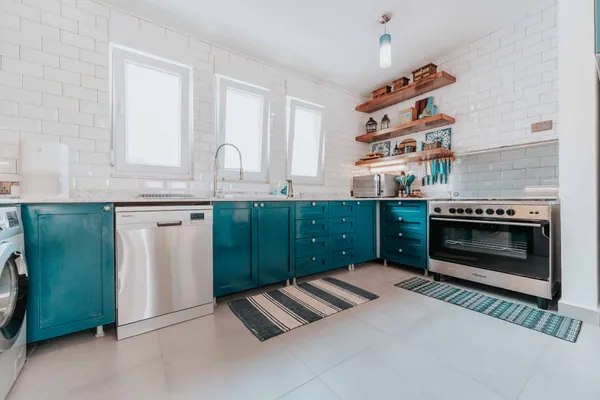
Floors are new marble or porcelain, highly polished and easily scratched by sand from the garden if not swept very carefully before mopping.
Painted cabinets, laminate, natural stone and stainless steel do not take the same degreaser.
We start high, the tops of cabinets and the hood, and work down to the floor.
The degreaser is put on the heavy areas and given time to break the oil down before it is wiped.
The metal filter carries the worst of the grease and is soaked and worked on its own, not just wiped in place, because a clogged filter puts the oil straight back into the air.
The burners, the tiled splash and the grout lines take focused work, since the grout darkens first and a flat wipe passes over it.
We go over the kitchen with you before the team leaves.
Testing the solution on a hidden spot is a step we treat as necessary, not optional.
We send a team, not a single worker.
The degreasers and tools come with the team.
If what the kitchen needs is a repair or pest treatment rather than a clean, we say so.
Photographs from real jobs carried out by the crew.












The commitment is simple enough to actually keep: we do not leave before you have seen the result and told us what you think of it.
New development: ongoing construction and vacant plots between the homes
A new development with polished new surfaces means grease may be light but shows very clearly on shiny materials. This demands gentle products and gentle brushing, not strong degreasers and heavy scrubbing, because the surfaces themselves are delicate and may lose their polish.
We provide these in Al Aqeeq too, and more than one can share a single visit.



