
We test before we treat
Reading the water first isn't optional to us.
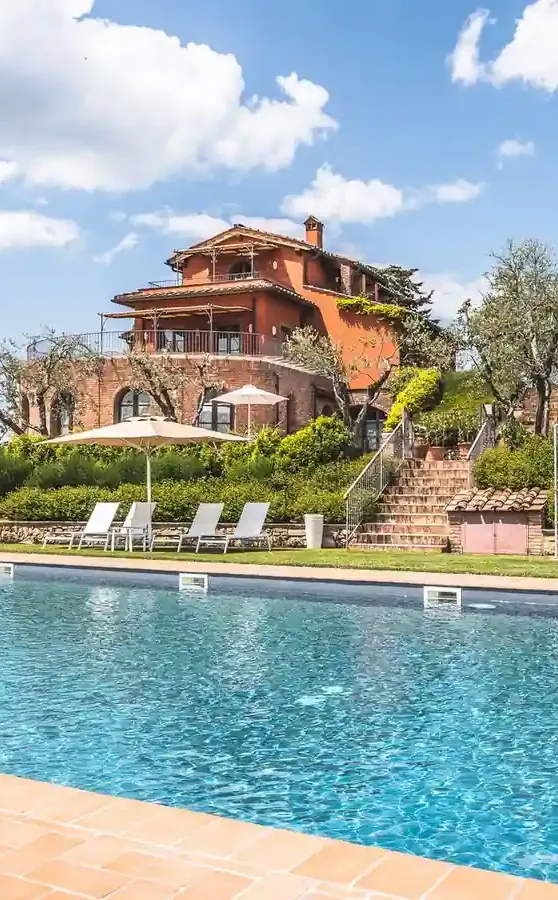
Al Sanabel is a recent district on Al Laith Road south of Jeddah, with new villas and apartments scattered among vacant plots and ongoing construction. Pools here sit in young homes surrounded by building work, and fine silica dust and sand from foundations leach constantly into the water.
New development areas need stronger suction and more frequent cleaning because construction sites next door release fine silica particles into the air continuously. For the method itself, see our guide to swimming pool cleaning.
In a district under development, excavation and concrete mixing around homes raise clouds of fine sand. This sand enters the pool water and settles fast into the floor and inside the filter media, clogging the mesh within days.
Fresh concrete cures by releasing cement dust and fine sand particles. This makes the water turbid quickly even if the pool is covered, because moisture beneath a cover keeps particles suspended rather than settled.
Open ground surrounding newly built homes has no trees or plants to hold soil in place. Any wind brings a fresh wave of fine sand and dust that settles into the water and coats every surface.
A newly developing district on Al Laith Road with new homes separated by open land and active building projects, and dust and fine sand blow into every garden with each wind gust.
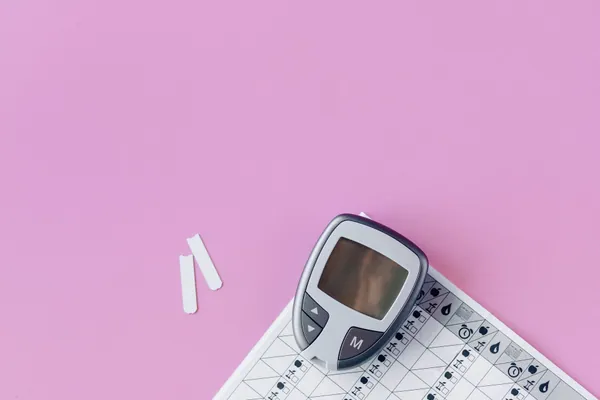
Testing here starts with turbidity and suspended particles before checking chlorine, because the filter may already be blocked before water chemistry matters.
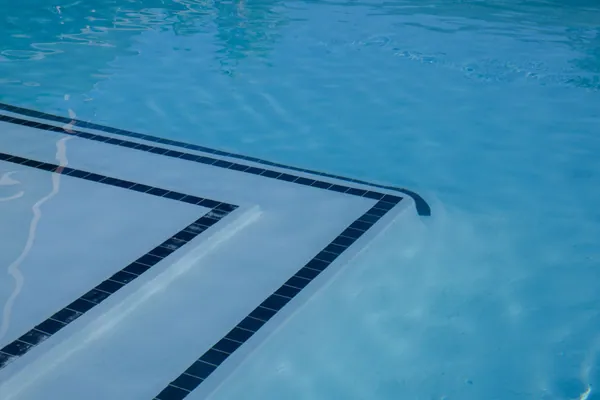
Brushing walls is gentler in Al Sanabel because tiles are new, but fine sand on the walls needs a soft brush rather than vigorous scrubbing.
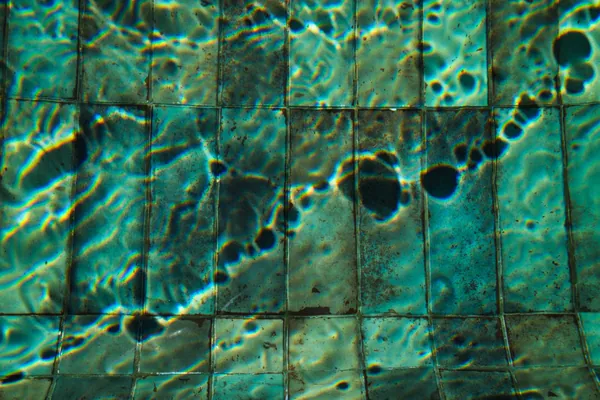
Vacuuming must run with higher pressure and more passes because fine sand settles rapidly and needs deeper suction to lift completely.
The skimmer and baskets fill with fine dust within days, so daily or every-other-day cleaning is routine, not weekly.
The filter requires frequent backwash, possibly twice weekly or more, and we may add clarifier to help it capture the finest particles.
Chemical balance is simple here because the water is new, but turbidity may not clear for days even with intensive treatment.
pH, sanitiser and hardness are read at the start.
Floating leaves and debris come off before we brush.
Algae and the oily waterline film cling to the surfaces.
Silt settles in the deep end and the corners the return jets never reach.
The skimmer and pump baskets are cleared and the filter checked or backwashed.
With the water clean, we balance and dose, then walk the pool with you before leaving.
We access pools in Al Sanabel along Al Laith Road or from Al Sanabil Park, and we coordinate with neighbouring residents about active construction hours to avoid peak excavation and mixing times.
Reading the water first isn't optional to us.
The company runs a large crew, and we send a team rather than one person.
Pumps, vacuum heads and the test kit come with the team.
If the pump or the plumbing is the real problem, we tell you.
Photographs from real jobs carried out by the crew.












The commitment is simple enough to actually keep: we don't leave until you've seen the result and had your say on it.
South Jeddah runs from the port and the industrial city down towards Al Khumrah, and homes here sit between the sea and the heavy goods roads. The dust is darker and oilier than in the north, a mix of diesel soot and workshop grit, and it clings to net curtains, window sills and the tops of kitchen cupboards. Floors in the older low rise housing are often plain cement or ceramic tile that darkens where soot is walked in. Humidity from the coast adds mildew in bathrooms and a musty smell in stored fabrics.
We provide these in Al Sanabel too, and more than one can share a single visit.



