
We treat the source, not the sighting
Spraying what walks across the floor is the common mistake we're called in to fix.
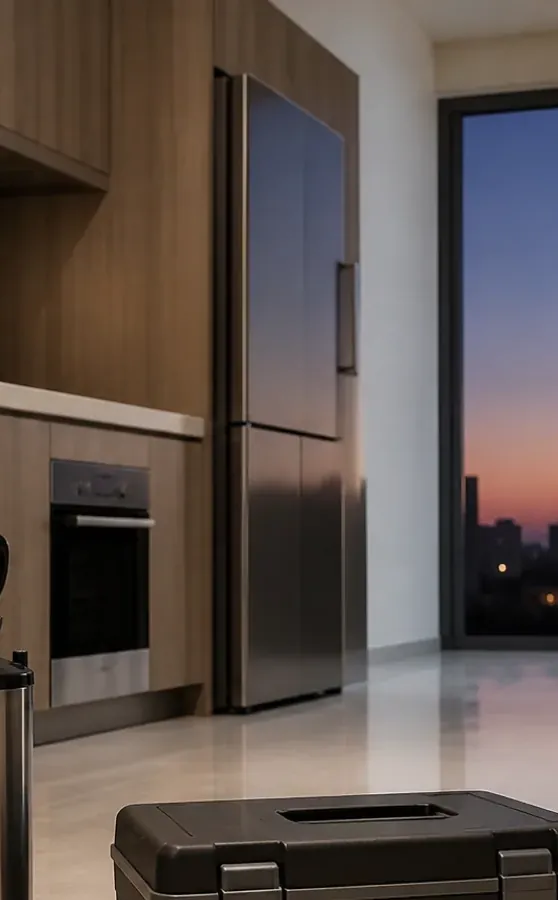
Al Huda is a south Jeddah neighbourhood once known as Al Tahlawi, filled with three storey apartment blocks east of Al Sanabil, next to Al Ajawid and Al Taawun. New villas are going up on the vacant plots, but the older apartment buildings have shared entrances and old shared drainage systems where insects move freely between flats. Treating one flat alone is futile; the entire building must be treated together.
Insects in Al Huda apartment blocks move effortlessly from flat to flat via shared drains and gaps in party walls, and a treated flat is reinfested within days if neighbouring units are not addressed simultaneously. For the method itself, see our pest control service in detail.
The three storey blocks in Al Huda are from an early building phase, their drains are shared and made from old materials, often caked with sediment. Insects live in these drains and travel between flats through the same pipes, and treating a single flat is pointless.
Each Al Huda apartment block has one shared entrance, and the electrical and ventilation ducts are shared too. Insects move through these ducts from floor to floor and flat to flat, spreading through the entire building before residents realise there is a problem.
New villas are being built next to the old apartment blocks on wide vacant plots. These plots provide a constant fresh insect supply that crawls towards both the old blocks and the new villas. New villas next to vacant land need preventive treatment from the outset.
Three storey apartment buildings from the first wave of neighbourhood development contain old shared drains and pipework between units, while vacant plots and active construction around the neighbourhood continually introduce new insects.
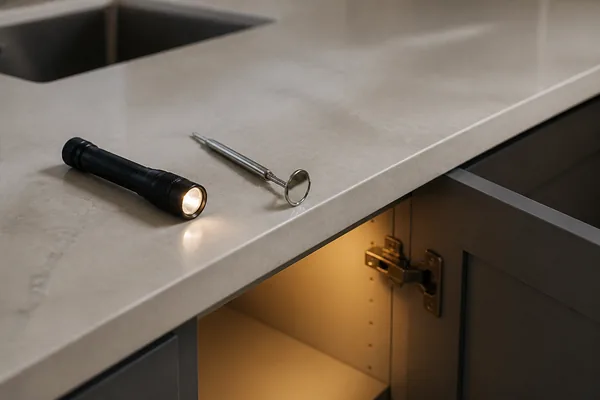
In Al Huda, identification focuses on moisture loving species and insects inhabiting old drains and sediment deposits.
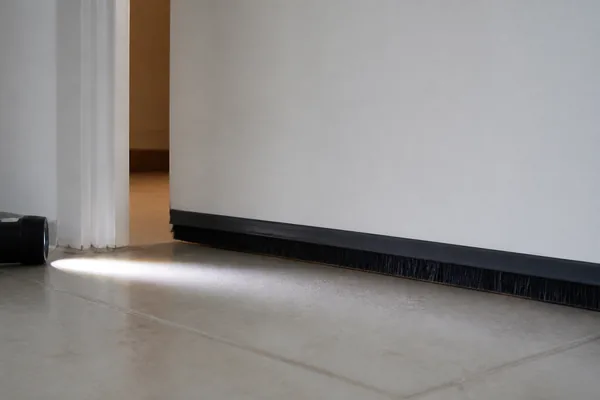
We trace insect routes through shared drains and ducts between flats and identify entry points from the street and surroundings.
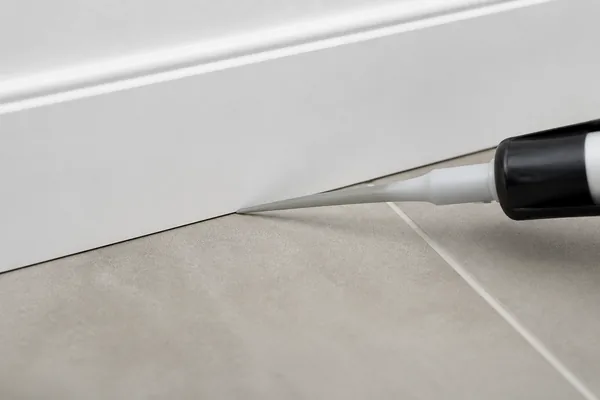
Gaps in party walls and electrical ducts between units are the inter flat corridors, and we treat these directly.
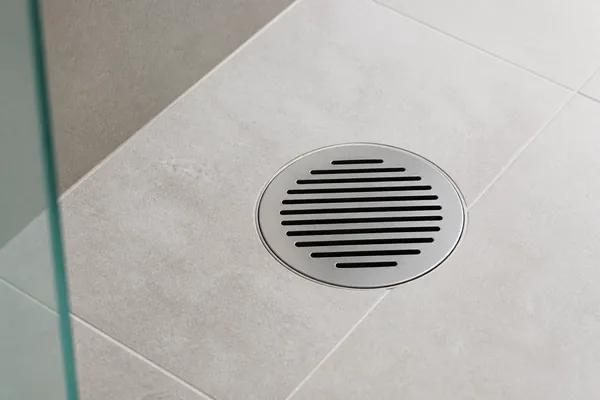
Old drains and damp round pipes provide water and food, and we treat these areas with special care and remove sediment buildup.
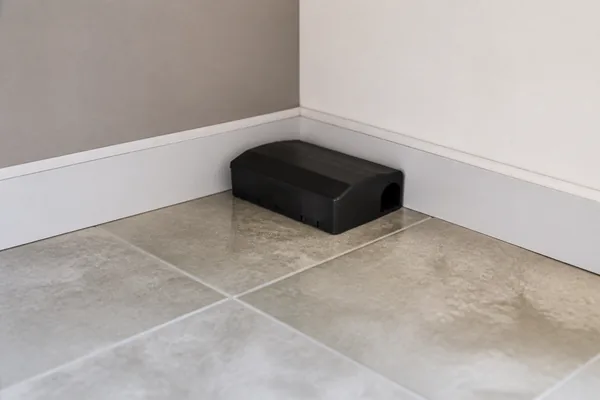
We place baits in shared spaces and between unit gaps, not only inside individual flats.
Follow up in a shared apartment building must be simultaneous across all units, and working with the building management or residents committee greatly improves success.
Droppings, damage and where they appear tell us the pest and roughly where it's nesting.
Gaps around pipes, thresholds and vents are the supply line.
Product goes into voids, cracks and the runways they use, not the open floor.
In the spaces spray can't reach, bait does the work, carried back to reach the nest and the ones that never surface.
Closing the easy entry points turns a constant re-supply into a closed problem, so the treatment isn't fighting a fresh wave every week.
Before leaving we walk the home with you and show you what was treated.
Spraying what walks across the floor is the common mistake we're called in to fix.
The company runs a large crew, and we send a team rather than one person.
Ants, cockroaches and rodents each need different products and placements.
If what you have is a one-off that doesn't need treating, or a structural issue for a builder, we tell you.
Photographs from real jobs carried out by the crew.












The commitment is simple enough to actually keep: we show you what was treated, and we stand behind it within the agreed cover.
The neighbourhood sits close to Al Laith Road which forms its western boundary, and Al Huda Park, Al Huda Mosque and Al Huda Health Centre are landmarks that locate the blocks and area precisely.
We provide these in Al Huda too, and more than one can share a single visit.



