
We test before we degrease
Testing the solution on a hidden spot is a step we treat as necessary, not optional.
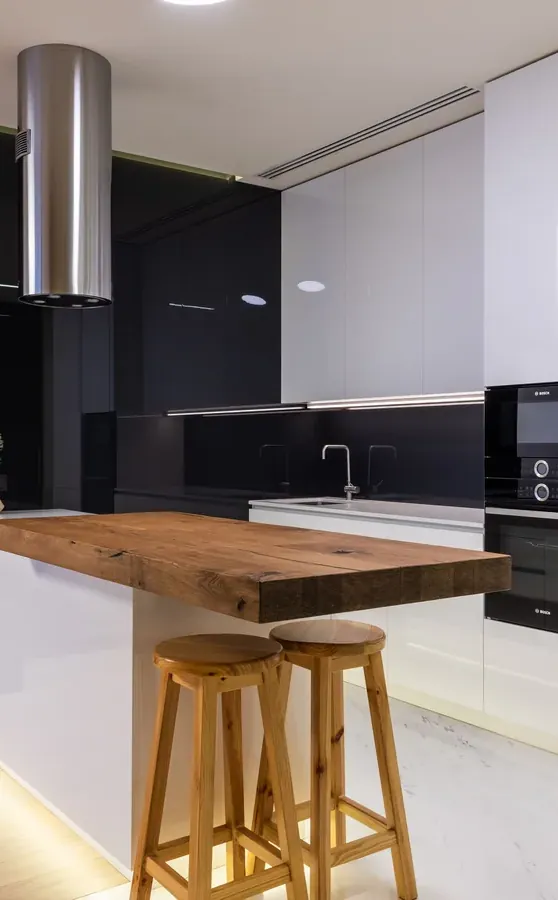
Um Al Salam sits in south eastern Jeddah on the Old Makkah Road, with popular housing and cleared areas from the informal settlement programme. It sits beneath the lorry route towards Makkah. Kitchens here collect dry, coarse dust rather than coastal salt, sand from the hills beyond the ring roads, and heavy grease built up over years.
Floors are mostly ceramic tile in apartment districts and marble in villa areas, both scratched by grit that is mopped rather than swept. For the method itself, see how we approach kitchen cleaning.
The air is dry and dust is coarser and paler than coastal dust. It comes in under doors and settles on every flat surface overnight. Dry dust mixes with grease and becomes very difficult to remove.
Roof tank water carries heavy mineral deposits that leave a grey film in sinks and basins. This is different from white coastal salt deposits. It is heavy metal oxides, not calcium scale.
Families here cook for long hours in large quantities. Grease accumulates very quickly and in large amounts, and older surfaces may absorb it deeply into their finish.
The location sits on the Old Makkah Road far from the sea and close to open ground and hills beyond the ring roads. The air is drier and the dust is coarser and paler than on the coast.
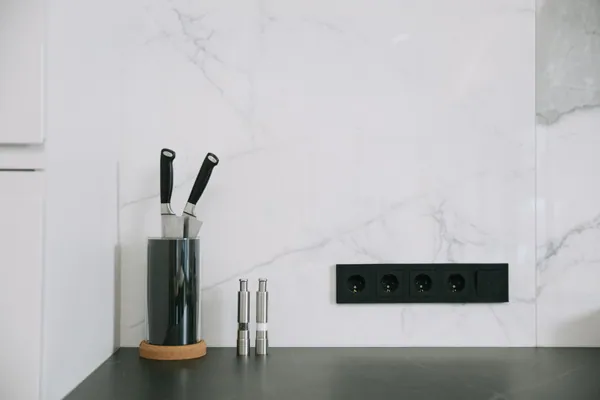
Cabinet fronts collect heavy grease mixed with dry grey dust, not the black of coastal areas.
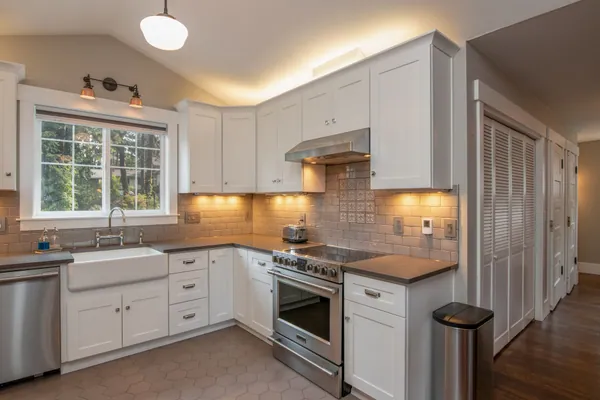
The hood traps heavy grease and dust together. The filter may be very clogged with a mixture rich in grit.
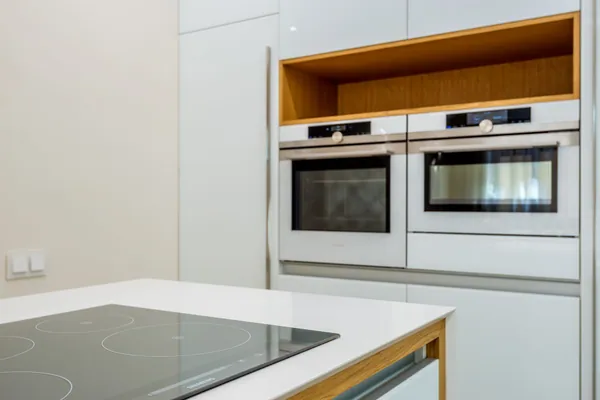
Oven and stovetop carry thick grease layers from intensive cooking for many hours daily.
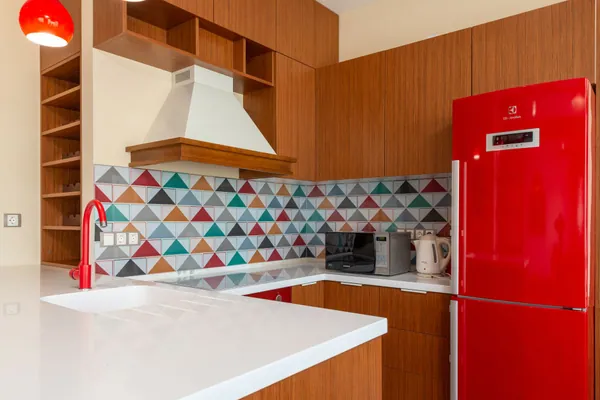
Tiles behind the hob are blackened by grease and dust combined, with grout gaps completely blocked.
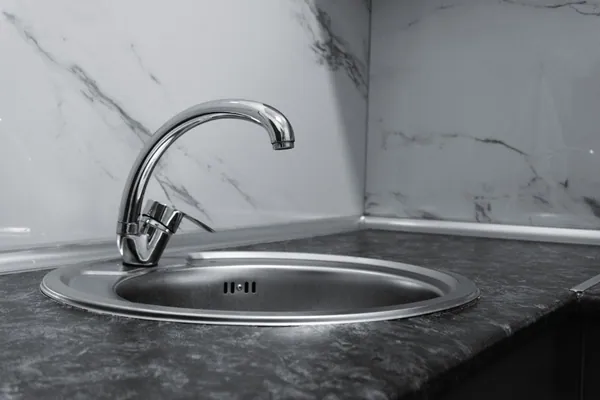
Tap and basin may show grey sediment from the roof tank as well as ordinary mineral scale.
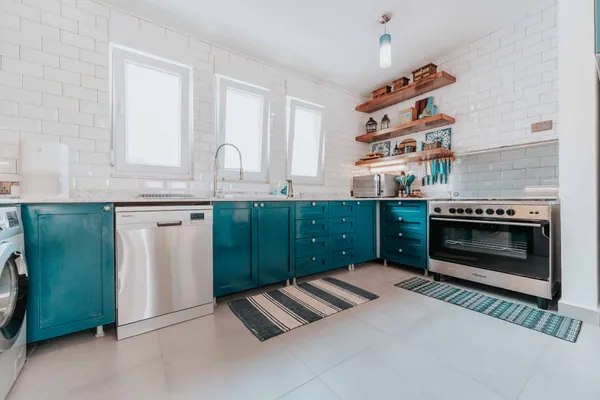
Floors are grey from dry dust and grease together, with grit underneath that scratches if mopped without thorough sweeping first.
Painted cabinets, laminate, natural stone and stainless steel do not take the same degreaser.
We start high, the tops of cabinets and the hood, and work down to the floor.
The degreaser is put on the heavy areas and given time to break the oil down before it is wiped.
The metal filter carries the worst of the grease and is soaked and worked on its own, not just wiped in place, because a clogged filter puts the oil straight back into the air.
The burners, the tiled splash and the grout lines take focused work, since the grout darkens first and a flat wipe passes over it.
We go over the kitchen with you before the team leaves.
Mixed district: shops at street level with homes above them
A mixed district far from the sea and close to open roads means dry, coarse dust rather than coastal damp and salt. Kitchens suffer from heavy dust mixed with grease from intensive cooking, not from humidity.
Testing the solution on a hidden spot is a step we treat as necessary, not optional.
We send a team, not a single worker.
The degreasers and tools come with the team.
If what the kitchen needs is a repair or pest treatment rather than a clean, we say so.
Photographs from real jobs carried out by the crew.












The commitment is simple enough to actually keep: we do not leave before you have seen the result and told us what you think of it.
East Jeddah lies furthest from the sea and closest to the open ground and hills beyond the ring roads, so the air is drier and the dust is coarser and paler than on the coast. It comes in under doors and settles on every flat surface overnight, making sofas, mattresses and curtains the heaviest part of the routine. Floors are mostly ceramic tile in the apartment districts and marble in the villa areas, both scratched by grit that is mopped rather than swept. Roof tank water leaves a grey film of sediment in baths and basins.
We provide these in Um Al Salam too, and more than one can share a single visit.



