
We test before we clean
Testing the solution on a hidden fold is a step we treat as necessary, not optional.

Al Shati sits on the Jeddah Corniche, and salt air settles on every surface all year. Humidity stays high and curtains are never quite dry, so they trap salt crystals in the weave and hold the concentrated smell of the sea. Cleaning curtains here is different from inland quarters: salt must be flushed out before it migrates into the fibre itself, and drying must be swift to prevent mildew.
Salt deposits visibly on glass and metal much faster here than in any inland area, and curtains smell of the sea even when windows stay closed for days. For the method itself, see what curtain cleaning involves.
The permanent salt air in Al Shati means salt particles enter curtains with every breath of wind. Simple shaking cannot remove salt embedded in the weave, and ordinary water spreads it rather than lifts it. Safe soaking followed by thorough rinsing with fresh water is the only method.
High humidity means curtains dry slowly and stay slightly damp. This locks sea smell and salt into the fabric even when the surface looks clean. Fast drying after cleaning is essential, or the smell returns and mildew begins to grow.
Salt attacks steel rails and metal window frames if salt water touches them. When cleaning curtains, every metal and glass surface near the rail must be shielded from splash and spray.
A coastal district facing the Jeddah Corniche with seafront hotels and landmarks, the floating Al Rahmah Mosque, Red Sea Mall and open market, with persistent salt air year-round and a mix of villas and hotel apartments.
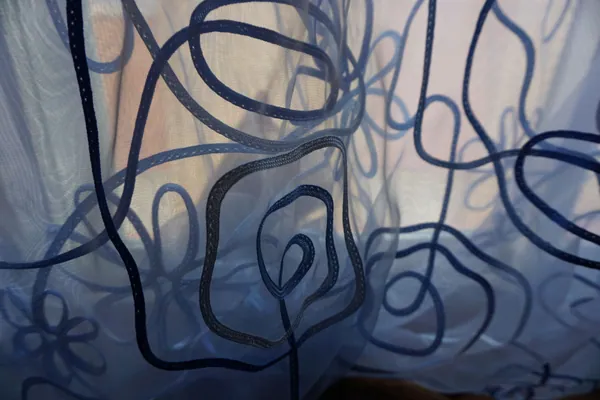
Coastal curtains are often lightweight or sheer to let light pass, and must be checked front and back since salt deposit may be uneven. Some areas may show heavier salt rings than others.
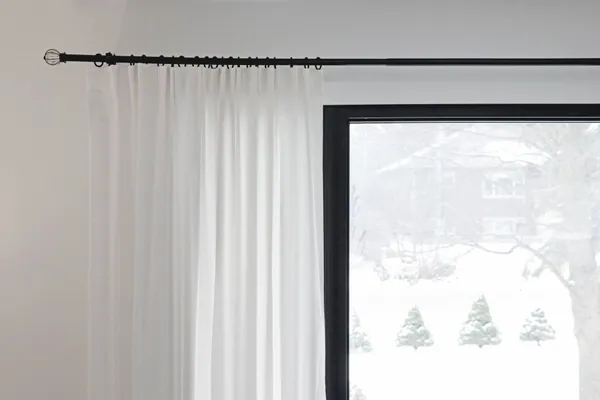
Removal from metal rails is handled with care since rails weaken from salt corrosion and may be brittle. Each panel is folded gently without stretching.
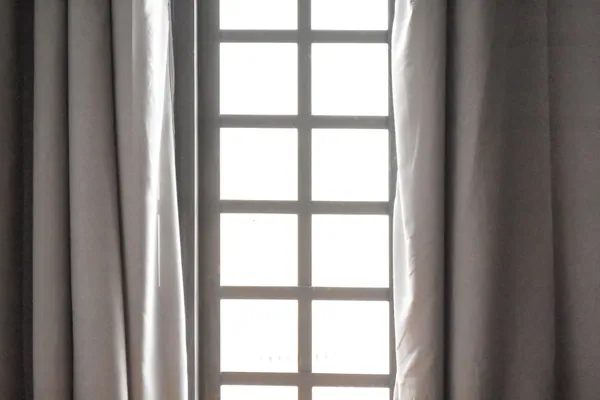
Dry vacuum is vigorous to dislodge surface salt which may fall like sand, then suction is very gentle to avoid pulling threads from sheer weave. Much loose salt shakes out during this stage.
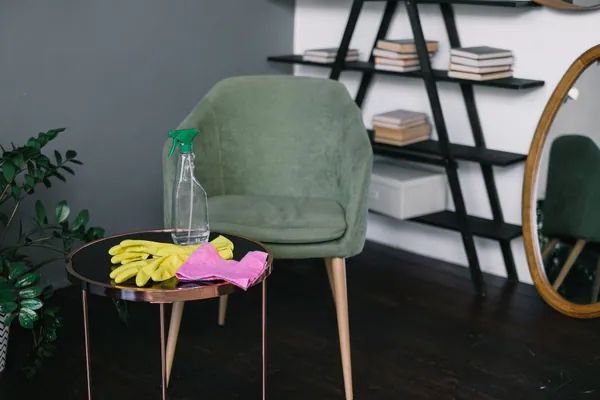
Salt is treated by soaking in fresh water, never salt water. White marks soak and rinse repeatedly before the final wash. Multiple rinses remove salt buildup.
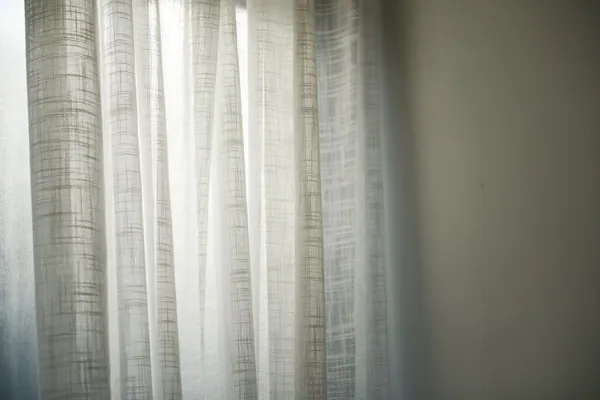
Cleaning is done by spray, soak and rinse cycles with fresh water only. Coastal fabrics may need extra rinsing because salt readily redissolves and creeps back toward the surface.
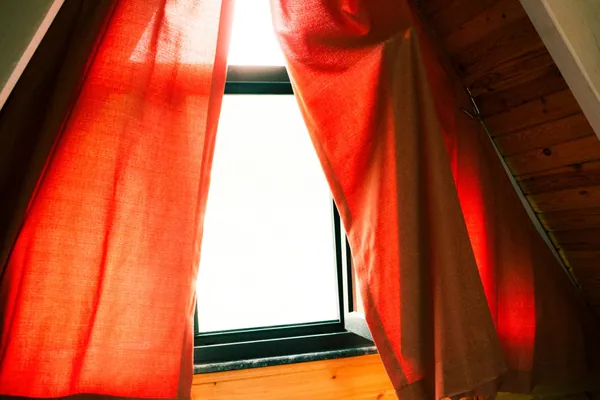
Drying is rapid by fan and air conditioning working together. Curtains are rehanged immediately after final rinse to prevent musty smell and mould from forming.
Cotton, linen, velvet, blackout weave and synthetic sheers do not take the same heat or the same solution.
Before any water.
A water spot at the hem is not treated like a greasy film near a kitchen.
We loosen what has bonded inside the fibres across the full panel, both faces and top to hem, with the method that suits the fabric, while the curtains stay on the rail so the drape is not disturbed.
The loosened dirt and water are pulled back out in the same pass.
We go over the panels with you before the team leaves.
Testing the solution on a hidden fold is a step we treat as necessary, not optional.
We send a team, not a single worker.
The cleaning and extraction machines come with the team.
If a panel needs a tailor rather than a clean, we say so.
Photographs from real jobs carried out by the crew.












The commitment is simple enough to actually keep: we do not leave before you have seen the result and told us what you think of it.
Coastal area: high humidity and salt air through the year
Coastal means permanent salt and humid air, and salt penetrates fibres differently than dust alone. Curtains need repeated rinsing and fast drying, or they retain sea smell and risk mildew growth within hours.
We provide these in Al Shati too, and more than one can share a single visit.



