
The access to reach it safely
A crystal fixture over a stairwell is not a job for a kitchen stool.

Al Sarawriyah is an industrial district south of Jeddah along the Al Laith Expressway, where commercial warehouses and distribution depots outnumber homes. Villas and shops occupy the gaps between loading yards and truck traffic. Chandeliers in warehouses and ground floor shops collect heavy black soot from constant vehicle and equipment movement. Villas situated nearby absorb industrial dust and airborne oil vapour from daily operations. Cleaning here addresses contaminants that require different solutions and careful handling of metals exposed to industrial fallout.
Chandeliers in Al Sarawriyah collect thick black soot from truck exhausts and sharp metallic dust from loading and unloading operations, accumulating visibly within weeks of cleaning. For the method itself, see our guide to chandelier cleaning.
Warehouses move heavy trucks, loaders and equipment every day. Exhaust from heavy diesel engines deposits thick black soot on all surfaces, including chandeliers. This soot is not light dust; it is a sticky carbon film that requires strong solutions and specialist brushes to dissolve and remove cleanly.
Warehouses handle iron stock, machinery and metal-frame equipment. Fine metallic dust becomes airborne and settles on every chandelier. This dust is sharp and hard; it can scratch crystal if we scrub roughly. Our technique changes here; we use softer brushes and avoid friction that would harm delicate surfaces.
Machinery and diesel engines shed oil vapour that drifts to nearby villas. Goods handling and water spray from washdown operations raise humidity. Chandeliers accumulate complex layers of soot, oil film and dust bonded together. The combination requires longer soaking and careful dissolution rather than direct scrubbing.
An industrial zone on the Al Laith Expressway where commercial and distribution warehouses dominate, with shops, villas and apartments interspersed, and continuous heavy vehicle and equipment movement throughout the district.
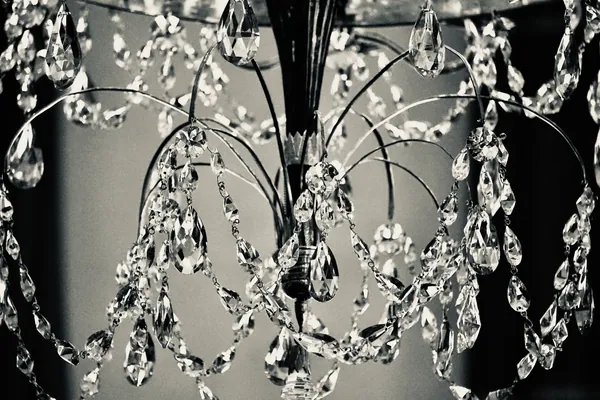
Warehouses and villas near them face heavy industrial contamination. We inspect fixings and wiring with utmost care and may require additional electrical capacity for our equipment.
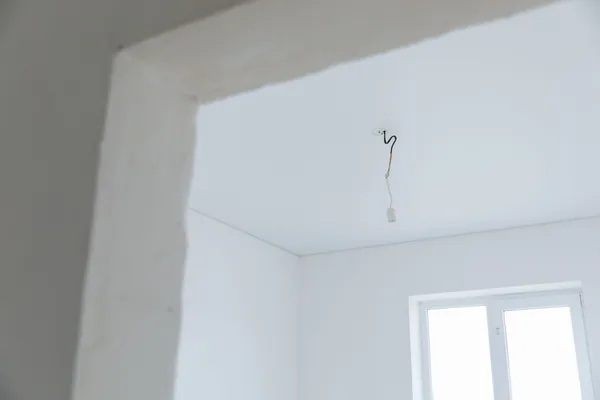
Electrical supply in industrial zones may be heavily loaded. We cut power to the chandelier from a safe independent source and coordinate with the owner for suitable working times.

Photography is essential because heavy soot returns quickly. Images preserve the exact position of each component and the contamination profile we encountered.
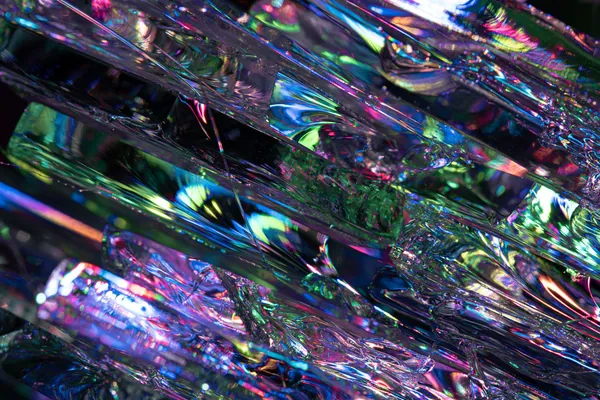
Each piece is washed with solutions approved for all metals and crystals. Metallic dust requires vigorous cleaning but with caution to avoid scratching crystal surfaces.
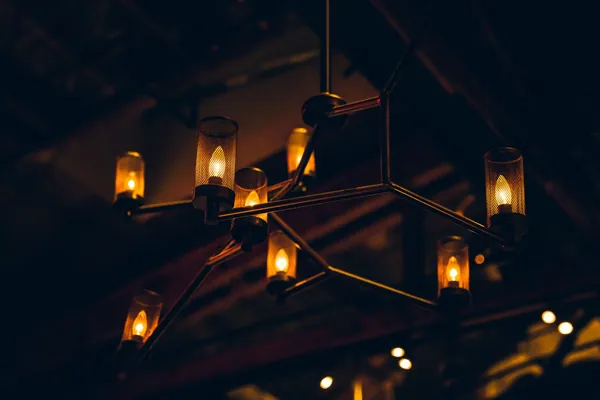
Frame and arms receive deep cleaning from heavy soot and oils. Plated metals need special attention as industrial oils can corrode finishes faster than domestic dust.

We test the chandelier carefully on site in the industrial setting. Vibration from machinery may be present. We confirm safety before powering on and walk through the area to confirm all functions.
The circuit is switched off before anything is touched, and warm bulbs are given time to cool.
We check how it is built, which crystals are loose, and how it comes apart before removing a thing.
The area under the fixture is covered before we start, so a dropped crystal lands soft and nothing marks the floor or table below.
Where the piece allows, crystals come off and are washed and dried individually.
With the crystals off or aside, the frame, arms, bulb holders and ceiling mount are wiped down, since that is where film and webs hide behind the glass.
Every crystal goes back to its place, the fixture is switched on and checked, and we walk the room with you.
A crystal fixture over a stairwell is not a job for a kitchen stool.
We send a team, not one person, so crystals come off, get washed and go back in one visit, without a lone worker hurrying a fragile piece to finish before dark.
Whether crystals come off or are cleaned in place depends on how the fixture is built.
Nothing is done until the fixture is back together, switched on, and you have seen it throw its light.
Photographs from real jobs carried out by the crew.












The commitment is simple enough to actually keep: we do not leave until the fixture is reassembled, lit, and you have seen it for yourself.
Industrial area: workshops, warehouses and loading yards
Industrial means heavy contamination from trucks, equipment and machine oils. Chandeliers in warehouses and nearby villas need specialised cleaning and strict electrical safety protocols. Industrial contaminants differ fundamentally from those in ordinary residential areas and require different solutions and techniques.
We provide these in Al Sarawriyah too, and more than one can share a single visit.



