
We treat the source, not the sighting
Spraying what walks across the floor is the common mistake we're called in to fix.
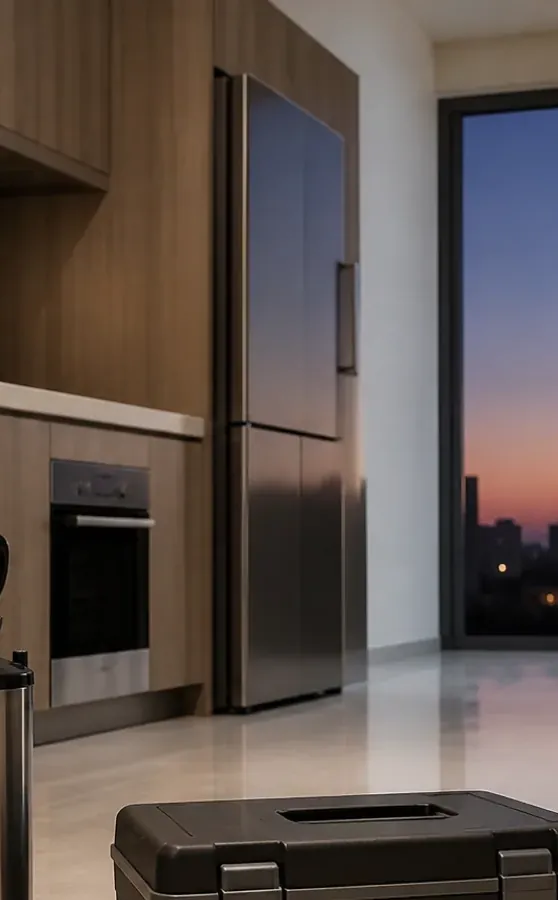
Al Rayyan is a dense apartment district between the Air Base Bridge and Al Kawthar, with multi-storey blocks sharing common entrances and piping throughout. Wide streets still undergoing drainage work create entry points, and insects move easily between units through shared pipes and gaps that run through the building structure.
In apartment blocks here, insects move from one unit to another through shared pipes far more easily than in villa areas, and the narrow drains and common risers provide direct routes between them. For the method itself, see our pest control service in detail.
Adjacent flats are connected by common water, waste and electrical conduits that run vertically and horizontally throughout the building. Insects use these paths to travel between units, so treatment in one flat alone does not solve the problem if neighbouring units are infested. We track the source through the entire block.
The incomplete drainage work in this area has left pipes exposed and gaps around them large enough for insects and rodents to pass through. We treat these gaps and every route the pipes take before we consider treatment complete.
The broad streets collect rainwater in pools and trapped moisture beneath floors and furnishings attracts insects. We search for these damp sources because insects come from damp warm places, not from the air.
Al Rayyan sits in east Jeddah, distant from the coast and close to the open hills beyond the ring roads. The air is drier here and dust coarser, and it enters under doors and settles on every surface overnight.
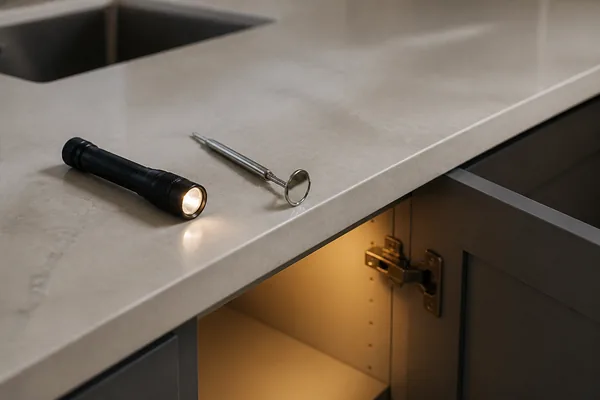
In apartment blocks, we inspect the affected unit and all adjacent units plus the shared entrance, because insects can arrive from any direction through the building's pipes and services.
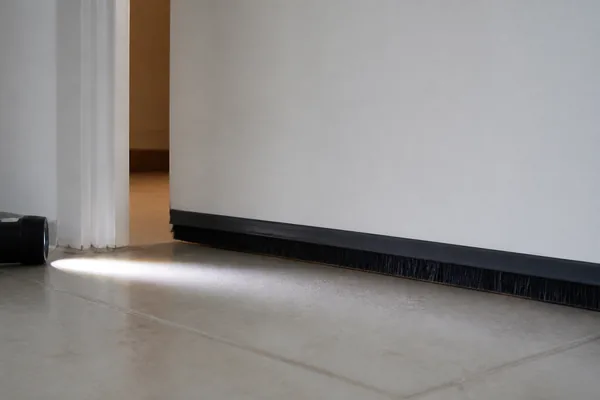
We trace entry routes through gaps around pipes, electrical conduits, broken windows and worn door seals, paying attention to tiny gaps that look insignificant but carry insects easily.
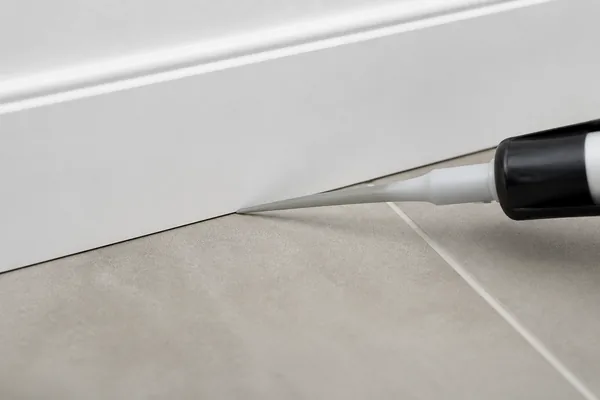
Cracks around water and waste lines need careful treatment to avoid disrupting services. We treat visible sections inside and outside, then seal them after confirming pests are dead.
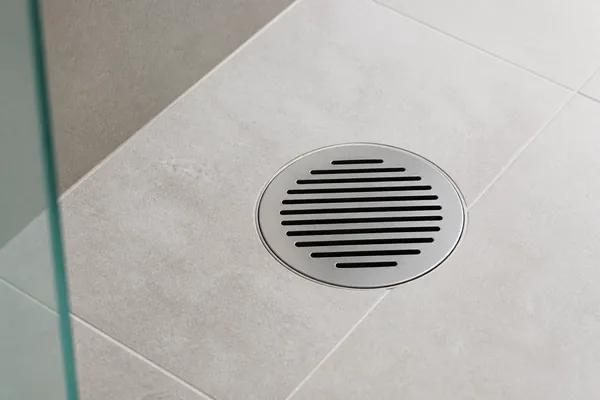
Drains and pipes under sinks and showers are permanent moisture sources. We treat inside visible pipe sections and clear blocked drains that trap water and humidity.
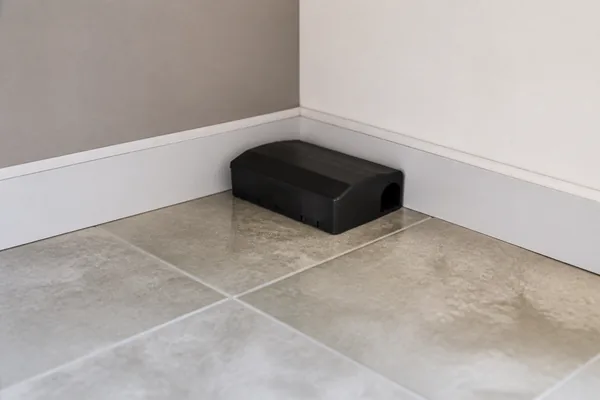
We place baits along main movement routes: near fine cracks, alongside pipe runs, in the shared entrance corner, along the skirting of the building's outer walls.
We plan follow-up visits every two weeks for the first four weeks because connected buildings need continuous protection, and we monitor responses from neighbouring units because infestation can return from there.
Droppings, damage and where they appear tell us the pest and roughly where it's nesting.
Gaps around pipes, thresholds and vents are the supply line.
Product goes into voids, cracks and the runways they use, not the open floor.
In the spaces spray can't reach, bait does the work, carried back to reach the nest and the ones that never surface.
Closing the easy entry points turns a constant re-supply into a closed problem, so the treatment isn't fighting a fresh wave every week.
Before leaving we walk the home with you and show you what was treated.
Al Rayyan stretches between the Air Base Bridge to the south and Al Kawthar to the north, with the Al Thuraya and Al Sultan schemes making up most of the district. Wide streets and clear building entrances make access straightforward for the treatment team.
Spraying what walks across the floor is the common mistake we're called in to fix.
The company runs a large crew, and we send a team rather than one person.
Ants, cockroaches and rodents each need different products and placements.
If what you have is a one-off that doesn't need treating, or a structural issue for a builder, we tell you.
Photographs from real jobs carried out by the crew.












The commitment is simple enough to actually keep: we show you what was treated, and we stand behind it within the agreed cover.
East Jeddah lies furthest from the sea and closest to the open ground and hills beyond the ring roads, so the air is drier and the dust is coarser and paler than on the coast. It comes in under doors and settles on every flat surface overnight, making sofas, mattresses and curtains the heaviest part of the routine. Floors are mostly ceramic tile in the apartment districts and marble in the villa areas, both scratched by grit that is mopped rather than swept. Roof tank water leaves a grey film of sediment in baths and basins.
We provide these in Al Rayyan too, and more than one can share a single visit.



