
We treat the source, not the sighting
Spraying what walks across the floor is the common mistake we're called in to fix.
Al Rabwah is an established mixed district where large older villas stand beside apartment buildings, connected by shared passageways. Pests move between vastly different housing patterns, from voids beneath sunken foundations to cracks in old masonry. Aged pipework and corroded metal conduits create hidden highways, and moisture collects in unseen gaps. A pest found in an old villa might be living in a void that has existed since the building was constructed.
In older districts, pests live in decades-old voids and cracks that began at the foundation itself, not just in corners you can see. For the method itself, see what pest control involves.
The large older villas of Al Rabwah rest on sunken foundations with voids beneath them, often damp from long-past leaks. Pests live in these buried spaces and climb into the house through drain openings and pipe runs. The owner sees no source of the problem unless we dig deeper than the floor level to find it.
Corroded metal pipes and old electrical conduits are perfect tunnels for tiny insects. The corrosion itself signals old seepage, which means there was moisture present to attract pests in the first place, and may still be.
Old walls crack around frames and corners, and the cracks expand with building movement and seasonal changes. An old building has hundreds or thousands of such cracks, and each one is a potential entry point the builders never anticipated.
An established district between King Fahd Road and Prince Majid Road, combining large villas and multi-storey apartment buildings with shared service routes and deep embedded piping.
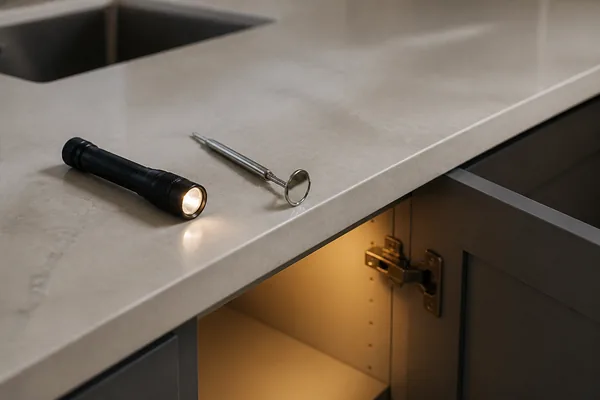
Thorough inspection in an old villa includes voids beneath the floor, the foundations and any basement spaces, not just visible areas.
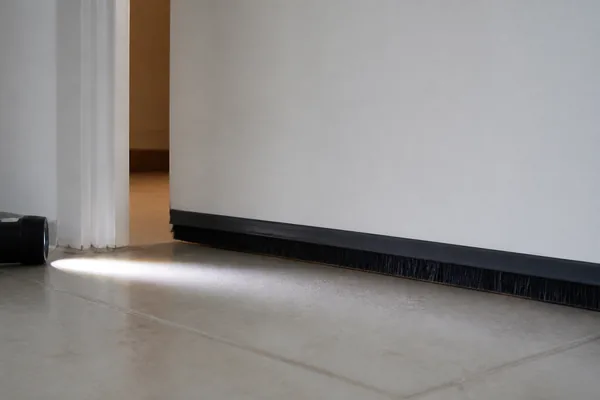
We trace aged pipework, cables and conduits around the foundation and external walls, as these are major travel routes.
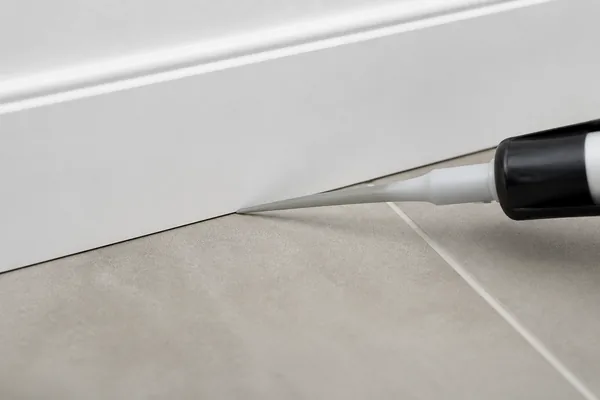
We seal large cracks and gaps around frames and pipes, and we recommend treating buried moisture below floor level.
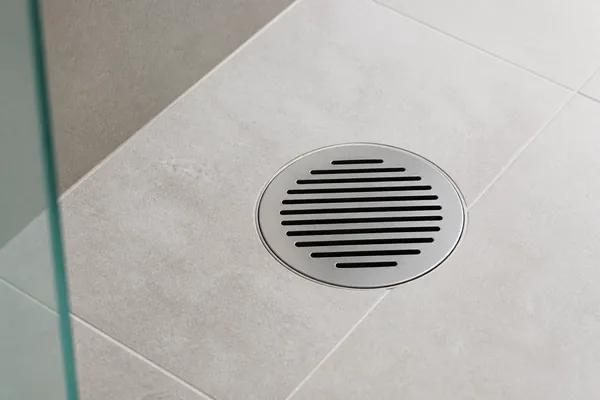
We address moisture in foundation voids by improving drainage and ventilation where possible, because moisture attracts pests to shelter there.
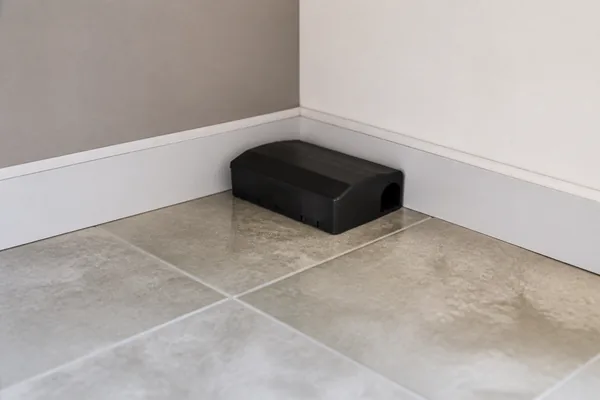
Bait is placed around the foundation perimeter and in wall voids, especially at old drain openings.
Follow-up every two weeks in the first months confirms we have found all sources and cut off all the old pathways that kept the problem alive.
Droppings, damage and where they appear tell us the pest and roughly where it's nesting.
Gaps around pipes, thresholds and vents are the supply line.
Product goes into voids, cracks and the runways they use, not the open floor.
In the spaces spray can't reach, bait does the work, carried back to reach the nest and the ones that never surface.
Closing the easy entry points turns a constant re-supply into a closed problem, so the treatment isn't fighting a fresh wave every week.
Before leaving we walk the home with you and show you what was treated.
Spraying what walks across the floor is the common mistake we're called in to fix.
The company runs a large crew, and we send a team rather than one person.
Ants, cockroaches and rodents each need different products and placements.
If what you have is a one-off that doesn't need treating, or a structural issue for a builder, we tell you.
Photographs from real jobs carried out by the crew.












The commitment is simple enough to actually keep: we show you what was treated, and we stand behind it within the agreed cover.
Mixed district: shops at street level with homes above them
In Al Rabwah, older villas and mixed buildings hide the problem underground and in historic voids. Cleaning and surface spraying are not enough; we investigate the foundations, aged piping and buried moisture that sustains the insects in the darkness.
We provide these in Al Rabwah too, and more than one can share a single visit.



