
We test before we degrease
Testing the solution on a hidden spot is a step we treat as necessary, not optional.
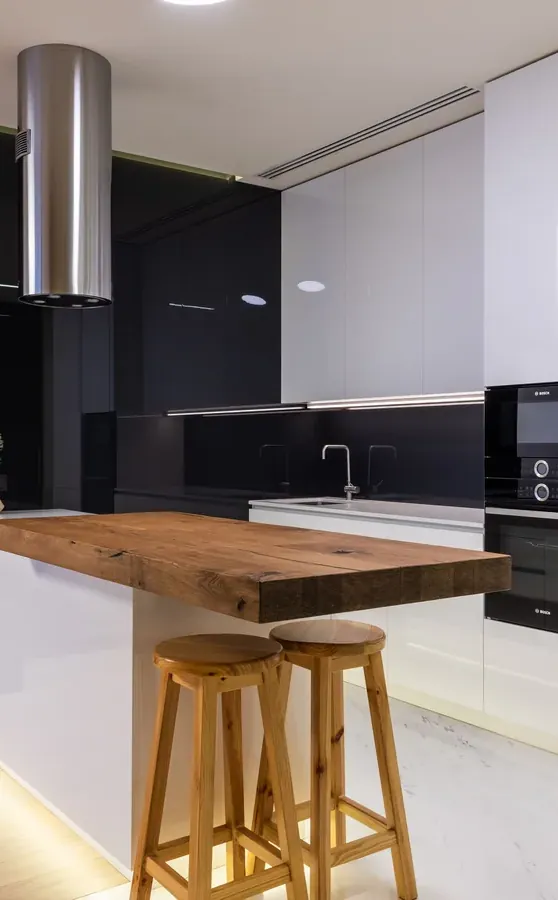
In Kilo 14, a kitchen does not get dirty the way other districts' kitchens do. The dust here is darker and oilier because it mixes diesel soot from the heavy road traffic and workshop grit with cooking oil. This compound sticks to every surface and hardens faster than pure grease. Cutting it needs a different approach than regular kitchen cleaning.
Old cement and ceramic floors darken quickly where soot is walked in, and transparent net curtains collect airborne particles that ordinary washing cannot remove. For the method itself, see what kitchen cleaning involves.
Cooking oil alone leaves a sticky film. Here, diesel soot from trucks and workshop exhaust mixes with the oil to form a black, hard crust on cabinets, the hood and the walls. This compound is harder to cut than pure grease. It needs a degreaser that breaks down both carbon and oil, applied from top to bottom.
Homes in this area sit close to the sea, and the salt air carries moisture that settles in kitchens. After the grease and soot are gone, humidity returns quickly to bathroom tiles and stored fabrics. Deep cleaning must dry the corners and the gaps between tiles to keep mould from returning fast.
The floors in older housing are plain cement or low-grade ceramic tile that absorbs soot particles into its surface. Ordinary mopping passes over it. Deep cleaning must treat the floor differently than it does new porcelain. Some discolouration may be permanent.
The industrial area combines car repair workshops, spare parts shops, a popular market selling fresh vegetables and fish, and densely built informal housing on unplanned streets with high population density.
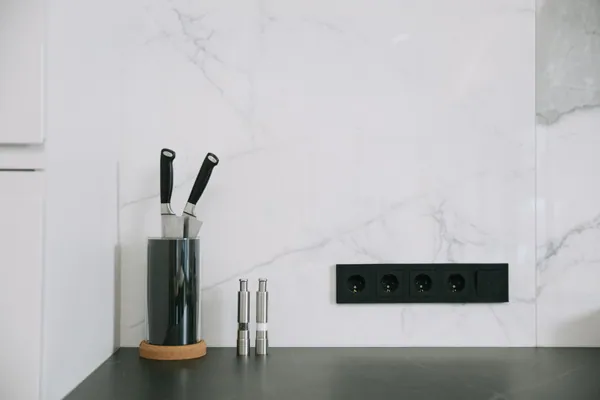
Cabinet fronts here accumulate a black layer of soot mixed with grease that surface wiping cannot shift. Removing it requires a strong product and time to work. The grain of cheap wood also traps particles deep inside.
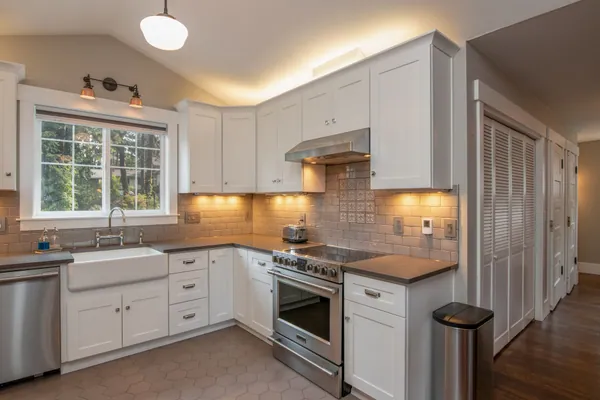
The extractor hood is clogged with soot more than with pure grease, and its filter blackens quickly. Separate hood and filter cleaning is essential, and the product must cut through both carbon and oil together.
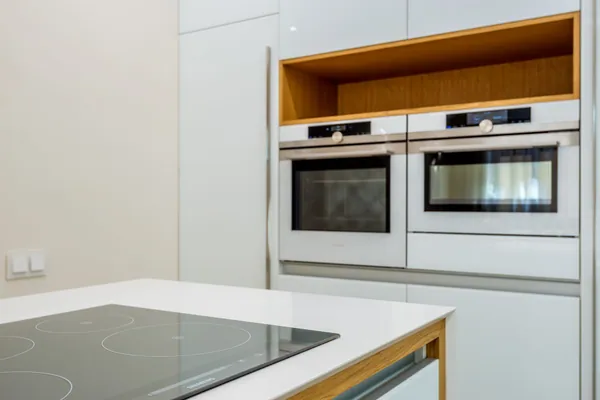
The stovetop and oven body combine cooking grease with truck soot. Gas burner heads need careful handling to avoid blocking the ports, and the interior surfaces must be treated with a product that is safe on metal and enamel.
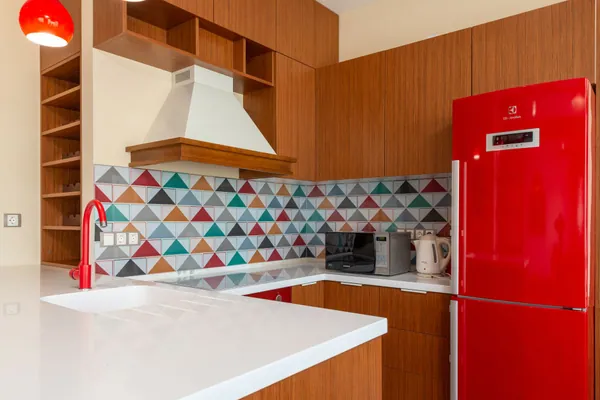
Tiles behind the hob absorb soot into the grout lines between them, and the cement darkens fast. Deep cleaning opens the grout and reveals its original colour where it was sealed by particles.
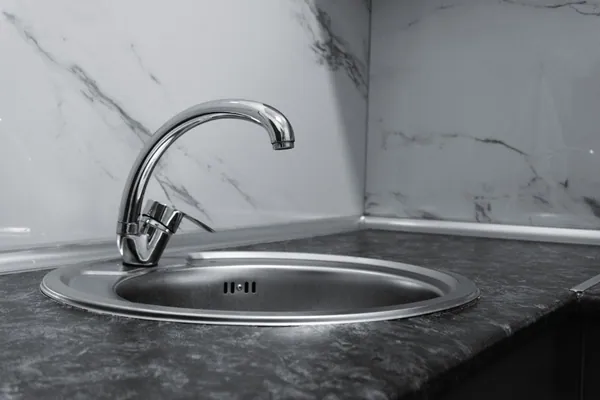
The sink and tap gather grease, soot and rust stains from old pipework. Salt air speeds rust formation, and cleaning removes the top layer but may not erase staining that has etched the metal.
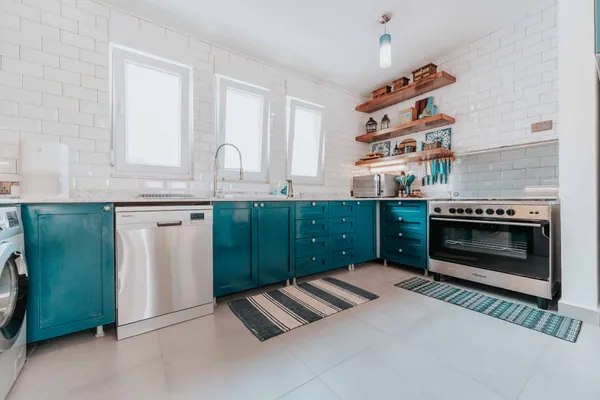
The floor and corners must be done last because soot has penetrated the surface. Corners trap both soot and moisture, and the gap between floor and wall needs drying to prevent mould.
Painted cabinets, laminate, natural stone and stainless steel do not take the same degreaser.
We start high, the tops of cabinets and the hood, and work down to the floor.
The degreaser is put on the heavy areas and given time to break the oil down before it is wiped.
The metal filter carries the worst of the grease and is soaked and worked on its own, not just wiped in place, because a clogged filter puts the oil straight back into the air.
The burners, the tiled splash and the grout lines take focused work, since the grout darkens first and a flat wipe passes over it.
We go over the kitchen with you before the team leaves.
Industrial area: workshops, warehouses and loading yards
In an industrial area, airborne pollutants are not just cooking grease. Truck exhaust and workshop dust enter the kitchen with the air and bond with the oil. Cleaning here is tackling a compound problem, not routine degreasing.
Testing the solution on a hidden spot is a step we treat as necessary, not optional.
We send a team, not a single worker.
The degreasers and tools come with the team.
If what the kitchen needs is a repair or pest treatment rather than a clean, we say so.
Photographs from real jobs carried out by the crew.












The commitment is simple enough to actually keep: we do not leave before you have seen the result and told us what you think of it.
South Jeddah runs from the port and the industrial city down towards Al Khumrah, and homes here sit between the sea and the heavy goods roads. The dust is darker and oilier than in the north, a mix of diesel soot and workshop grit, and it clings to net curtains, window sills and the tops of kitchen cupboards. Floors in the older low rise housing are often plain cement or ceramic tile that darkens where soot is walked in. Humidity from the coast adds mildew in bathrooms and a musty smell in stored fabrics.
We provide these in Kilo 14 too, and more than one can share a single visit.



