
We test before we degrease
Testing the solution on a hidden spot is a step we treat as necessary, not optional.
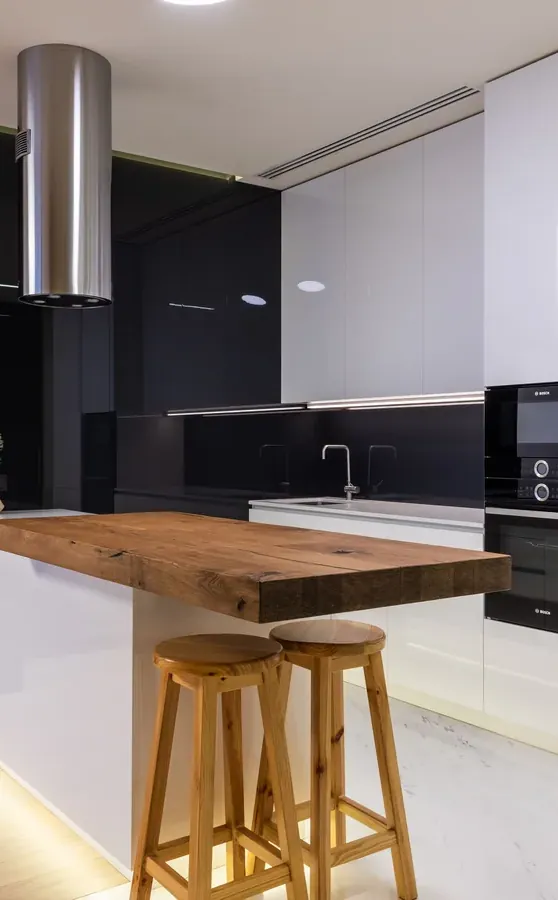
Al Wafa is a small residential district east Jeddah near open land and hills, where the air is drier than the coast and dust is coarser, darker and heavier. This thick dust enters kitchens and bonds to grease, making it far harder to remove than household grease alone. Flats and villas share the area, and both face kitchens clogged with the mixture rapidly.
Kitchens in Al Wafa accumulate thick grey layers of coarse dust and grease together far faster than kitchens in central Jeddah or near the coast. For the method itself, see how we approach kitchen cleaning.
The drier air east Jeddah carries coarse grit from roads and open land. This dust does not slide across hot oil but embeds directly into it. When the oil cools, the mixture becomes rock hard and difficult to remove. Daily wiping works the particles deeper rather than lifting them away, and the residue hardens further with each day.
The dry environment east Jeddah means dust dries instantly and bonds to dry grease with tremendous force. No humidity allows the particles to slide or separate. The dry mixture grips the surface tightly and hardens with time, and no amount of water will dissolve it.
Grease alone is relatively straightforward, but coarse dust locked to dry grease requires a stronger agent and longer contact time. The degrease must first soften the grease bond so dust particles can release, then clear the freed grit. Work sequence here differs from coastal kitchens where humidity helps.
The location east Jeddah toward Asfan and open ground away from the sea means drier air and heavier dust that does not dissolve easily in plain water.
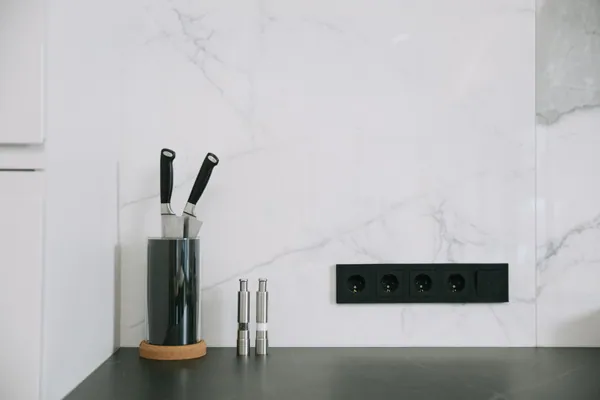
Cabinet fronts in Al Wafa kitchens collect a thick layer of grey dust mixed with yellow grease, and cleaning requires a strong agent and adequate dwell time for breakdown.
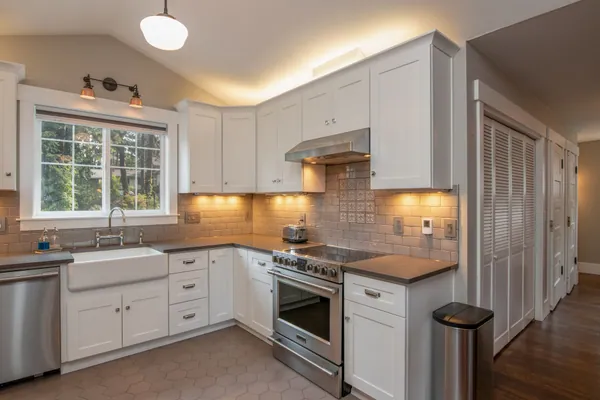
The extractor hood and filter clog rapidly from coarse dust, and the filter may occasionally need replacement if heavily clogged, though careful cleaning usually restores it.
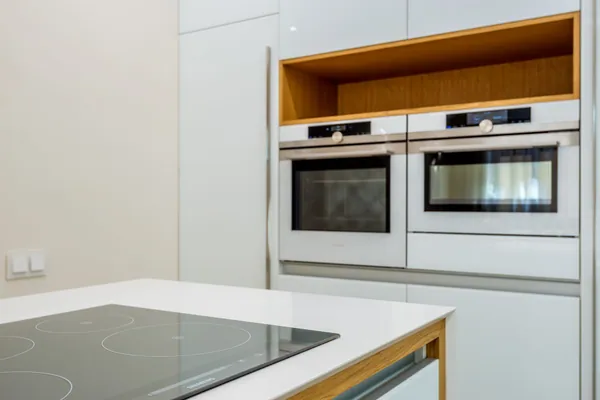
Old ovens and hobs need careful attention because they may be weakened by rust and age, combining dust, old grease and corrosion in ways that require a gentle touch.
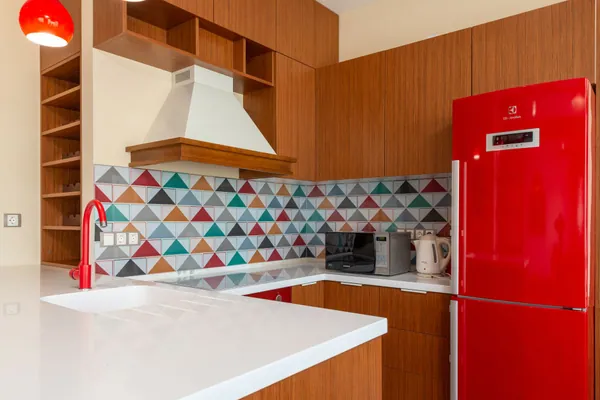
Tiles behind the hob trap coarse dry dust and thick grease together, and grouting turns black from accumulation. Cleaning requires a small brush and patience to clear packed material.
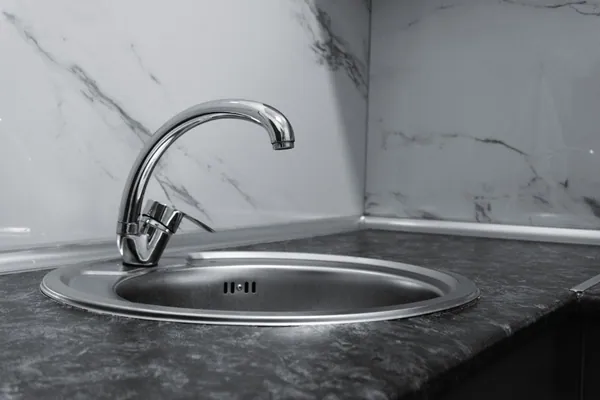
Sink and mixer tap show grey deposits from roof tank water alongside grease marks, requiring an agent that removes both mineral scale and residual oil.
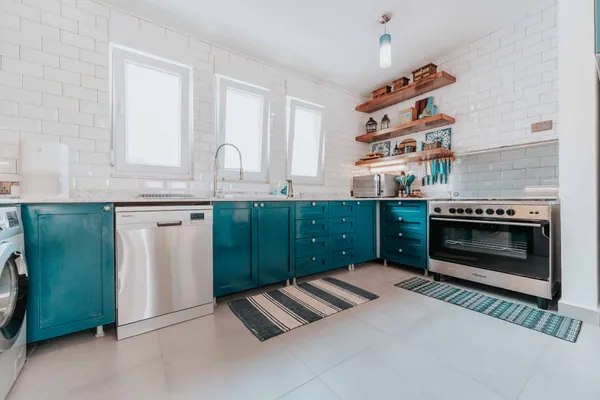
Ceramic or marble floors need sweeping first because grit scratches them easily if mopped without initial dust removal.
Painted cabinets, laminate, natural stone and stainless steel do not take the same degreaser.
We start high, the tops of cabinets and the hood, and work down to the floor.
The degreaser is put on the heavy areas and given time to break the oil down before it is wiped.
The metal filter carries the worst of the grease and is soaked and worked on its own, not just wiped in place, because a clogged filter puts the oil straight back into the air.
The burners, the tiled splash and the grout lines take focused work, since the grout darkens first and a flat wipe passes over it.
We go over the kitchen with you before the team leaves.
Mixed district: shops at street level with homes above them
A mixed district here means flats and villas sharing the same dust problem. Dust and grease form a compound that is dry and hard rather than sticky, and cleaning requires more force and time because the agent must break the dust-grease bond rather than dissolve moist oil.
Testing the solution on a hidden spot is a step we treat as necessary, not optional.
We send a team, not a single worker.
The degreasers and tools come with the team.
If what the kitchen needs is a repair or pest treatment rather than a clean, we say so.
Photographs from real jobs carried out by the crew.












The commitment is simple enough to actually keep: we do not leave before you have seen the result and told us what you think of it.
East Jeddah lies furthest from the sea and closest to the open ground and hills beyond the ring roads, so the air is drier and the dust is coarser and paler than on the coast. It comes in under doors and settles on every flat surface overnight, making sofas, mattresses and curtains the heaviest part of the routine. Floors are mostly ceramic tile in the apartment districts and marble in the villa areas, both scratched by grit that is mopped rather than swept. Roof tank water leaves a grey film of sediment in baths and basins.
We provide these in Al Wafa too, and more than one can share a single visit.



