
We test before we clean
Testing the solution on a hidden fold is a step we treat as necessary, not optional.
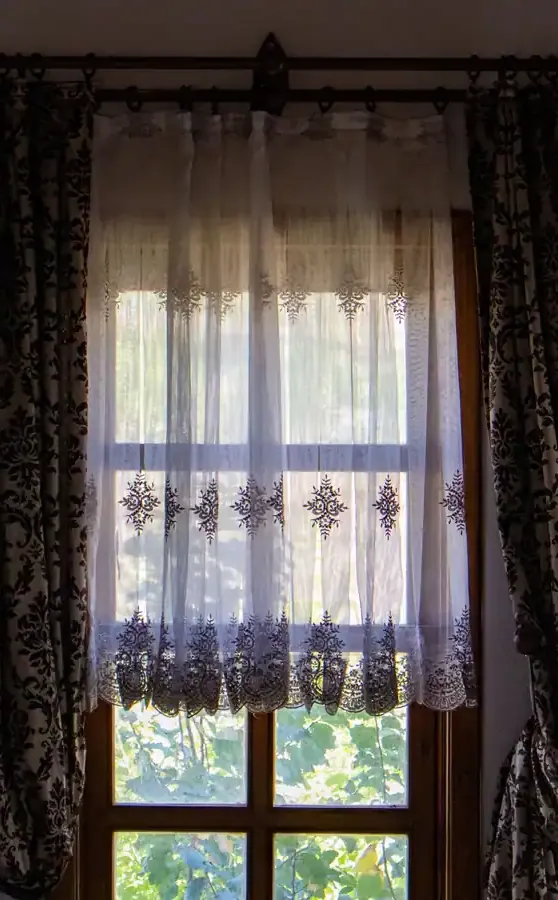
Al Corniche faces the Red Sea directly, and salt-laden humidity penetrates every window daily, settling into the weave of the curtains. Sea salt reacts with the fibres and weakens them progressively. High humidity year-round accelerates mould and the trapped, stale smell that builds in damp fabric. Routine cleaning cannot reach the salt deposits and moisture residue that gather here.
Curtains require more frequent professional washing because salt and humidity never fully leave the weave, and mould appears rapidly even in modern air-conditioned flats. For the method itself, see our guide to curtain cleaning.
Salt-laden humidity from the Red Sea penetrates curtains daily and reacts with the fibres from within. This causes progressive weakness that is invisible at first, but emerges during removal or washing. Specialised cleaning must extract salt before it causes the fabric to tear or thin.
Humid air does not dry curtains, even when they hang in strong sun. Moisture remains in the folds of the weave and feeds fungal growth. Controlled drying after cleaning is essential to prevent mould from returning within weeks.
Salt, humidity and mineral deposits from the sea leave a deep, musty trapped smell in the fibres. Dry vacuuming alone cannot reach it. Specialised cleaning must penetrate the weave to extract the smell at source and prevent it from reforming.
The northern coastal strip is exposed to salt-saturated air from the Red Sea throughout the year, with salt crystals depositing on every exposed surface, including window textiles.
Coastal fabrics require close inspection for salt deposits and trapped moisture before any cleaning treatment begins.
Removal must be gentle because fabric weakened by years of salt and humidity accumulation may be fragile or compromised.
Dry vacuum extraction must be thorough to draw salt particles and moisture residue from deep within the weave.
Salt staining, mould, and trapped musty smells each need separate, specialised treatment tailored to the specific deposit.
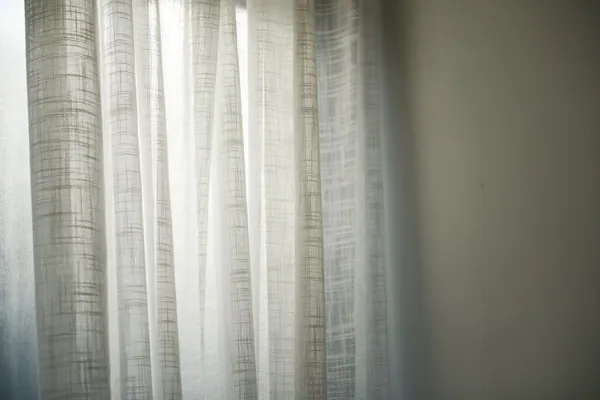
The cleaning method depends on fabric type and degree of salt damage, and is always tested on a corner sample first.
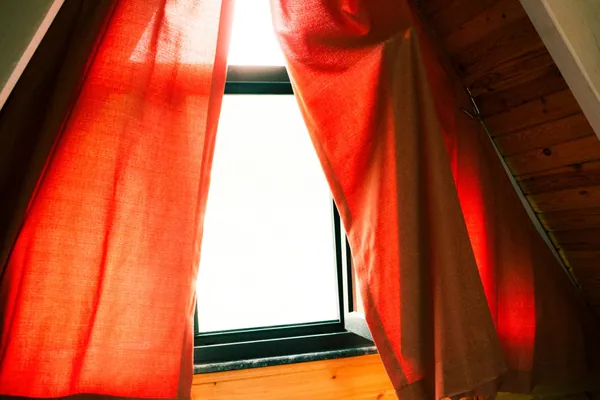
Controlled drying and humidity management are critical here, then careful rehang on the original track without strain.
Cotton, linen, velvet, blackout weave and synthetic sheers do not take the same heat or the same solution.
Before any water.
A water spot at the hem is not treated like a greasy film near a kitchen.
We loosen what has bonded inside the fibres across the full panel, both faces and top to hem, with the method that suits the fabric, while the curtains stay on the rail so the drape is not disturbed.
The loosened dirt and water are pulled back out in the same pass.
We go over the panels with you before the team leaves.
Testing the solution on a hidden fold is a step we treat as necessary, not optional.
We send a team, not a single worker.
The cleaning and extraction machines come with the team.
If a panel needs a tailor rather than a clean, we say so.
Photographs from real jobs carried out by the crew.












The commitment is simple enough to actually keep: we do not leave before you have seen the result and told us what you think of it.
Coastal area: high humidity and salt air through the year
Coastal areas mean constant humidity and salt spray depositing daily. This places curtains under continuous pressure that accelerates fabric breakdown and mould onset. Cleaning here is not optional but a necessary regular investment in protecting both the textiles and the air inside the flat.
We provide these in Al Corniche too, and more than one can share a single visit.



