
The gear reaches the scale
Proper descalers, matched to each surface, are what move mineral off glass and out of grout.
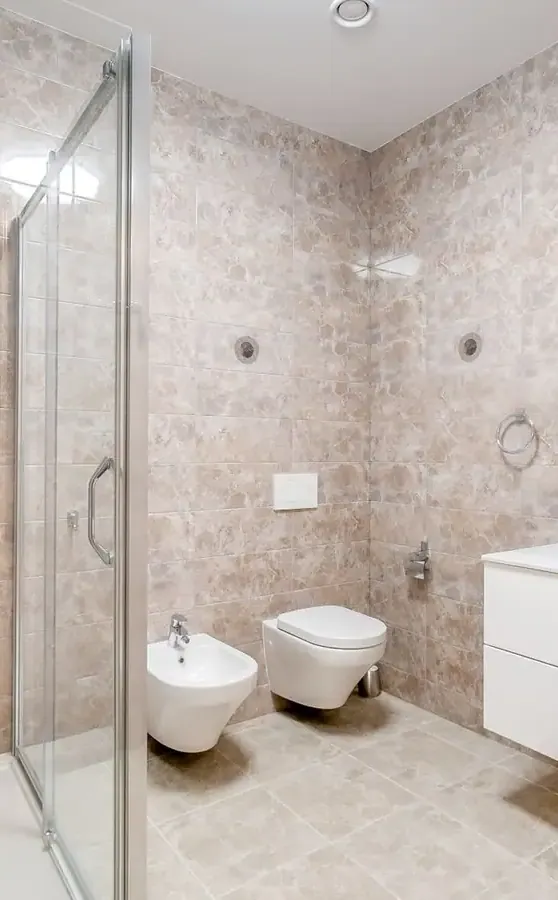
Dhahban West is an old coastal village on the Red Sea north of Jeddah, historically home to fishing families of the Al Jada'an and Al Ni'am clans, later a tourist destination after the Durrat Al Arus resort opened nearby. Bathrooms here battle concentrated sea salt, year-round humidity and salt-laden wind, salt deposits bond hard and mould returns faster than anywhere else.
Bathrooms in homes directly beside the sea need deep cleaning far more often than homes in the interior, because salt penetrates walls, pipes and all metal fittings. For the method itself, see what bathroom cleaning involves.
The coastal air here is richer in sea salt than south Jeddah, and wind drives it straight into bathrooms. Taps, metals and ceramic are covered in thick salt coating within weeks, and rust starts beneath the salt layer. New fixtures corrode fast.
Old houses here were built with materials not tested for continuous coastal dampness. Grout joints absorb salt water and mould grows deep inside, surface scrubbing cannot reach into the joint itself where mould feeds on salt and moisture.
Pipes in seaside homes collect salt and microscopic algae from salt-laden air. Deposits form inside the pipe around its walls, water pools because the pipe is clogged from marine sediment that ordinary chemical drain cleaners cannot dissolve.
A village right on the coast, homes here face the sea and salt wind directly, and humidity never breaks even in the dry season. The air is saturated with sea salt particles year-round.
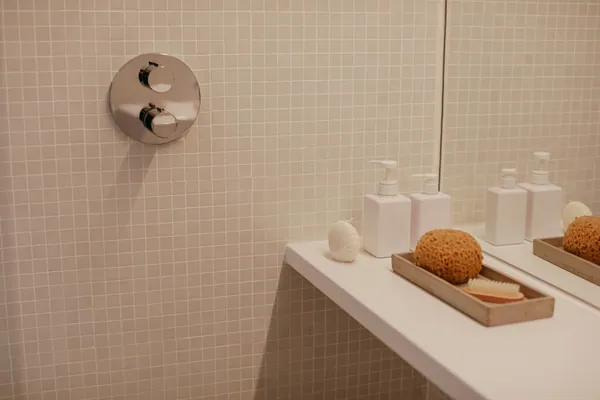
Surface testing checks how each material resists salt, because old marble and ceramic react with salt in different ways and need different approaches.
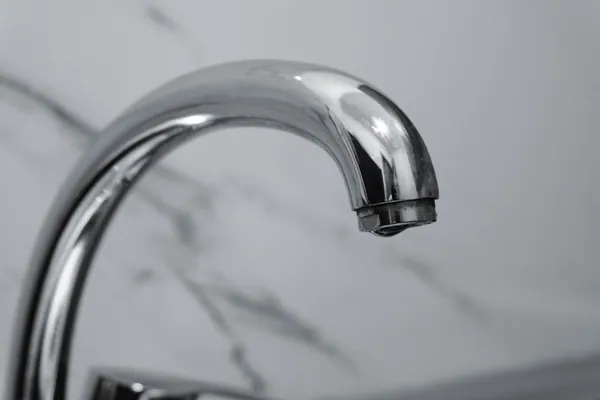
Removing salt deposits requires specialist chemical treatment because sea salt bonds harder than ordinary limescale and needs chemical assistance.
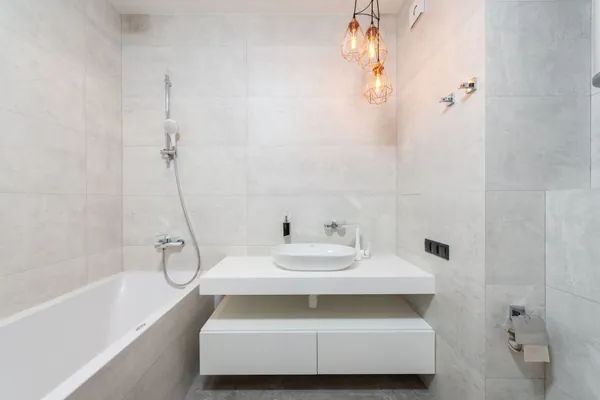
Grout line work removes salt and mould from inside the joint, then dries quickly because coastal moisture returns immediately.
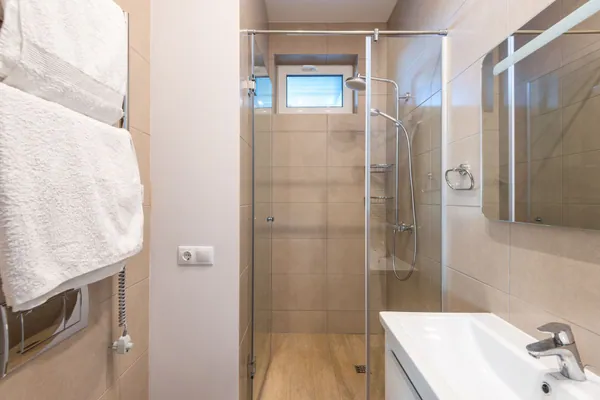
Glass and mirrors are salt-cleaned and defogged, then dried carefully because salt returns very quickly in the salty seaside environment.
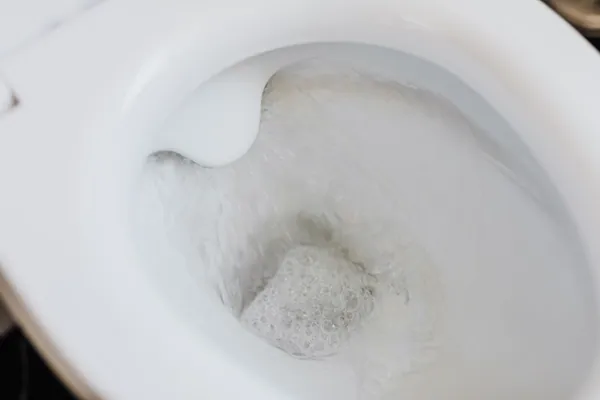
Tap, basin and bath are cleaned of salt and rust, with careful inspection of silicone and metals for deep corrosion from ongoing salt exposure.
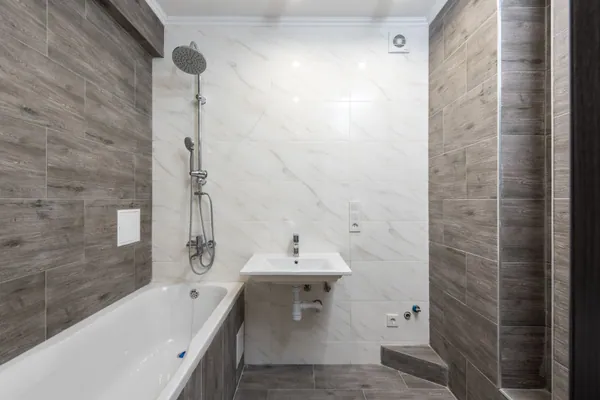
Drain and ventilation are cleared of salt and algae sediment, then left open to air the bathroom quickly because coastal dampness returns fast.
We open the room, take everything off the ledges and shelves, and lift loose hair from the drains before any water or chemical goes down.
Scale on glass, taps and the shower head is not scrubbed off cold.
The joints are treated and scrubbed along the line, top to bottom, because film sits in the porous grout and a flat wipe never enters it.
The bowl, the base joint and the floor trap are done as one stage, since this is where odour lives.
What the products loosened is lifted off, and everything is rinsed downward so nothing dirty settles back onto a cleaned surface.
The damp low corners are dried so nothing feeds mould again, then we walk the room with you.
Proper descalers, matched to each surface, are what move mineral off glass and out of grout.
We send a team, not a single person.
Where scale has already etched the glass or mould has stained the grout for good, we tell you at the inspection.
Nothing is called done until you have walked the room and said so.
Photographs from real jobs carried out by the crew.












The commitment is simple enough to actually keep: we do not leave until you have seen the result and told us what you think of it.
Dhahban Park and King Abdulaziz Road are the main navigation points in the coastal village, and work in Dhahban West departs from King Abdulaziz Road toward the shore. Durrat Al Arus Resort nearby marks where homes sit that need specialist coastal bathroom deep cleaning.
We provide these in Dhahban West too, and more than one can share a single visit.



