
The gear reaches the scale
Proper descalers, matched to each surface, are what move mineral off glass and out of grout.
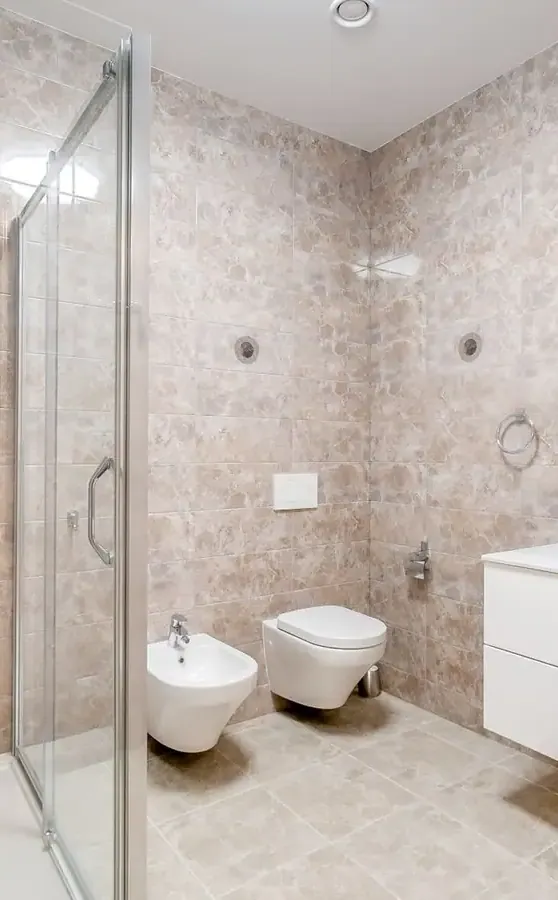
Al Mahjar is a south Jeddah district on King Faisal Road between hospitals and commercial markets, sitting close to the port and refinery where heavy trucks pass daily. Dark oily dust and diesel soot drift into the bathroom on the wind and on clothes, while sea humidity locks these particles onto grout and glass. The deposits here are not just dust; they are damp and oily.
Floors here darken from soot deposits fast despite repeated mopping, because oily dust settles rather than sweeps clean. For the method itself, see our bathroom cleaning service in detail.
Diesel soot mixed with workshop grit sticks to curtains, window frames and bathroom edges. Grout lines blacken fast because the oils make fine dust particles adhere rather than slide. Glass and mirrors become cloudy within days even after cleaning.
Older housing with plain concrete or basic ceramic tile darkens visibly where people walk the daily soot in. Ordinary mopping removes the surface but the colour underneath is worse, because the oil has entered the stone itself and cannot be wiped away.
The damp air from the port makes the bathroom a perfect breeding ground for mould on the ceiling and high walls, not just in grout. Cleaning removes what is there but humidity brings it back quickly and in quantity.
The district lies between heavy goods roads and the industrial port on one side and the sea on the other. The dust carries diesel fumes and workshop particles, and it clings instead of falling.
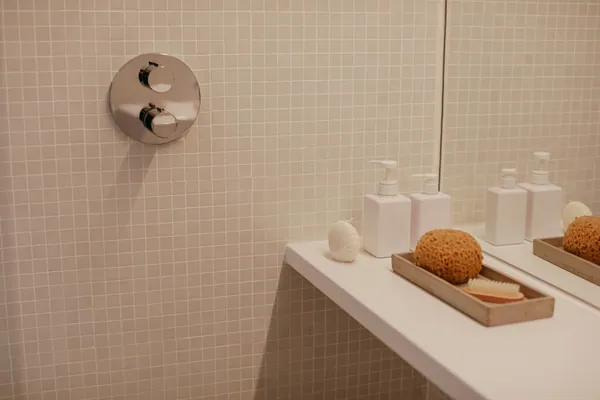
Concrete and ceramic floors need testing first to measure how deep the oily soot has gone, because hard scrubbing may not help if the oil has entered the pores.
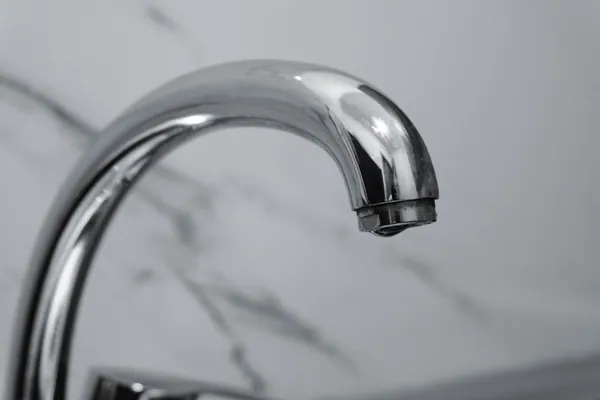
Limescale on taps is mixed with soot grease, so we use a product that removes both together with extended soaking.
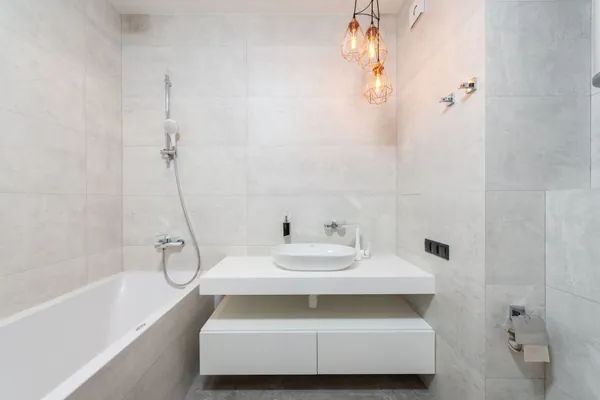
Grout needs double soaking because oily dust adheres harder than ordinary mould dust does in other districts.
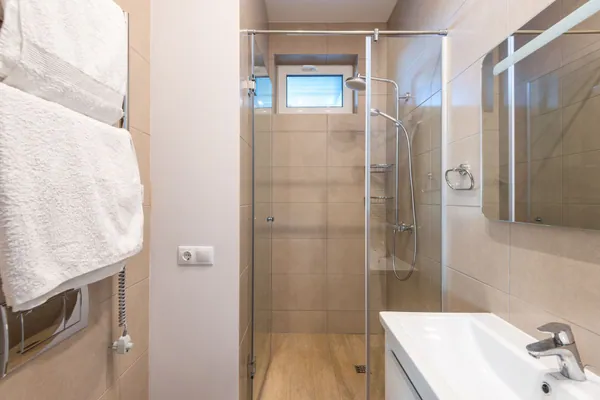
Glass and mirrors need repeated wiping with strong product because grease leaves a thin film that returns quickly.
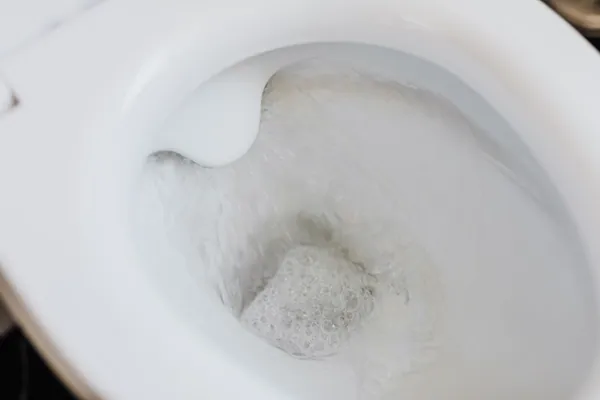
Basin, toilet and bath all carry layers of scale and soot combined. We soak them with strong product then work each fixture separately.
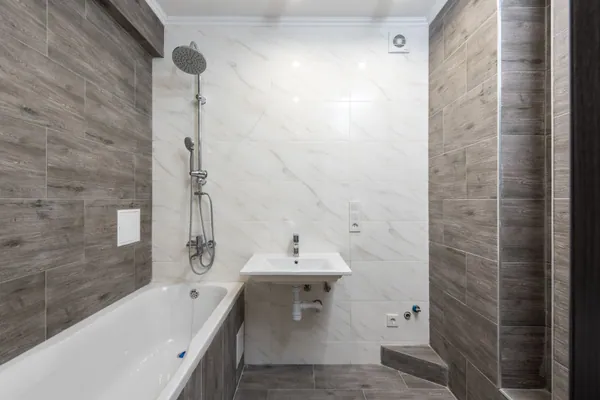
Drain and vents need deep clearing of hair, grease and accumulated soot before final rinsing.
We open the room, take everything off the ledges and shelves, and lift loose hair from the drains before any water or chemical goes down.
Scale on glass, taps and the shower head is not scrubbed off cold.
The joints are treated and scrubbed along the line, top to bottom, because film sits in the porous grout and a flat wipe never enters it.
The bowl, the base joint and the floor trap are done as one stage, since this is where odour lives.
What the products loosened is lifted off, and everything is rinsed downward so nothing dirty settles back onto a cleaned surface.
The damp low corners are dried so nothing feeds mould again, then we walk the room with you.
Proper descalers, matched to each surface, are what move mineral off glass and out of grout.
We send a team, not a single person.
Where scale has already etched the glass or mould has stained the grout for good, we tell you at the inspection.
Nothing is called done until you have walked the room and said so.
Photographs from real jobs carried out by the crew.












The commitment is simple enough to actually keep: we do not leave until you have seen the result and told us what you think of it.
South Jeddah runs from the port and the industrial city down towards Al Khumrah, and homes here sit between the sea and the heavy goods roads. The dust is darker and oilier than in the north, a mix of diesel soot and workshop grit, and it clings to net curtains, window sills and the tops of kitchen cupboards. Floors in the older low rise housing are often plain cement or ceramic tile that darkens where soot is walked in. Humidity from the coast adds mildew in bathrooms and a musty smell in stored fabrics.
We provide these in Al Mahjar too, and more than one can share a single visit.



