We test before we wash
Testing the product on a hidden patch is a step we treat as necessary rather than optional.
Al Sarawat is an industrial district dotted with warehouses and workshops around scattered homes. Sofas here absorb heavy industrial dust and machinery oils far faster than those in purely residential areas. The washing must reach that industrial depth throughout the foam.
Sofas in Al Sarawat carry a blend of oily diesel soot and workshop particulates that ordinary vacuuming cannot extract. The dust is denser and more adhesive than residential dust, requiring deeper, more persistent removal. For the method itself, see the full sofa and upholstery cleaning page.
Metal workshops and vehicle yards around Al Sarawat release oily fumes and heavy grit. This mixture does not slide off fabric easily and builds up fast in the pile. Standard vacuuming will not budge it. The fabric must be tested first, then washed on all three sides of the sofa frame with care.
Near the southern corniche, sea moisture creeps into home foundations and rises through walls and furniture. A sofa placed against a damp wall absorbs this moisture and develops musty smells before visible mildew arrives. Post wash drying must be monitored closely so the smell does not return.
Al Sarawat sees constant truck and machinery movement. Families work near this activity or live in homes close to loading zones, so fine grit and mineral oils enter the home on shoes and clothes. Sofas here face greater cleaning pressure than those in quieter districts.
The district sits adjacent to Jeddah Industrial City and the southern corniche, where dust and fumes from neighbouring workshops and warehouses settle heavily on indoor furnishings daily.
Fabric in Al Sarawat is saturated with oily industrial dust. Testing shows whether it accepts plain water or needs a solvent-based treatment designed for machinery soil.
Deep vacuuming in the industrial zone removes far more heavy grit than standard home vacuuming, because the dust is denser and does not lift easily.
All sides of the sofa and back are washed with a product matched to the fabric type and the industrial soiling, never with a one-method approach.
Cushions in industrial-area sofas carry dust on both faces from daily handling near workshops. Both sides must be cleaned in the same wash.

Oil stains, grease marks and machinery residue need different products than food and drink spills. Each type is treated with the solution it responds to.
Drying near the southern coast requires humidity monitoring because sea moisture rises through the foundation and can bring mildew back if not controlled.
Cotton, velvet, chenille and synthetics do not take the same heat or the same product.
Before any water.
An oil mark is not treated like a juice mark.
We wash with the method that suits the fabric.
The piece is left slightly damp, never wet.
We go over the pieces with you before leaving.
Al Sarawat sits about 3.5 km from Al Khumrah and about 4.5 km from Al Sarawriyah.
Open in Google MapsTesting the product on a hidden patch is a step we treat as necessary rather than optional.
The company employs more than forty cleaners, and we send a crew rather than an individual.
The washing and extraction machines are ours and travel with the crew.
If a piece needs reupholstering rather than washing, we say so.
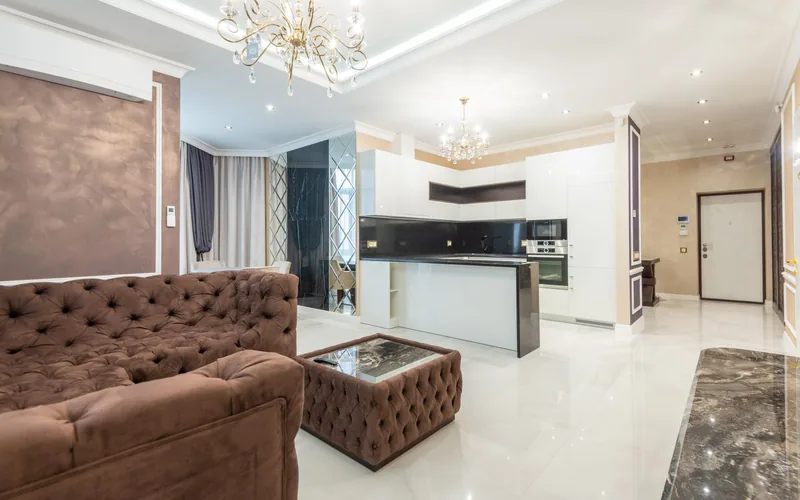
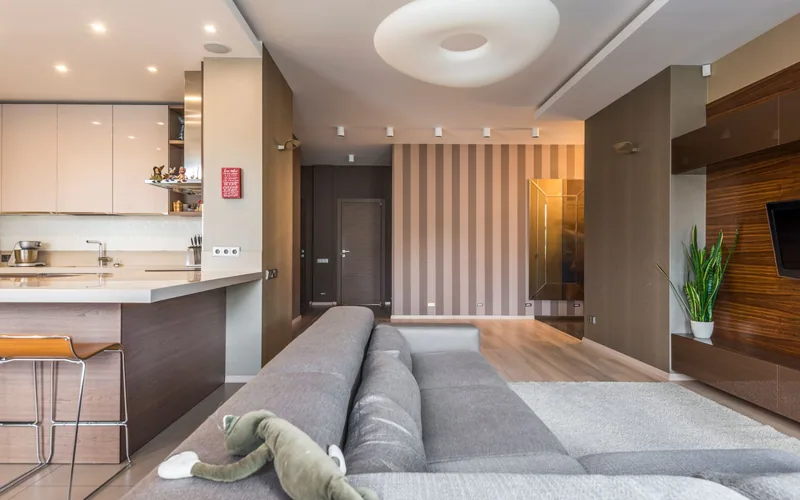
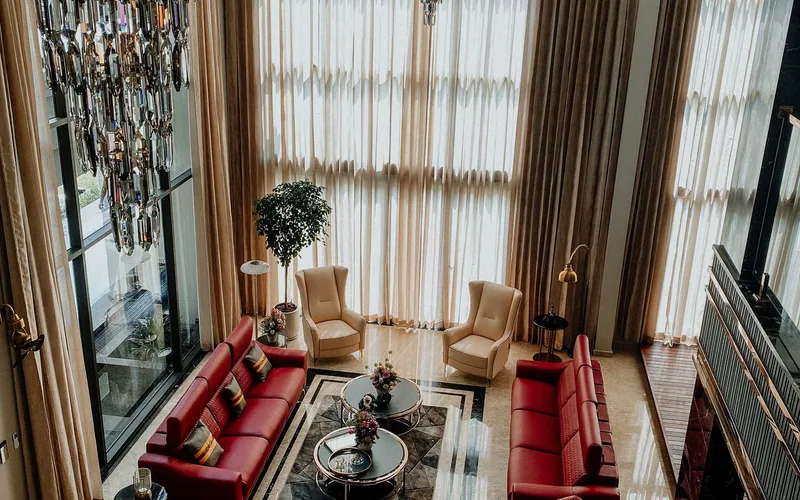
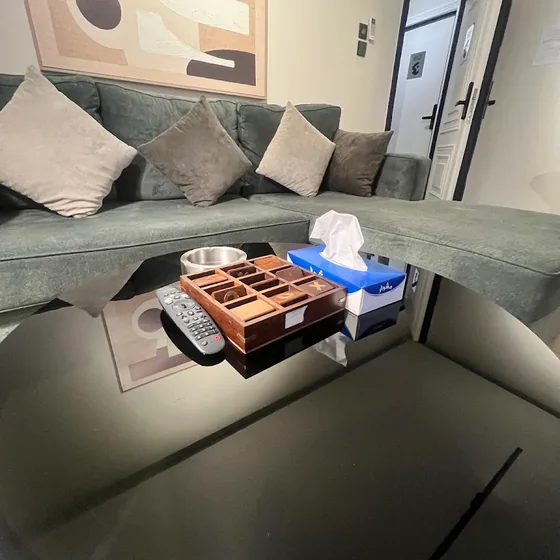
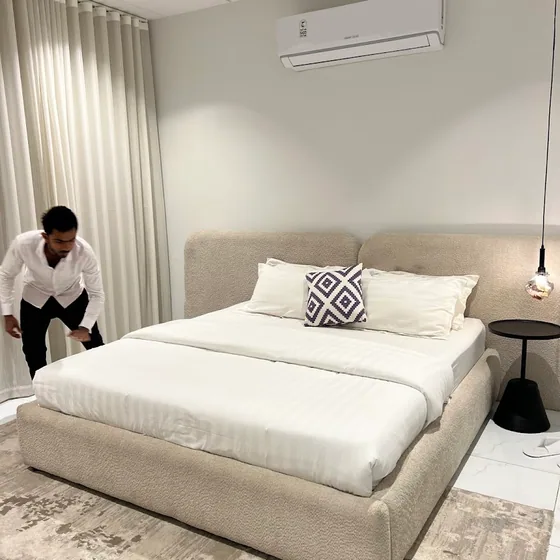
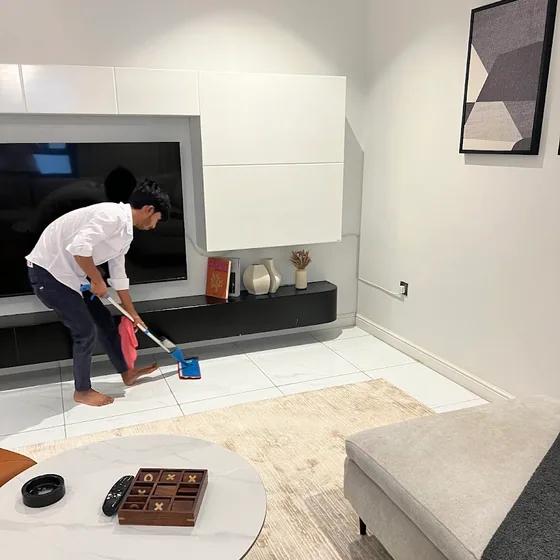
Photographs from real jobs carried out by the crew.
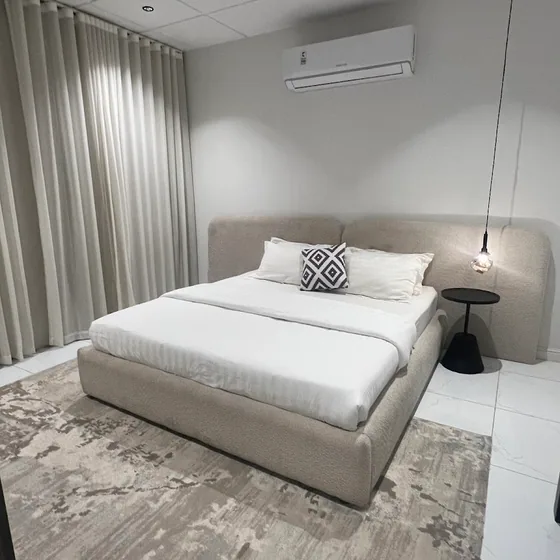
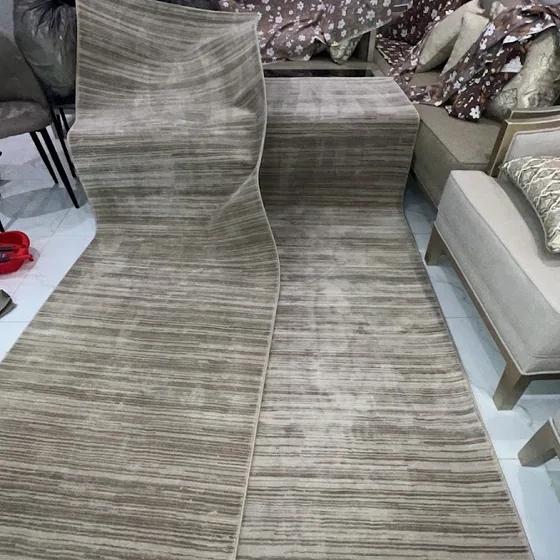
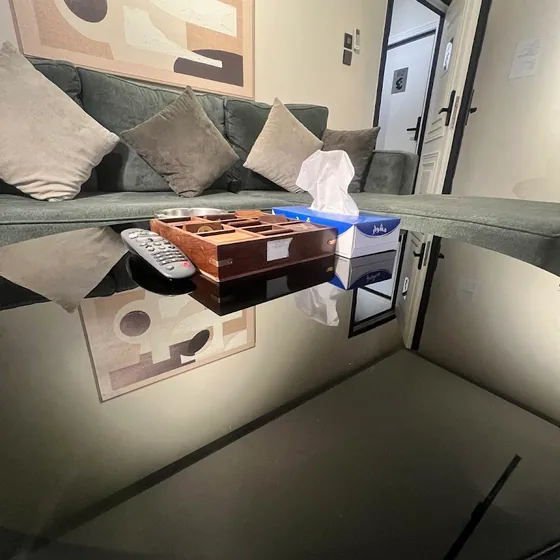
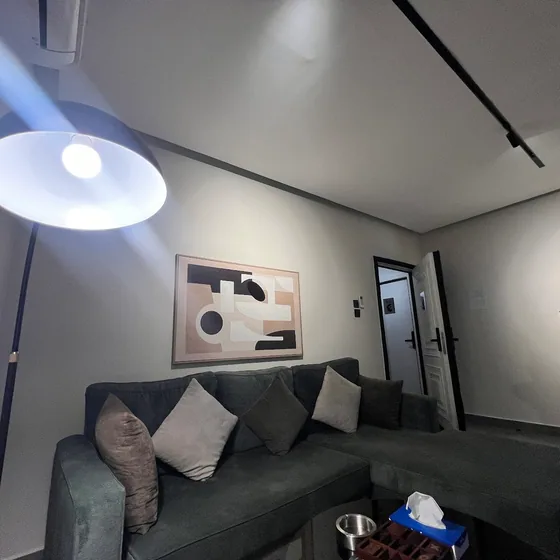
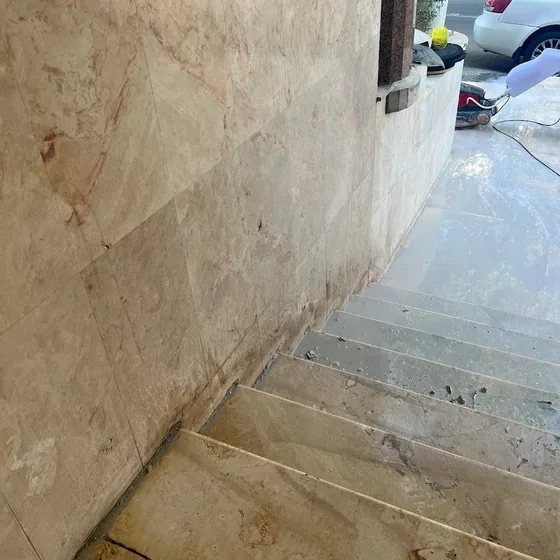
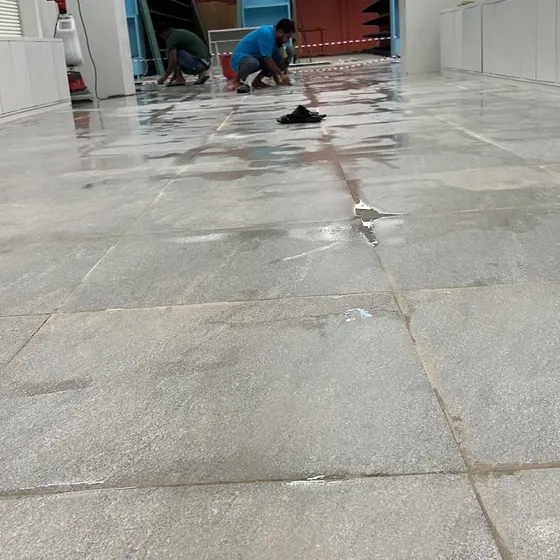
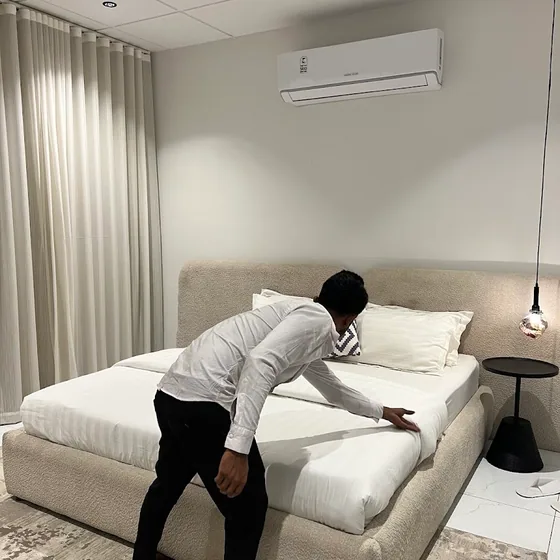
The commitment is simple enough to be keepable: we do not leave until you have seen the result and given your view of it.
Industrial area: workshops, warehouses and loading yards
An industrial zone means the sofa is exposed to heavy grit and mineral oil daily. This demands continuous deep vacuuming and specialist washing matched to the fabric, not generic home upholstery cleaning.
We provide these in Al Sarawat too, and more than one can share a single visit.