We test before we wash
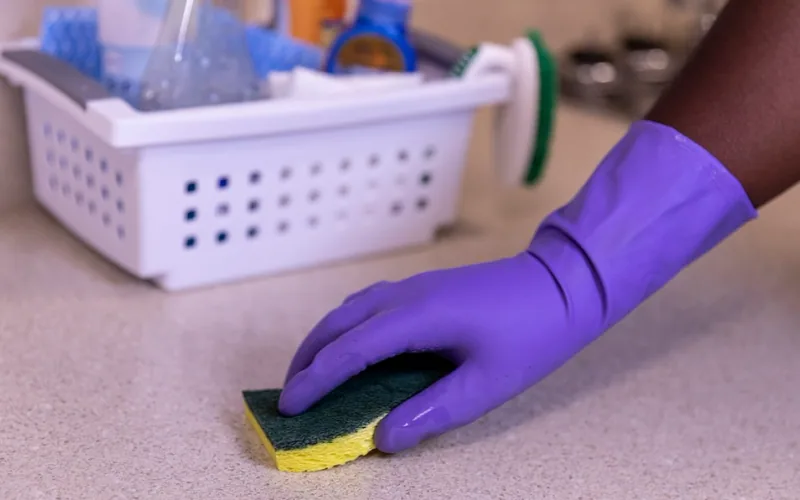
Testing the product on a hidden patch is a step we treat as necessary rather than optional.
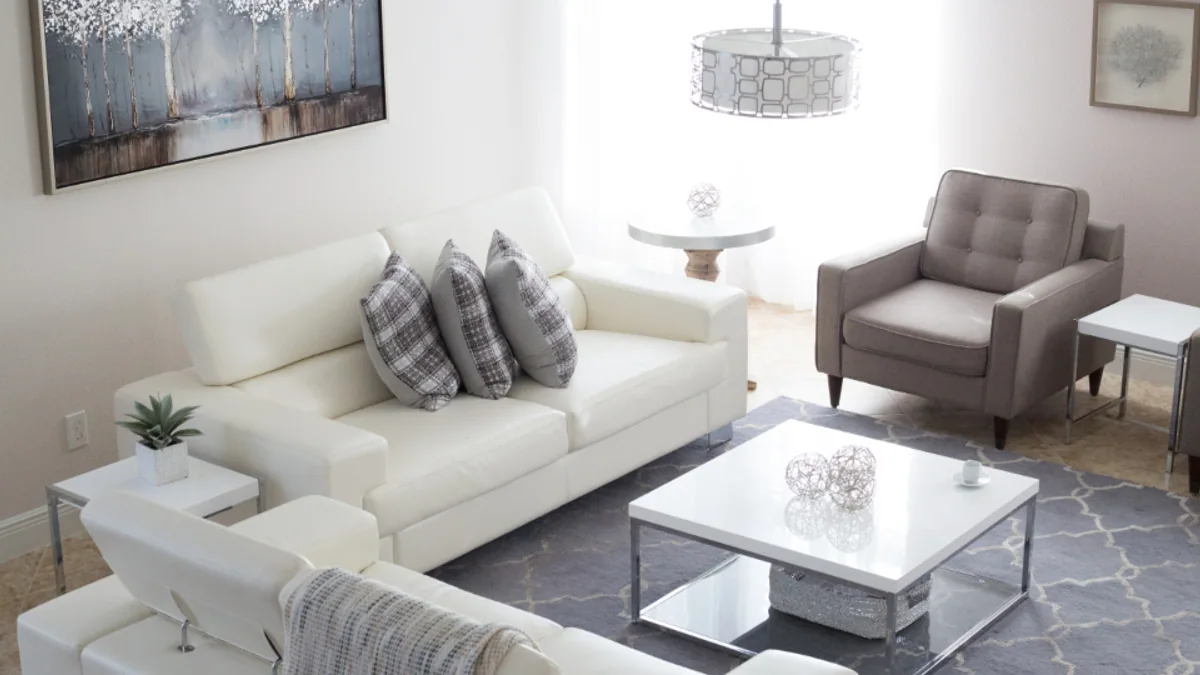
Al Sarawriyah is an industrial district in south Jeddah along the Al Laith Expressway, where warehouses and commercial workshops vastly outnumber homes. Working families rent villas and apartments interspersed among the loading yards and repair shops. The air carries diesel soot and fine workshop dust that settles on sofas and upholstery faster than in purely residential neighbourhoods, and the odour clings deeply.
Sofas and upholstery in Al Sarawriyah soil from fine black diesel soot and workshop grit far more rapidly than in residential districts, because the air is concentrated with exhaust particles and metal dust from the surrounding industrial activity. For the method itself, see how we approach sofa and upholstery cleaning.
The air in the industrial area carries fine metal particles from machine shops and black diesel soot from heavy vehicle exhausts. These particles do not merely settle on the surface but penetrate the fabric weave and mix with natural skin oils, leaving a thick grey-black film on the upholstery. Vacuuming alone cannot break this bond.
Diesel soot and engine oils from the workshops and heavy goods traffic leave a sharp, harsh smell trapped in the sofa foam. The odour is part of the fine particle deposit, not a separate smell. It requires chemical treatment alongside the wash to actually dissolve the molecules bound in the fibres.
Floors in homes throughout the industrial district are usually plain cement or simple ceramic tile, both quickly soiled by the fine sand and pebbles that enter from the street. This grit is walked across floors and left behind, and if not removed carefully it scratches sofas during washing and sits in the foam where it traps odour.
Located beside Al Khumrah near the vegetable and livestock markets and Al Seef Beach, the district is bounded by the Al Laith expressway and surrounded by distribution warehouses, heavy goods routes and maintenance workshops on multiple sides.
Fabric testing first is essential in the industrial zone because soot and grease can affect some textiles differently than others.
Deep dry vacuuming removes the fine black soot and grit that has worked into the weave at a molecular level.
Washing with products that break down industrial grease and diesel soot is essential in this district.
Cushions and arms need specialist treatment because high humidity combined with soot creates a musty trapped smell.
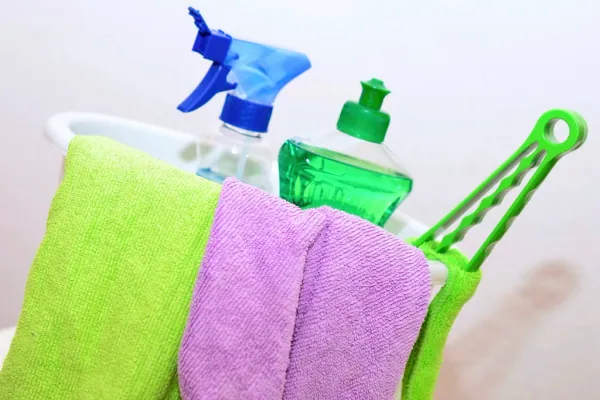
Stains from oils and soot require separate targeted treatment with strong products before the full fabric wash.
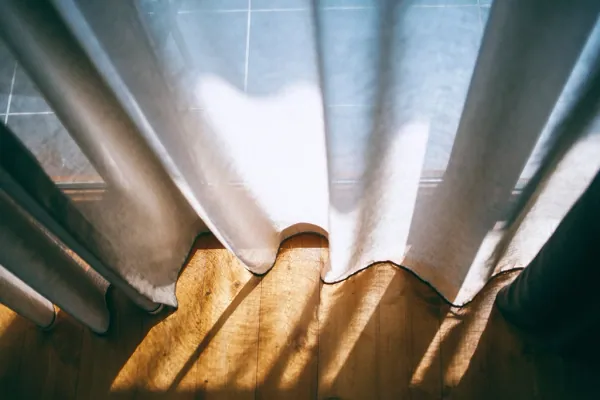
Wet extraction and ventilation need industrial-strength equipment in the industrial zone to remove both moisture and odour simultaneously.
Cotton, velvet, chenille and synthetics do not take the same heat or the same product.
Before any water.
An oil mark is not treated like a juice mark.
We wash with the method that suits the fabric.
The piece is left slightly damp, never wet.
We go over the pieces with you before leaving.
Testing the product on a hidden patch is a step we treat as necessary rather than optional.
The company employs more than forty cleaners, and we send a crew rather than an individual.
The washing and extraction machines are ours and travel with the crew.
If a piece needs reupholstering rather than washing, we say so.
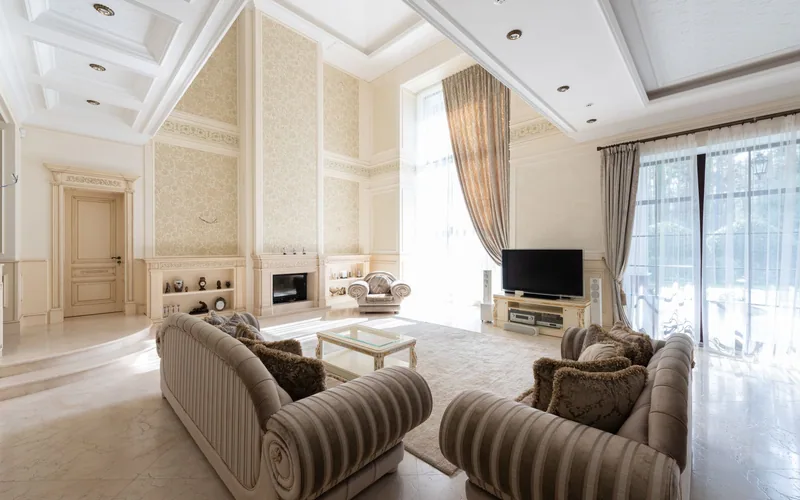
Photographs from real jobs carried out by the crew.
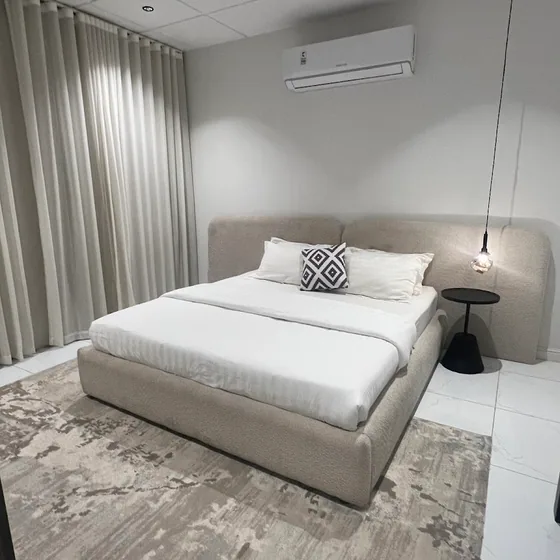
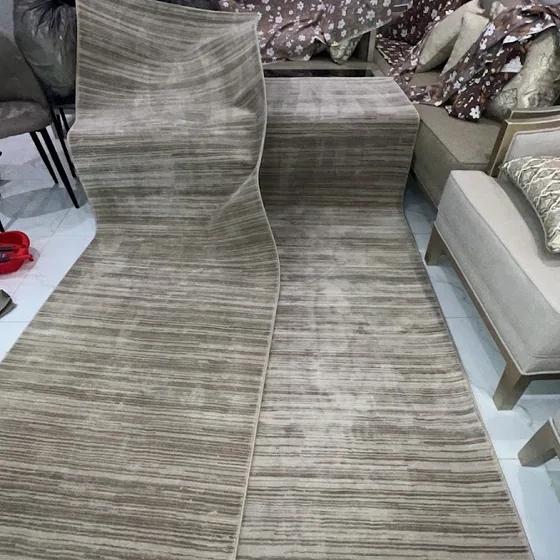
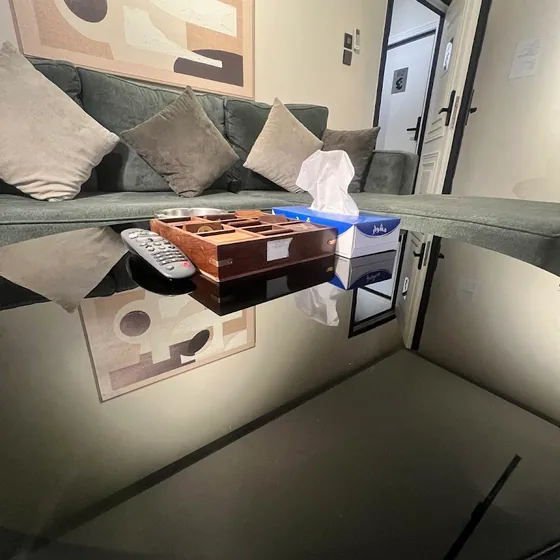
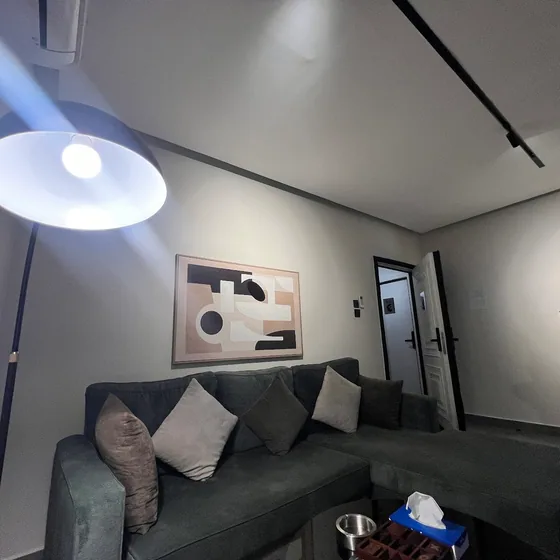
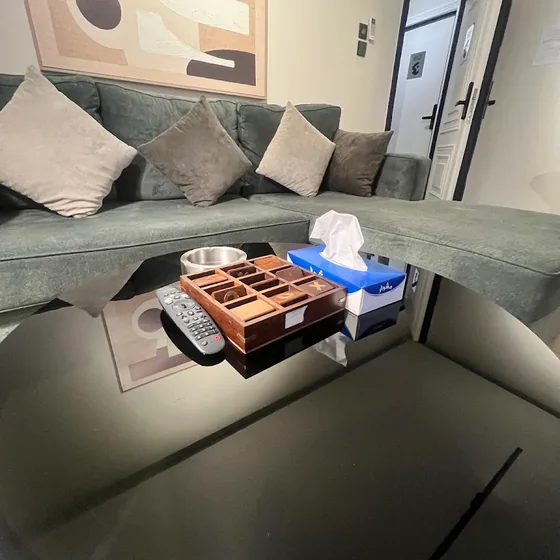
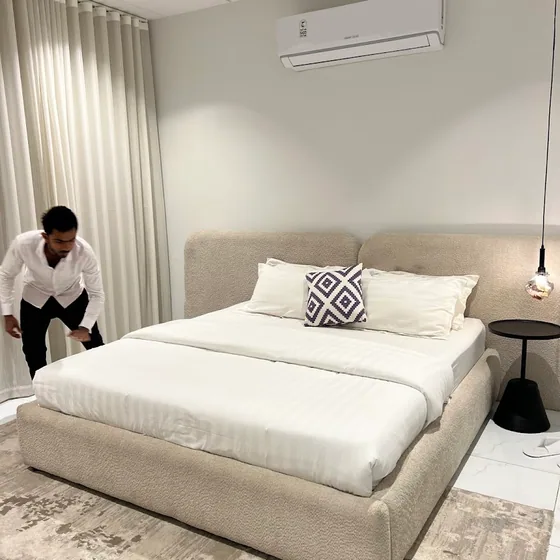
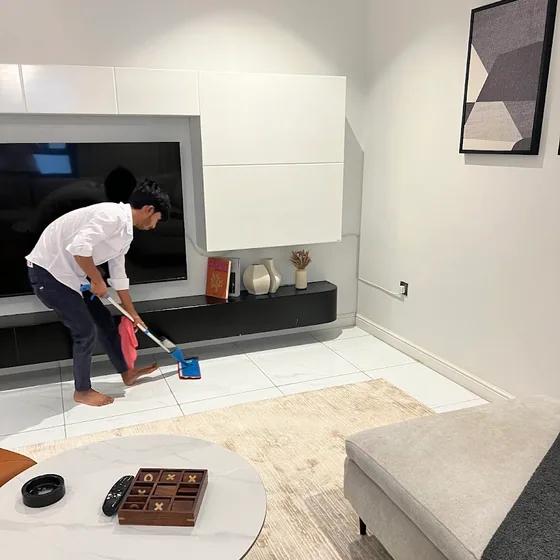
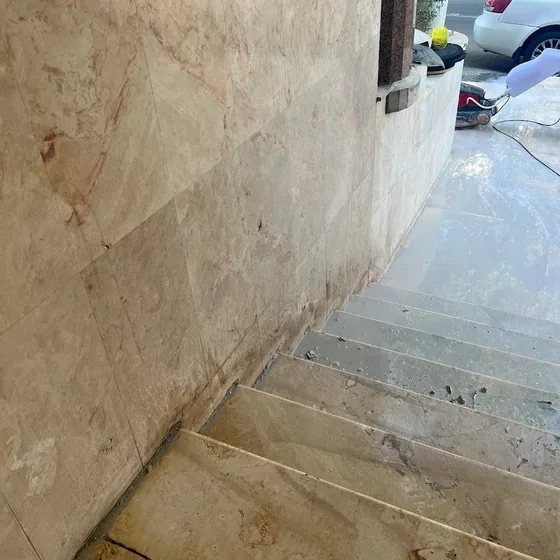
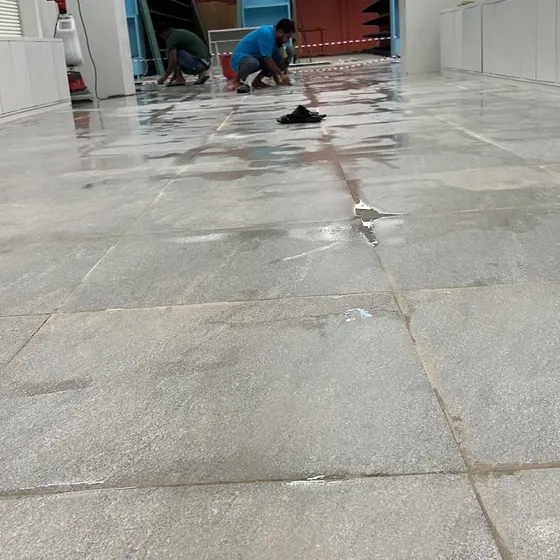
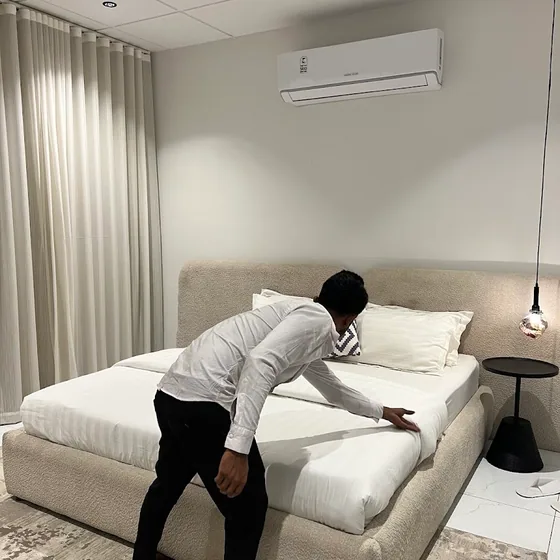
The commitment is simple enough to be keepable: we do not leave until you have seen the result and given your view of it.
Industrial area: workshops, warehouses and loading yards
An industrial district means sofas and upholstery are exposed to concentrated industrial dust and diesel soot far more than in residential areas.
We provide these in Al Sarawriyah too, and more than one can share a single visit.