
We treat the source, not the sighting
Spraying what walks across the floor is the common mistake we're called in to fix.
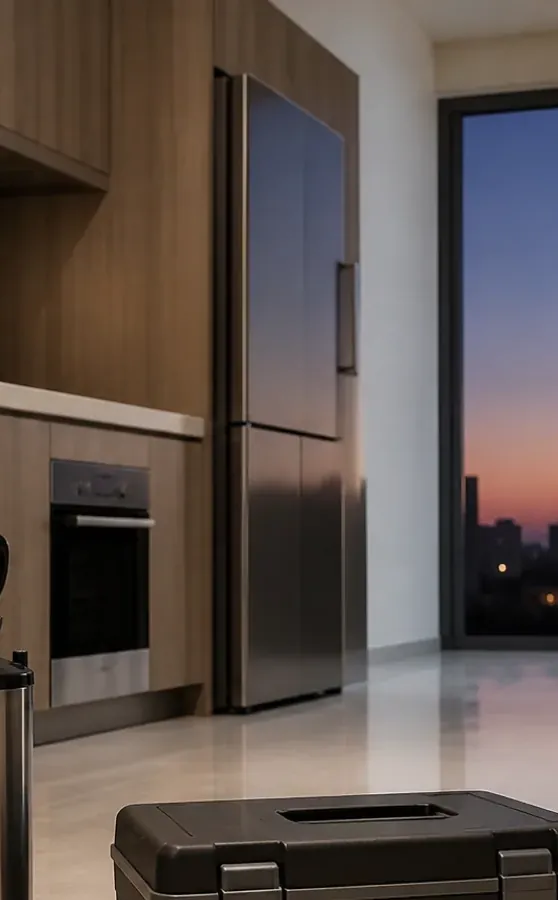
Al Mawaddah is a simple residential quarter in east Jeddah toward Asfan, one of a cluster of small neighbouring districts with popular housing predominating, close to the University of Jeddah road and Wadi Al Ghawla. The nearby desert provides a continuous source of wild insects searching for water and food. The air is dry and dust is coarser and paler than on the coast, entering under doors and settling on every surface. Moisture is confined to kitchens and bathrooms, making the source easy to identify but treatment difficult because the moisture source is permanent.
Floors are ceramic tile in apartment areas and marble in villa areas, both scratched quickly by coarse grit, with fine fissures from scratching providing new entry routes. For the method itself, see our guide to pest control.
Vacant land and open roads around Al Mawaddah are natural desert insect habitat. In summer these pests move seeking water and food indoors. Treatment slows entry but does not stop it, so regular monitoring is essential as long as the desert is close.
Desert dust is harsher and more abrasive than coastal dust, scratching ceramic and marble quickly. Small cracks from scratching expand over time due to repeated mopping, continuously opening new entry routes for insects.
The only moisture in homes is in kitchens, bathrooms and roof tanks. Insects cluster there seeking water, and may return repeatedly because the moisture source is permanent.
The dry desert setting close to open land and roads provides natural habitat for wild insects that invade homes searching for water, particularly in summer months.
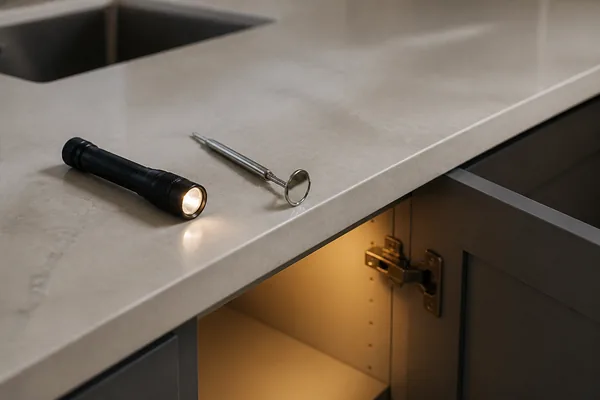
The desert environment provides a constant external source, so inspection focuses on entry points and exterior gaps first.
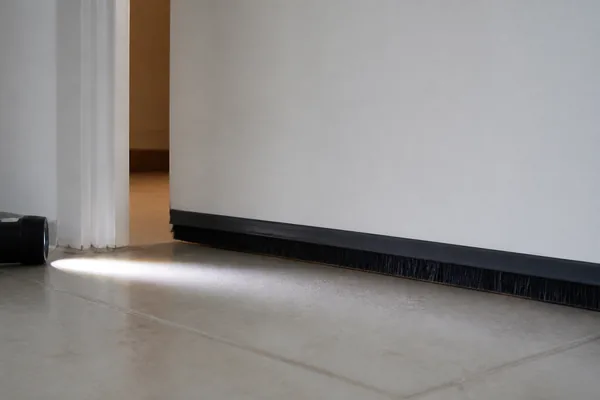
Cracks that widen from coarse dust create new entry routes continuously, so precise sealing and ongoing monitoring are essential.
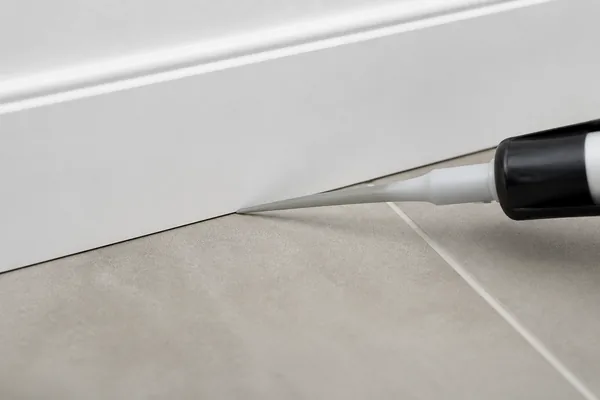
Gaps around exterior pipes and services provide safe passages from outside, requiring parallel exterior treatment alongside interior work.
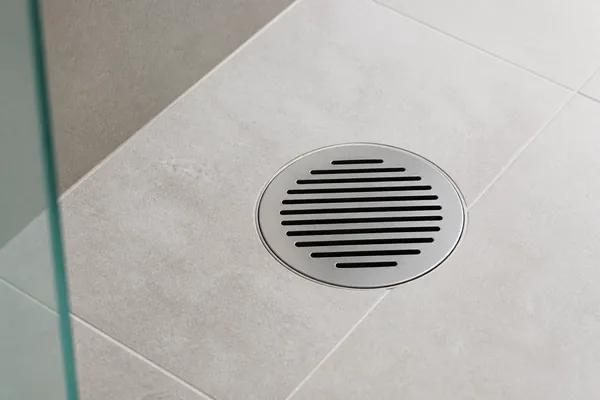
Roof tanks and their openings provide water attracting insects, and treating surrounding areas reduces attraction but does not solve the problem entirely.
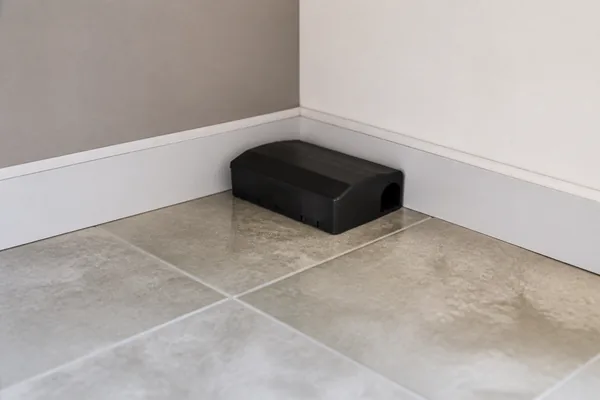
Bait is positioned on external and internal movement routes together, especially around entry points and gaps, because insects enter and exit constantly.
Follow-up includes inspection of the building perimeter and exterior gaps because insects may return from the nearby desert quickly.
Droppings, damage and where they appear tell us the pest and roughly where it's nesting.
Gaps around pipes, thresholds and vents are the supply line.
Product goes into voids, cracks and the runways they use, not the open floor.
In the spaces spray can't reach, bait does the work, carried back to reach the nest and the ones that never surface.
Closing the easy entry points turns a constant re-supply into a closed problem, so the treatment isn't fighting a fresh wave every week.
Before leaving we walk the home with you and show you what was treated.
Mixed district: shops at street level with homes above them
Mixed here means small ground-floor shops may provide food for insects, and homes above are exposed to invasion from both the shop and the desert exterior. Treatment requires a comprehensive strategy covering shops, exterior gaps and services together to be effective.
Spraying what walks across the floor is the common mistake we're called in to fix.
The company runs a large crew, and we send a team rather than one person.
Ants, cockroaches and rodents each need different products and placements.
If what you have is a one-off that doesn't need treating, or a structural issue for a builder, we tell you.
Photographs from real jobs carried out by the crew.












The commitment is simple enough to actually keep: we show you what was treated, and we stand behind it within the agreed cover.
East Jeddah lies furthest from the sea and closest to the open ground and hills beyond the ring roads, so the air is drier and the dust is coarser and paler than on the coast. It comes in under doors and settles on every flat surface overnight, making sofas, mattresses and curtains the heaviest part of the routine. Floors are mostly ceramic tile in the apartment districts and marble in the villa areas, both scratched by grit that is mopped rather than swept. Roof tank water leaves a grey film of sediment in baths and basins.
We provide these in Al Mawaddah too, and more than one can share a single visit.



