
We test before we degrease
Testing the solution on a hidden spot is a step we treat as necessary, not optional.
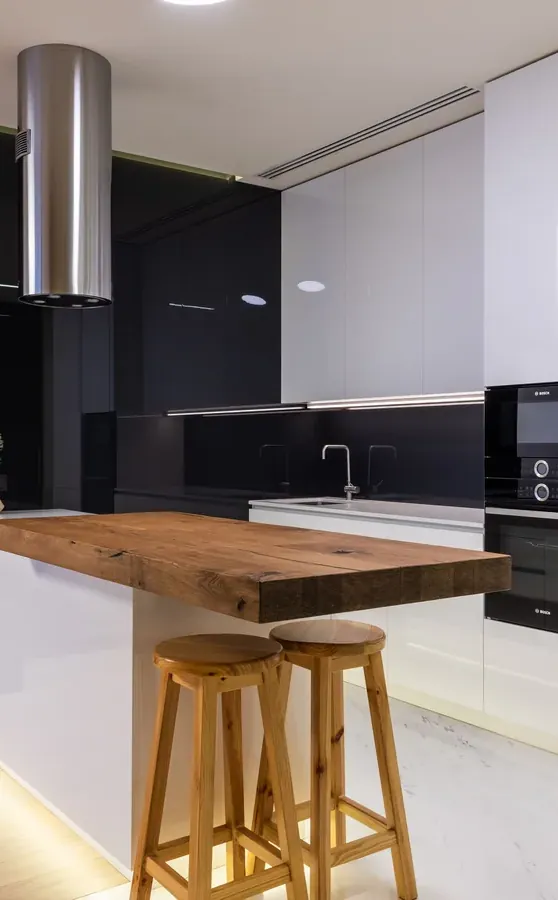
Kilo 18 sits further out along the Old Makkah Road, near the Bahrah boundary, within the logistics and storage strip that has grown outside the city. The air here carries dust from warehouses, trucks and loading yards that mixes with cooking grease before it settles. The dust is coarser and drier than it is in the coastal districts. Deep cleaning must first break up the particles before the grease film can be removed.
The dust is coarse and dry, finer particles embed themselves easily in tile grout and floor crevices, and ordinary sweeping or wet mopping leaves traces of grey sediment behind. For the method itself, see our kitchen cleaning service in detail.
Dust from warehouses and heavy traffic here is larger-grained and drier than the fine salt dust nearer the coast. It enters the kitchen with air currents and mixes with cooking oil to form a gritty crust. The particles breach surface seals and lodge in tile grout and wood grain. Cleaning must start with mechanical removal of the dry dust before degreaser is applied.
The area surrounding Kilo 18 includes unpaved roads, and fine silt from construction and open ground enters homes. New porcelain and ceramic can scratch if this sediment is not thoroughly swept before deep cleaning begins. The order of work matters more here than it does in established districts.
This area sits inland from the coast, and the air is drier than it is in South Jeddah's humid zones. Cooking grease dries to a hard film more quickly. After degreaser is applied, the window to wipe it away before it sets is shorter. If the product dries on the surface, it leaves marks that need rinsing.
A logistics and storage zone along the Old Makkah Road near the Jeddah governorate boundary, dominated by heavy truck traffic, large warehouses and open areas with limited residential density.
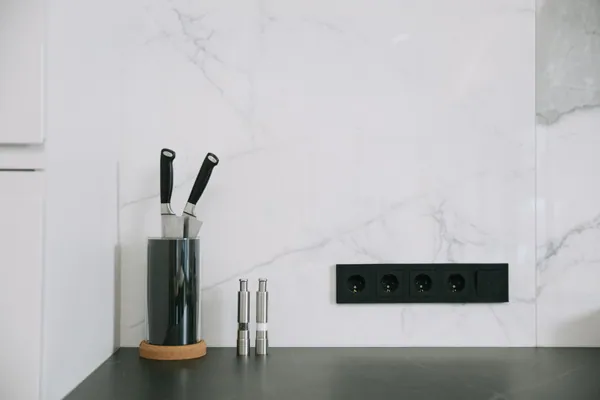
Cabinet fronts combine cooking grease with coarse industrial dust. The particles breach the surface finish and become part of the paint film. Cleaning must start with dry dust removal, followed by degreaser. The cabinet surface needs both treatments.
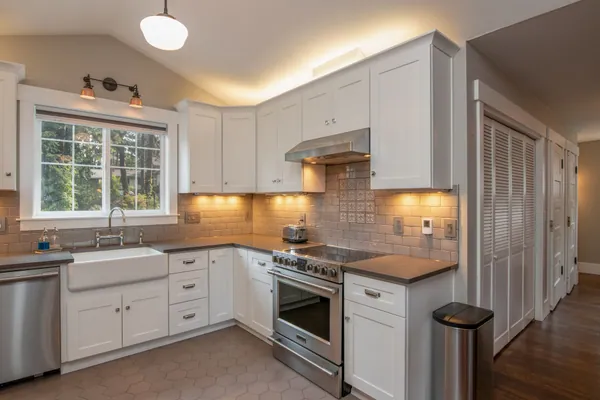
The extractor hood and filter block quickly because coarse dust lodges in the mesh alongside grease. Separate hood and filter cleaning is essential, and the filter may need replacing if the buildup is heavy.
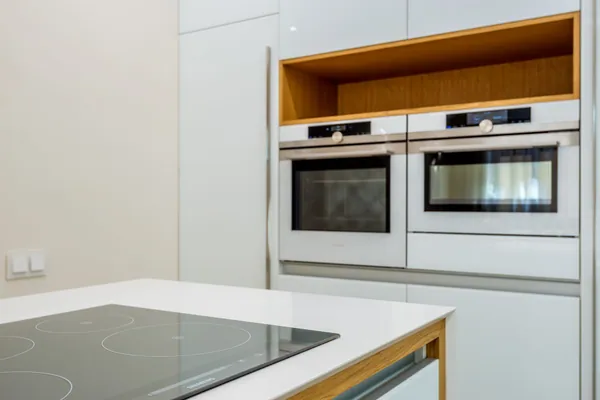
The stovetop and oven gather both grease and dust particles. Grit can scratch the enamel surface if not handled carefully. Cleaning must be gentle on painted and enamelled surfaces to avoid breaking the seal.
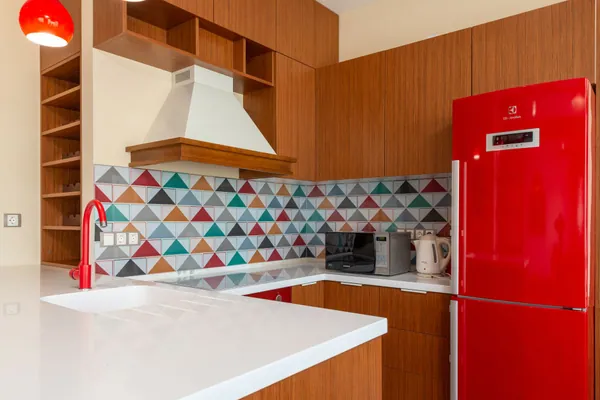
Tiles behind the hob collect both dust and grease in their grout lines. The cement between tiles turns grey with sediment. Deep cleaning opens the joints and reveals their original colour underneath the trapped particles.
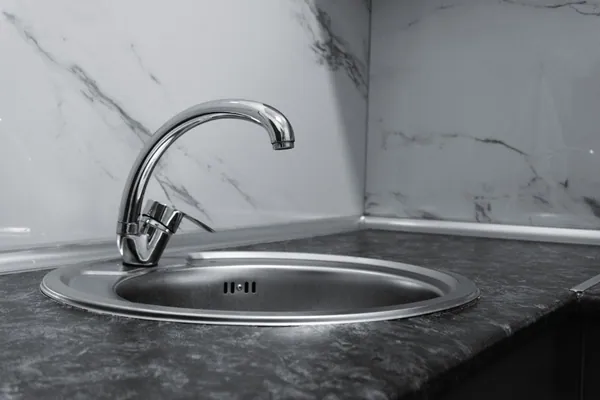
The sink and tap gather grease and dust together. Water from the roof tank may not be pure, leaving white or grey mineral stains. Cleaning removes the top layer but cannot erase rust or staining that has etched the metal.
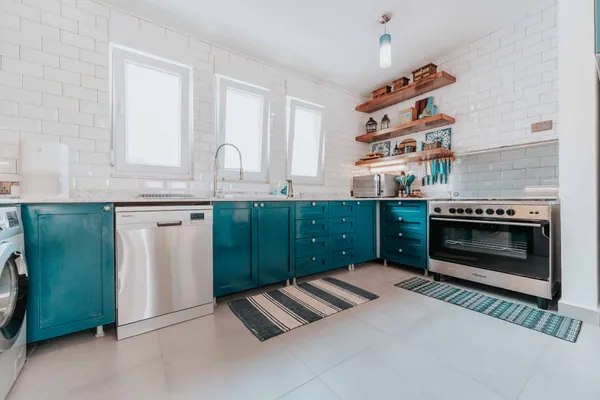
Floor and corners must be swept thoroughly before deep cleaning to prevent grit scratching new surfaces. Fine sediment settles in corners and along the base of walls. Dry removal is the first step, and vacuuming may be needed before wet cleaning.
Painted cabinets, laminate, natural stone and stainless steel do not take the same degreaser.
We start high, the tops of cabinets and the hood, and work down to the floor.
The degreaser is put on the heavy areas and given time to break the oil down before it is wiped.
The metal filter carries the worst of the grease and is soaked and worked on its own, not just wiped in place, because a clogged filter puts the oil straight back into the air.
The burners, the tiled splash and the grout lines take focused work, since the grout darkens first and a flat wipe passes over it.
We go over the kitchen with you before the team leaves.
Testing the solution on a hidden spot is a step we treat as necessary, not optional.
We send a team, not a single worker.
The degreasers and tools come with the team.
If what the kitchen needs is a repair or pest treatment rather than a clean, we say so.
Photographs from real jobs carried out by the crew.












The commitment is simple enough to actually keep: we do not leave before you have seen the result and told us what you think of it.
Industrial area: workshops, warehouses and loading yards
In a logistics zone, airborne pollutants come from warehouses and trucks operating next to homes. Coarse dust particles penetrate surfaces deeply and do not come off with ordinary wiping. Kitchen cleaning here tackles a compound problem of grease, metal particles and industrial silt.
We provide these in Kilo 18 too, and more than one can share a single visit.



