
Clean first, then disinfect
The common mistake is spraying disinfectant over dirt.
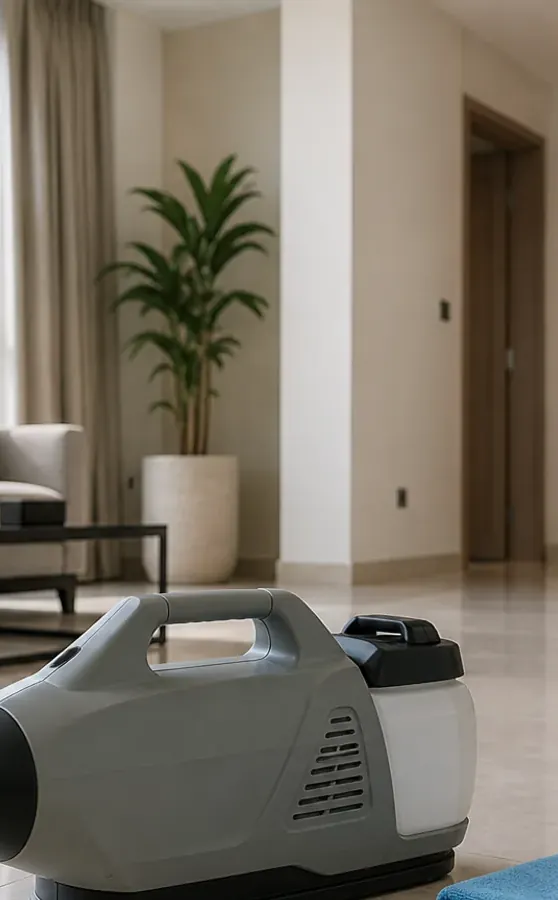
Al Murjan is a small coastal district on the north Jeddah corniche west of Al Basatin, with villas, apartments and residential compounds at low density facing the waterfront. The location sits close to the sea, which means year-round high humidity and salt air that leaves a film on glass and fabric. Disinfection here needs careful attention to salt deposits, moisture and odours that dry air alone does not shift.
Coastal humidity keeps curtains and fabrics slightly damp, so they hold odours and dust longer than in dry inland districts further from the water. For the method itself, see what disinfection and sanitisation involves.
Sea air leaves a fine salt film on glass and metal and outdoor upholstery. Plain water spreads it rather than removes it. A strong salt-removing product is needed first to clear it, then disinfection of an actually clean surface.
High humidity causes mould to grow fast in bathrooms and tight corners. Damp air does not dry water from grout quickly, so mould takes hold easily. Disinfection must focus hard on drain areas and grout joints.
Outdoor cushions and fabrics stay slightly damp and hold a stale salty smell. The odour drifts inside and curtains absorb it. Special treatment of fabrics and long ventilation after disinfection is needed.
A small coastal district on the north corniche with low density villas and apartment buildings facing the sea. Salt air is constant through the year and humidity is high, leaving surfaces slightly damp.
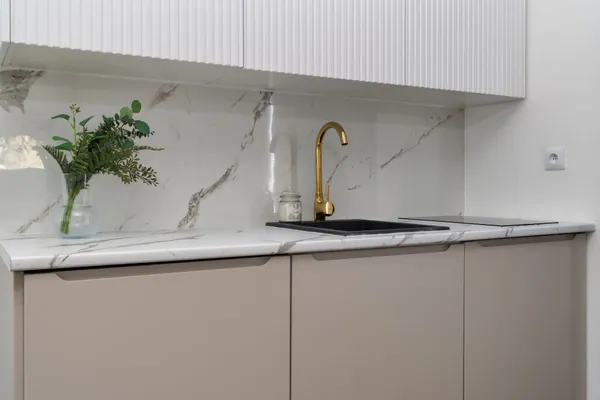
Salty surfaces need vigorous washing first with a salt-removing product, then clean water rinsing, then disinfection on a surface that is actually salt-free.
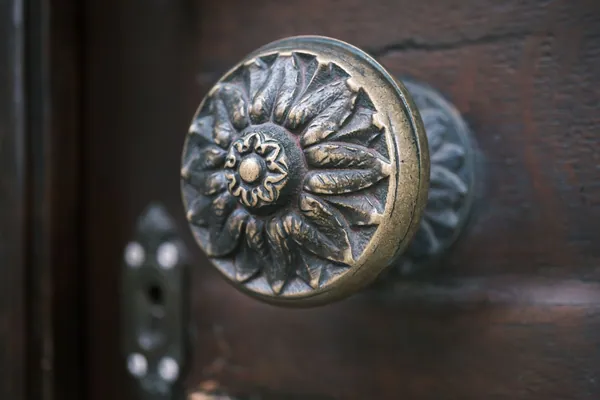
Metal door handles may be corroded by salt, so they need preliminary treatment and may not be disinfected the same way as new surfaces.
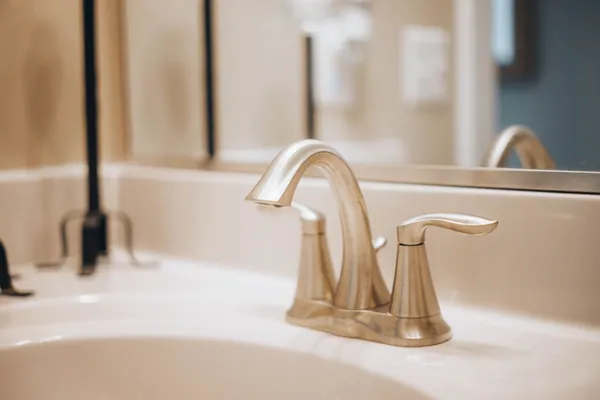
A coastal flat bathroom is constantly damp, so grout lines and drains need focused disinfection and complete drying afterward.
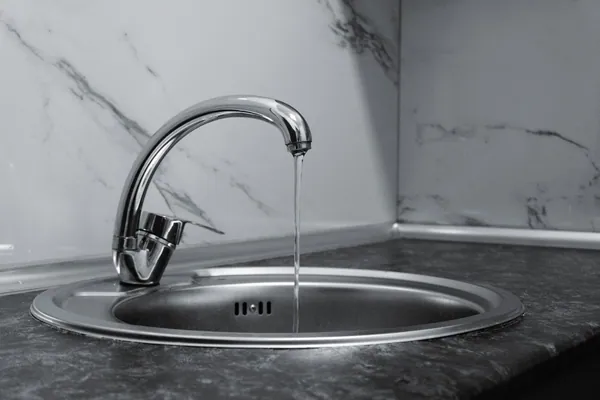
A coastal kitchen may have salt and damp from sea air, so food preparation surfaces need strong washing to remove salt first before disinfection.
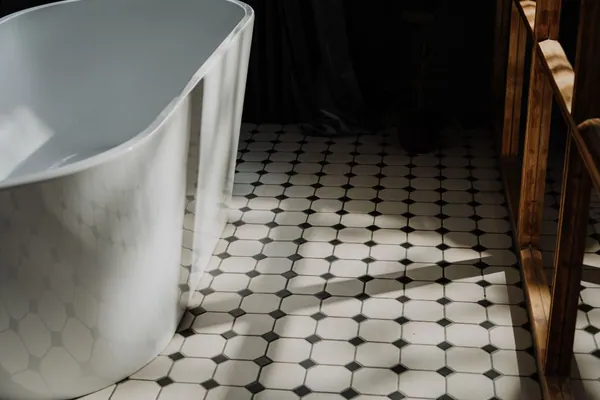
Tile grout in a coastal flat collects salt and mould together, so it needs brushing and deep cleaning and concentrated disinfection.
Ventilation after disinfection takes longer because outside air is damp and salty and may not clear indoors quickly, so we wait until odour has completely cleared.
A move-in, an illness and an after-party aren't the same job.
Grime and grease shield what's under them.
A disinfectant has to stay wet on the surface to work.
Handles, switches, taps and rails are done by hand because they carry the most and need direct contact that fogging alone doesn't give.
Once the hard surfaces are done, a fine fog reaches the air, the fabrics and the corners a cloth can't, settling over what hand-wiping misses.
We open up and air the rooms, then walk the home with you before leaving.
The common mistake is spraying disinfectant over dirt.
The company runs a large crew, and we send a team rather than one person.
The foggers and the products come with the team.
If what you need is deep cleaning or mould work rather than disinfection, we tell you.
Photographs from real jobs carried out by the crew.












The commitment is simple enough to actually keep: we don't leave until you've seen the result and had your say on it.
West Jeddah faces the sea along the Corniche, and the flats and towers along it live with salt in the air all year. Salt settles on glass as a haze that plain water spreads rather than removes, and it works into balcony railings, outdoor fabric and the metal of window frames. Indoors, humidity keeps carpets and curtains slightly damp, so they hold odours and dust longer than in drier districts, and bathroom grout and shower glass show scale quickly. Wooden floors and doors swell a little in the wetter months.
We provide these in Al Murjan too, and more than one can share a single visit.



