
Clean first, then disinfect
The common mistake is spraying disinfectant over dirt.
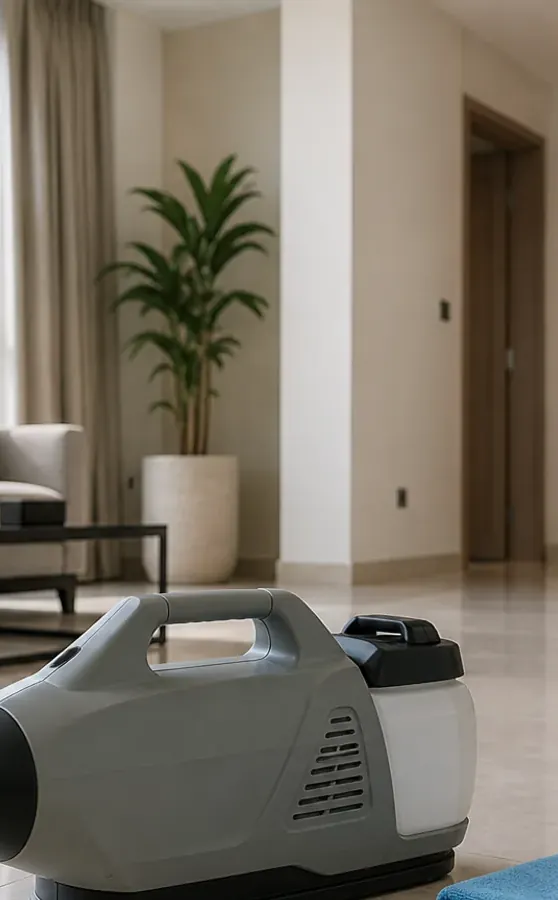
Al Mulaisa is an emerging residential subdivision on Al Lith Road in south Jeddah, mostly subdivided land plots with sparse completed housing and ongoing construction nearby. A newly built home here faces relentless construction dust from neighbouring vacant plots and building sites, making disinfection different from a new home in a finished neighbourhood, because recontamination from dust happens quickly and continuously.
An emerging neighbourhood with incomplete paved roads means heavy construction traffic and mix trucks moving constantly through the district, raising dust levels far higher than established areas, so new homes accumulate visible grime rapidly. For the method itself, see what disinfection and sanitisation involves.
Vacant plots and homes under construction surrounding the area release fine building dust continually. This dust is not ordinary soil but cement powder and fine aggregate that scratches new floors and creeps under doors, so disinfection must include vigorous pre-cleaning to remove the dust before the disinfectant can work.
New homes retain moisture locked in fresh concrete, plaster and paint. Excess moisture slows disinfectant drying and reduces effectiveness, and may permit mould to grow rapidly after treatment if the house has not been properly dried first.
Emerging neighbourhoods may have incomplete drainage points or land contours that trap water seasonally. This means unexpected moisture may arrive after disinfection, affecting how long the home stays protected and how quickly surfaces can dry.
Nearby vacant land and active construction release fine building dust that settles on every surface daily. Concrete particles and fine aggregate from nearby demolition and new build work enter the house easily through gaps and open doors, coating surfaces faster than ordinary street dust would.
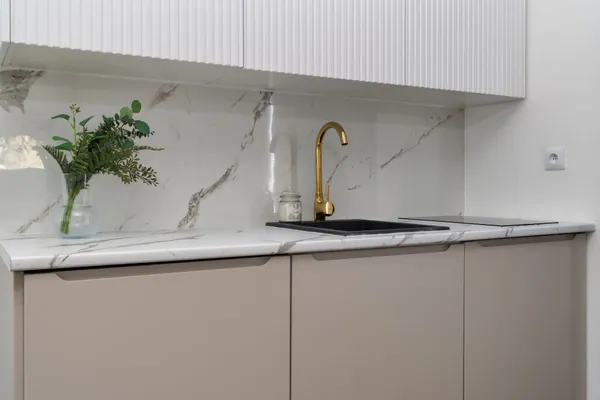
Cleaning before disinfecting must remove construction dust vigorously, as cement particles and fine aggregate block the disinfectant from reaching the underlying surface, reducing effectiveness sharply.
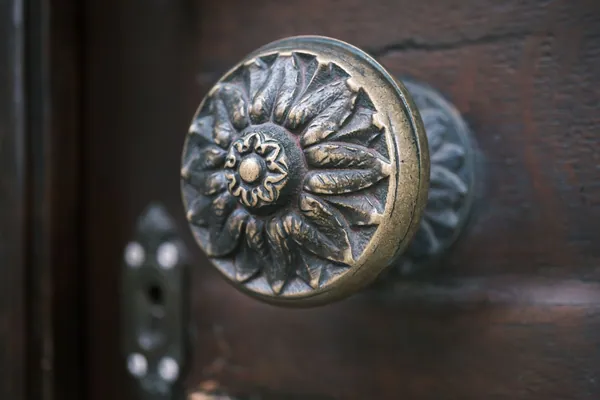
High-touch surfaces like door handles and kitchen worktops accumulate building dust rapidly in an emerging neighbourhood, so disinfection may not remain effective for more than a few weeks if construction continues nearby.
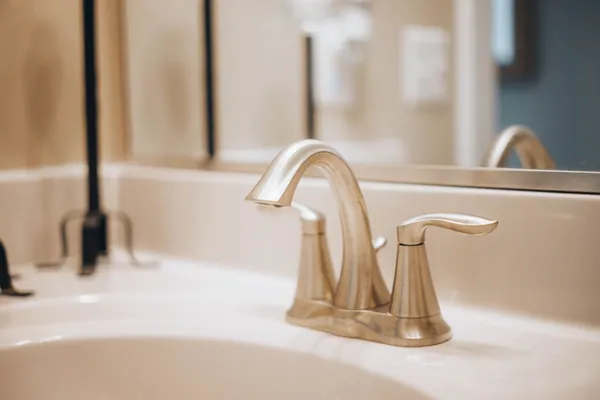
Bathrooms in the new home may retain building moisture, and construction dust may have entered through incomplete seals during the build, causing mould to form quickly after disinfection if ventilation is poor.
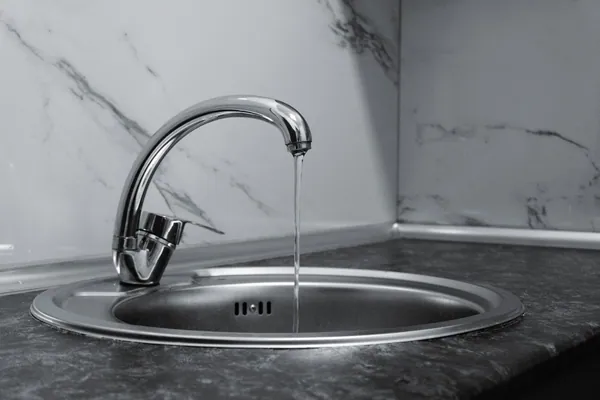
Kitchen and food preparation surfaces collect fine building dust faster than in older established areas, so pre-cleaning must be thorough and aggressive to remove the dust layer completely before disinfectant is applied.
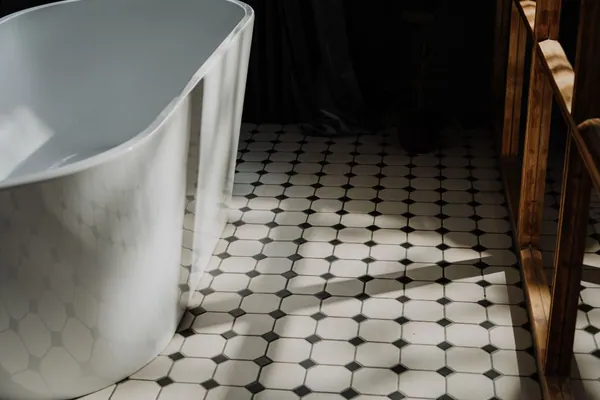
Drains and grout lines may contain construction debris and cement residue, and may need separate cleaning before any disinfectant is applied, especially if floors are ceramic tile laid during or shortly after construction.
Contact time may need extension because building moisture from fresh concrete slows disinfectant drying, and ventilation is essential to remove lingering dust and construction odours trapped in new plaster and paint.
A move-in, an illness and an after-party aren't the same job.
Grime and grease shield what's under them.
A disinfectant has to stay wet on the surface to work.
Handles, switches, taps and rails are done by hand because they carry the most and need direct contact that fogging alone doesn't give.
Once the hard surfaces are done, a fine fog reaches the air, the fabrics and the corners a cloth can't, settling over what hand-wiping misses.
We open up and air the rooms, then walk the home with you before leaving.
New development: ongoing construction and vacant plots between the homes
In a new development like Al Mulaisa, the newly built home faces different challenges: building moisture and relentless cement dust from neighbouring sites.
The common mistake is spraying disinfectant over dirt.
The company runs a large crew, and we send a team rather than one person.
The foggers and the products come with the team.
If what you need is deep cleaning or mould work rather than disinfection, we tell you.
Photographs from real jobs carried out by the crew.












The commitment is simple enough to actually keep: we don't leave until you've seen the result and had your say on it.
Al Mulaisa sits on Al Lith Road and near the Ring Road, and these main arteries determine how the team reaches your home through the developing neighbourhood, where local streets may still be under preparation or incomplete.
We provide these in Al Mulaisa too, and more than one can share a single visit.



