
We test before we clean
Testing the solution on a hidden fold is a step we treat as necessary, not optional.
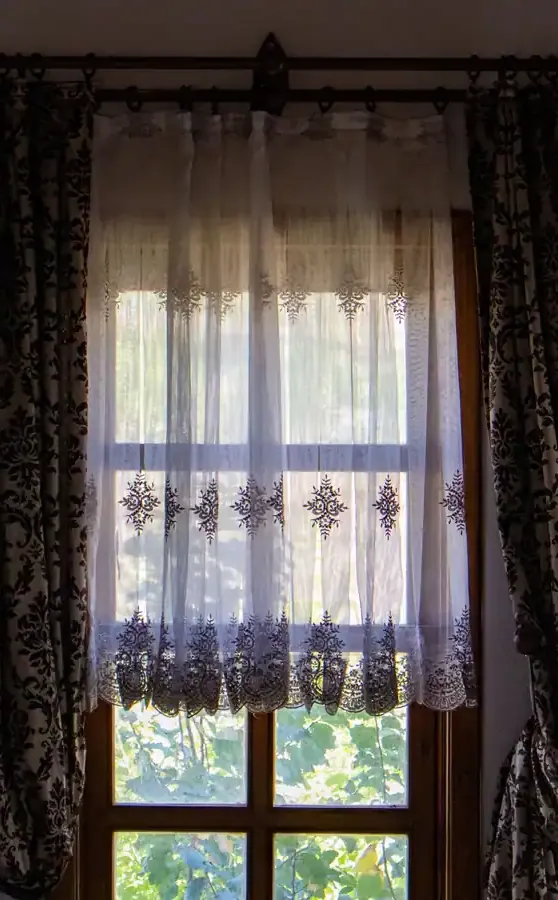
Ghulail is a decades-old working quarter in south Jeddah that has been entirely cleared and is undergoing wholesale redevelopment. Its informal buildings were demolished completely, and the land is now part of a large South Jeddah renewal project. The district today is a patchwork of active construction and vacant plots between new homes. Construction dust and moisture from builder water and disturbed earth mean curtains in newly built homes carry an unusual type of dust: cement and sand particles mixed with water and clay, requiring care specific to this phase of a district's life.
Curtains carry construction dust from cement and sand mixed with water, and high humidity from contractor water and excavation runoff. For the method itself, see our curtain cleaning service in detail.
Active building generates extremely fine cement dust and sharp sand particles and dust from digging and earth movement. This mixture is heavy and has properties unlike road dust or wadi grit. It clings stubbornly to fabric and may leave a heavy grey tone on curtains even if swept daily. The particles are fine enough to penetrate deeply into the weave.
Construction uses large volumes of water in excavation, concrete and curing. This raises humidity temporarily across the zone, and curtains in newly built homes may feel damp more than usual, especially in flats close to the building site. The dampness accelerates dust adhesion and may allow faint mildew.
The district is now a patchwork of wide open spaces, foundations and deep excavations. Loose, disturbed soil and sand rise on any strong wind and fall on the new homes nearby. This dust can be very heavy on the curtains, and the pattern is unpredictable because wind direction and intensity vary.
The district lies between Al Mahjar and the Nazlah quarters in south Jeddah, and building, demolition and renewal work continues across the entire zone.
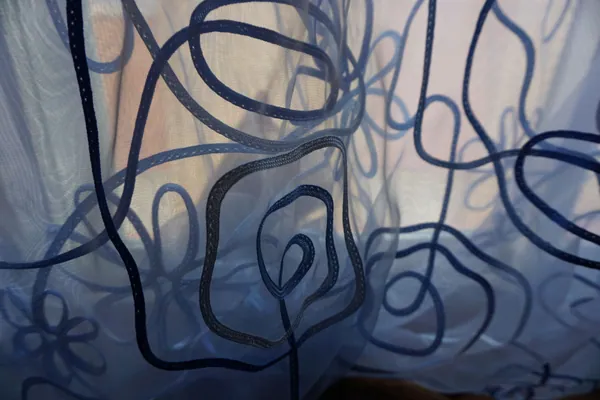
Fabric in new homes is new, may be sensitive to water and heat, and construction dust can penetrate quickly and deeply.
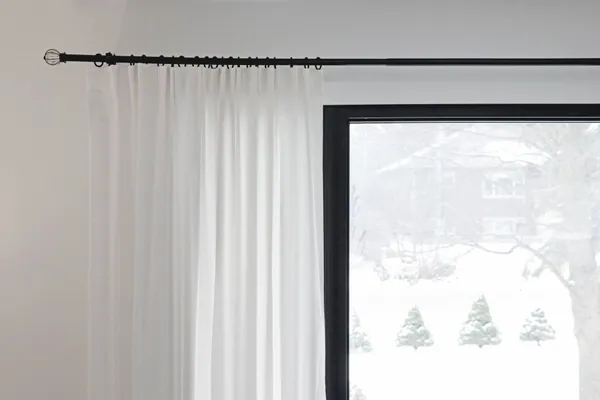
Removal from new homes is straightforward; windows are modern and fittings are contemporary and secure.
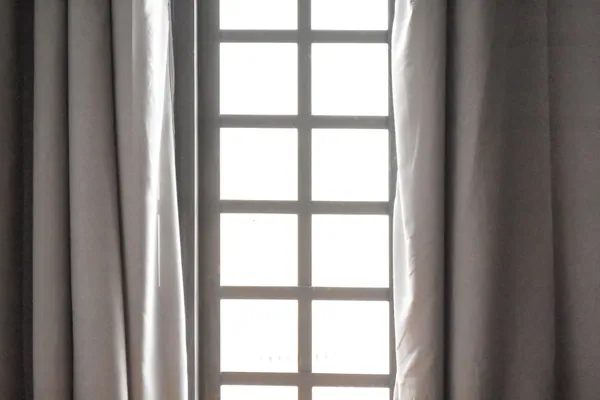
Dry vacuum starts strong to lift heavy cement dust before any water is introduced.
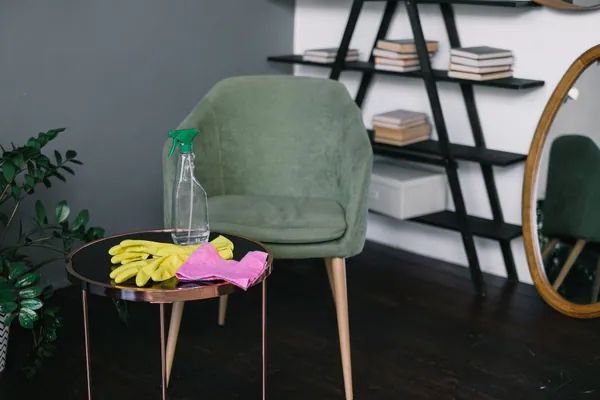
Stains from wet cement may be stubborn and need weak acid treatment before water washing.
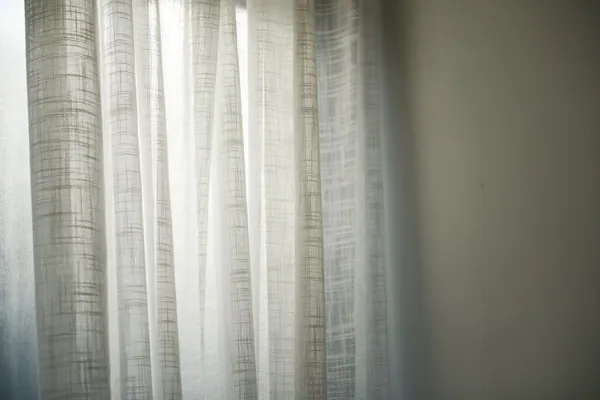
Washing in warm water with strong soap for heavy construction dust, followed by thorough rinsing.
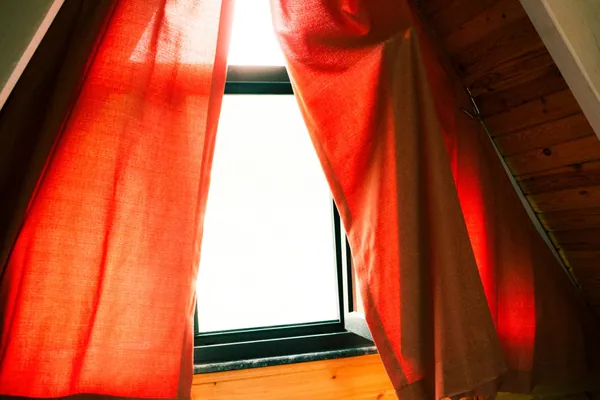
Drying needs strong air flow to remove moisture from builder water and humidity.
Cotton, linen, velvet, blackout weave and synthetic sheers do not take the same heat or the same solution.
Before any water.
A water spot at the hem is not treated like a greasy film near a kitchen.
We loosen what has bonded inside the fibres across the full panel, both faces and top to hem, with the method that suits the fabric, while the curtains stay on the rail so the drape is not disturbed.
The loosened dirt and water are pulled back out in the same pass.
We go over the panels with you before the team leaves.
Ghulail sits about 1.5 km from Al Quraiyat and about 2 km from Al Nuzlah Yamaniyah.
Open in Google MapsTesting the solution on a hidden fold is a step we treat as necessary, not optional.
We send a team, not a single worker.
The cleaning and extraction machines come with the team.
If a panel needs a tailor rather than a clean, we say so.
Photographs from real jobs carried out by the crew.












The commitment is simple enough to actually keep: we do not leave before you have seen the result and told us what you think of it.
Ghulail lies near Al Mahjar Street and Omar Al Mutawa Street, old district markers from before redevelopment. When confirming the address with you, we use these historic references because the district is newly built and street names and numbering may not yet be fully established across the development.
We provide these in Ghulail too, and more than one can share a single visit.



