
We test before we clean
Testing the solution on a hidden fold is a step we treat as necessary, not optional.
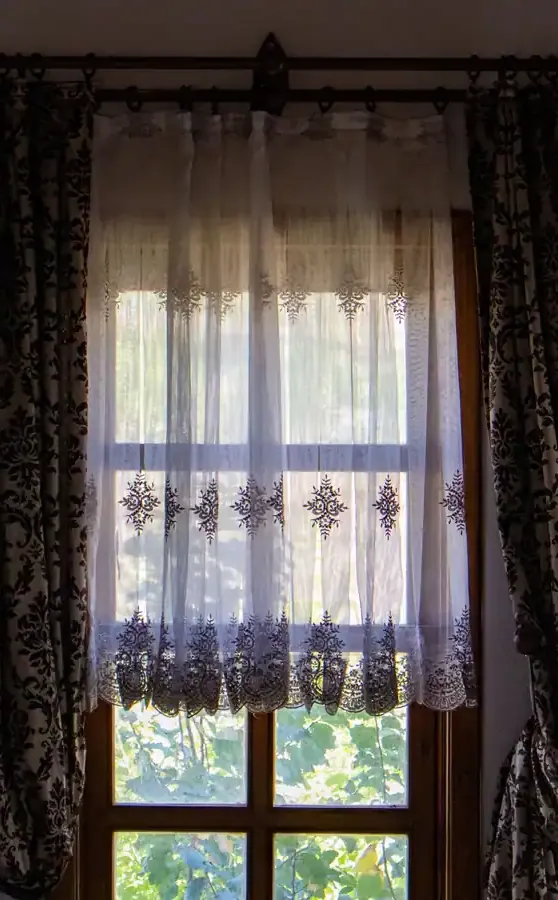
Al Thaghr lies south of Old Makkah Road, bounded by Al Jamiah Road, Bakhashab Road and King Khalid Road, with Prince Majid Road running through its centre. Homes sit between the sea on one side and heavy goods roads on the other. The dust is darker and oilier than in north Jeddah. It is a mix of diesel soot and workshop grit that clings to net curtains, window sills and the tops of kitchen cupboards. Humidity from the coast adds mildew in bathrooms and musty smell in stored fabrics.
Residents report that curtains absorb both salt and diesel smell at once, an overlay that does not lift without deep cleaning and complete drying. For the method itself, see how we approach curtain cleaning.
Heavy truck routes immediately adjacent deposit diesel soot on curtains. The dust is not dry but filled with oily particles. Cleaning must remove this oily layer before ordinary water, or it spreads and redeposits deeper in the weave.
Position between the sea and the south means high humidity and salt air. Curtains absorb both salt and moisture, causing white salt marks on edges and hems. Salt weakens fabric over time, especially lightweight weaves exposed for years.
Older lower-rise housing often has plain cement or tile floors that darken where soot is tracked in. Coastal humidity causes rapid mildew in bathrooms and musty smell in stored fabrics, including hanging curtains that absorb the building's air.
The district runs from the port and industrial zone down toward Al Khumrah. Homes sit between the sea and heavy traffic routes. Floors in older low-rise housing are often plain cement or ceramic that darkens where soot is walked in.
Curtains here face salt and humidity together, so inspection must include searching for white salt deposits and hidden moisture deep in the weave that surface inspection misses.
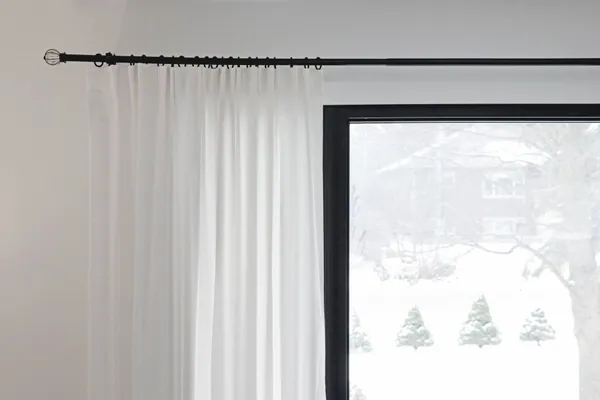
Removal requires care because salt can corrode brackets and rods. Cleaning rust and salt from fixings before removal prevents damage to both curtain and hanging system.
Dry vacuum must be strong to lift salt particles and soot before any water touches the fabric. Ordinary water can spread salt deeper if grit is not removed first.
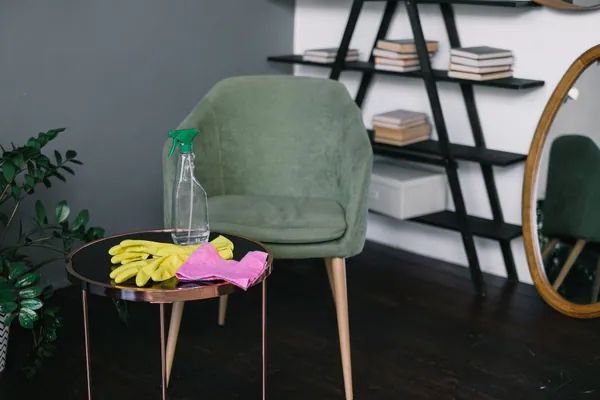
Stains here are three types: white salt marks, black soot, and damp musty smell. Each requires separate treatment and different drying time.
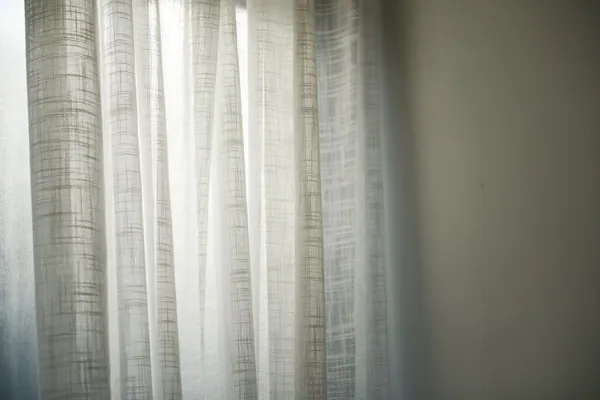
Lightweight and net fabrics need special care because salt and humidity weaken them. Cleaning must be thorough but gentle to avoid accelerating damage.
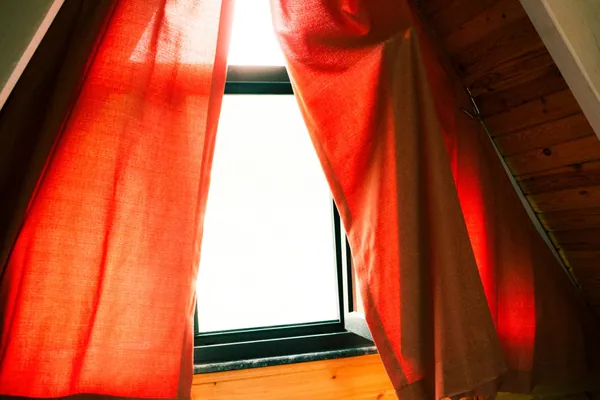
Drying and rehang must happen quickly. Strong ventilation and full sun exposure are critical to prevent new mildew forming before or after rehang.
Cotton, linen, velvet, blackout weave and synthetic sheers do not take the same heat or the same solution.
Before any water.
A water spot at the hem is not treated like a greasy film near a kitchen.
We loosen what has bonded inside the fibres across the full panel, both faces and top to hem, with the method that suits the fabric, while the curtains stay on the rail so the drape is not disturbed.
The loosened dirt and water are pulled back out in the same pass.
We go over the panels with you before the team leaves.
Al Thaghr is bounded by Old Makkah Road to the south and King Khalid Road to the west, with Al Thaghr Model Schools and Al Thaghr Hospital as key landmarks. We reach you via these streets and the hospital area often serves as a navigation reference point for homes in the district.
Testing the solution on a hidden fold is a step we treat as necessary, not optional.
We send a team, not a single worker.
The cleaning and extraction machines come with the team.
If a panel needs a tailor rather than a clean, we say so.
Photographs from real jobs carried out by the crew.












The commitment is simple enough to actually keep: we do not leave before you have seen the result and told us what you think of it.
South Jeddah runs from the port and the industrial city down towards Al Khumrah, and homes here sit between the sea and the heavy goods roads. The dust is darker and oilier than in the north, a mix of diesel soot and workshop grit, and it clings to net curtains, window sills and the tops of kitchen cupboards. Floors in the older low rise housing are often plain cement or ceramic tile that darkens where soot is walked in. Humidity from the coast adds mildew in bathrooms and a musty smell in stored fabrics.
We provide these in Al Thaghr too, and more than one can share a single visit.



