
We test before we clean
Testing the solution on a hidden fold is a step we treat as necessary, not optional.
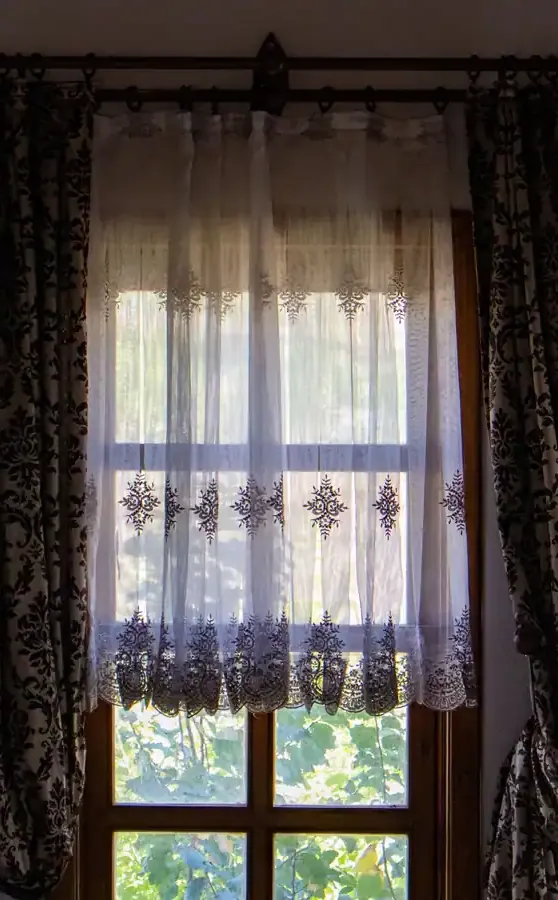
Al Shuwaidi is a newly developing area within Obhur Al Shamaliyah subdivisions in north Jeddah, mostly new residential plots and housing with construction ongoing. Curtains here are mostly new but homes are surrounded by building sites and dust and mud from active work. Windows look out onto open land and developing plots, so the air carries coarse particles and harsh light bouncing off exposed sand.
Construction dust in Al Shuwaidi rises and falls seasonally, but spikes during excavation and heavy building phases, so curtains soil on an irregular cycle. For the method itself, see how we approach curtain cleaning.
Construction sites on all sides raise coarse dust and particles from excavation, transport and mixing. Curtains in Al Shuwaidi are exposed to waves of dust each time a new work day begins. The particles are larger and heavier than street dust and settle with force.
Wide open spaces allow stronger winds than completed neighbourhoods, and standing water on vacant plots releases thick morning moisture. Curtains trap this humidity and grow heavy and slow to dry compared to enclosed neighbourhoods.
Exposed sand around the vacant plots reflects light intensely and increases surface heat. Curtains facing the open ground fade faster and become brittle from unfiltered UV rays without the shade of surrounding buildings.
A new urban extension in north Jeddah within the Obhur development, mostly newly released residential land with continuous construction, served by new primary roads.
Fabric is usually new but may have been exposed to construction dust during storage and transport before hanging and installation.
Removal from new brackets is straightforward, but the rails may be dusty and need wiping before handling the fabric.
Dry vacuum is essential and may need higher power than usual to lift the coarse particles that settle deep in the weave.
Stains from construction dust and diesel traces bond quickly, so regular cleaning prevents the debris from setting permanently in the fibres.
Cleaning method depends on dust load: heavy dust needs multiple rinses to clear all particles before drying begins.
Drying may take more than an hour because of the high ambient humidity from vacant land and sea proximity.
Cotton, linen, velvet, blackout weave and synthetic sheers do not take the same heat or the same solution.
Before any water.
A water spot at the hem is not treated like a greasy film near a kitchen.
We loosen what has bonded inside the fibres across the full panel, both faces and top to hem, with the method that suits the fabric, while the curtains stay on the rail so the drape is not disturbed.
The loosened dirt and water are pulled back out in the same pass.
We go over the panels with you before the team leaves.
New development: ongoing construction and vacant plots between the homes
New development in Al Shuwaidi means instability: building progresses, land changes, and dust moves with each new project. The curtain becomes a measure of the phases happening around the neighbourhood, each month bringing something different to the windows.
Testing the solution on a hidden fold is a step we treat as necessary, not optional.
We send a team, not a single worker.
The cleaning and extraction machines come with the team.
If a panel needs a tailor rather than a clean, we say so.
Photographs from real jobs carried out by the crew.












The commitment is simple enough to actually keep: we do not leave before you have seen the result and told us what you think of it.
Work in Al Shuwaidi is defined by shifting landmarks: the new Jeddah Madinah Road sets the eastern boundary and development advances toward Abhor Park to the south, so homes near the road and the park are priority access points and show first the changes the area is undergoing.
We provide these in Al Shuwaidi too, and more than one can share a single visit.



