
We test before we clean
Testing the solution on a hidden fold is a step we treat as necessary, not optional.
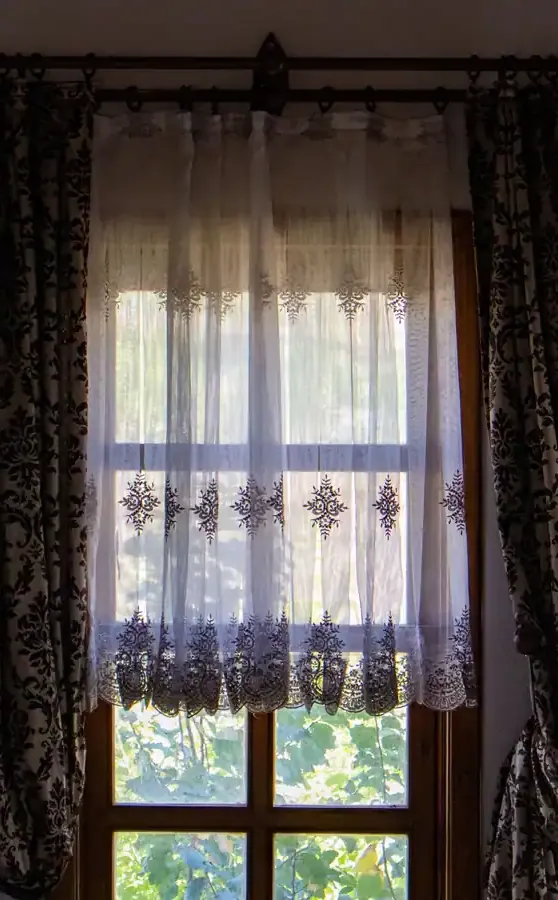
Al Safa is an old, sprawling district between Prince Majid Road and King Fahd Road, a mix of apartment buildings and shops at street level. The main roads carry a fine black dust that embeds itself in curtain weave more readily than in quieter neighbourhoods, and cooking fumes from the markets rise all day long.
Curtains here need a deeper clean than in new districts because the dust that sticks to them carries cooking oils, and a shake alone will not lift it once it has cooled and set. For the method itself, see our guide to curtain cleaning.
Prince Majid Road and King Fahd Road carry continuous traffic and Souq Al Murjan sits beneath, so the dust is hot when it arrives and sticky when it cools. Dry vacuum comes first to lift what will lift, and then each mark is treated with its own product because this dust mixed with cooking oil needs a different approach than ordinary street grit.
Apartments sit above the shops, so windows face different directions and hang at different levels. Some look out onto Al Safa Park, others directly onto the street, and a few overlook a narrow gap between buildings. Taking each curtain down and rehinging it requires a different plan for each one based on its position and what it overlooks.
The packed buildings and continuous shops trap heat and humidity, and the older kitchens below add moisture to the air. Curtains dry more slowly here than in open neighbourhoods, and they need monitored drying so dampness does not settle back in.
Shops and markets along Prince Majid Road emit cooking grease and diesel smoke throughout the day, lifting on the hot air to settle deep in curtain fabric rather than sit on the surface.
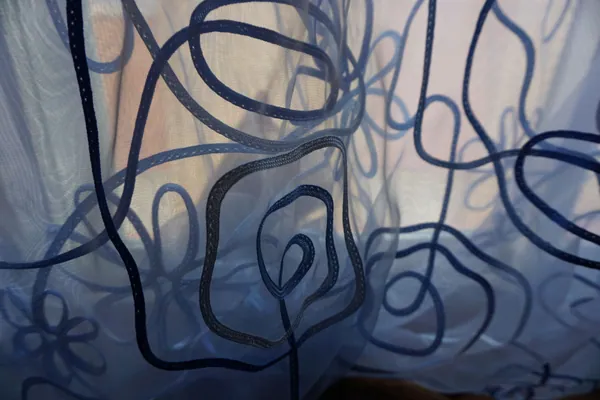
Fabrics here are mixed: light transparent, heavy blackout, and some are old enough that they need testing before any water touches them. We inspect every curtain and ask about its age.
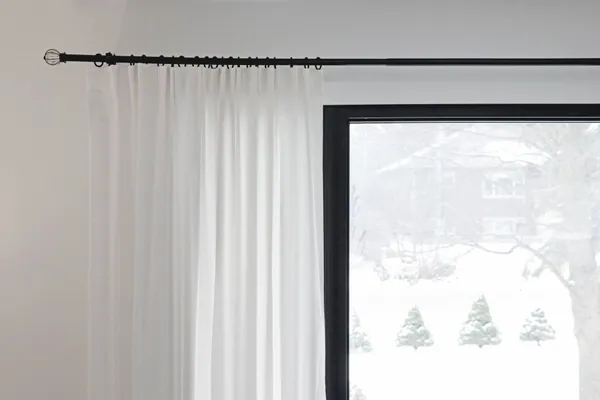
Curtains in tight gaps between apartments have to come down carefully or they tangle with neighbours' windows or fall into the shop below, so we pad the area and work slowly.
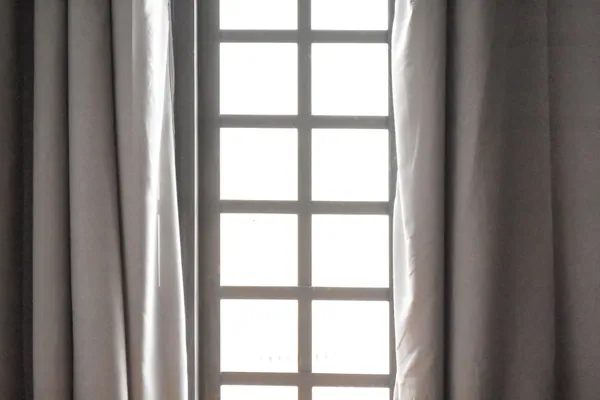
Dry vacuum matters most here because dust bound to cooking oil will turn to slurry if water touches it first, so the grit has to come off before any moisture.
Black stains from oil, brown stains from moisture and rust need different products. Each mark is treated for what it is and how long it has sat in the fabric.
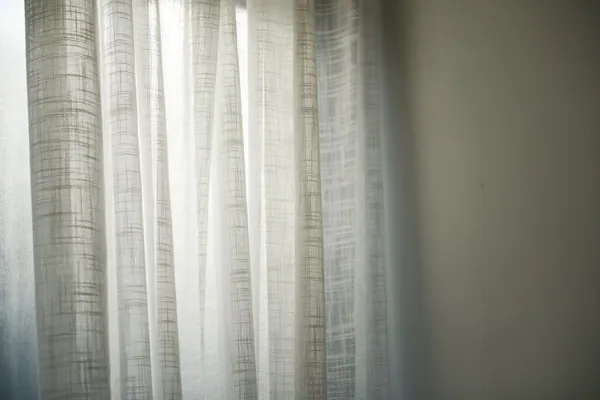
Light curtains wash in warm water with a gentle rinse, and heavy ones can take firmer handling depending on how densely woven they are and how robust the seams are.
Drying and rehang takes time here because humidity is high from the market heat and the building density, so we wait for moisture levels to drop before the curtain goes back up.
Cotton, linen, velvet, blackout weave and synthetic sheers do not take the same heat or the same solution.
Before any water.
A water spot at the hem is not treated like a greasy film near a kitchen.
We loosen what has bonded inside the fibres across the full panel, both faces and top to hem, with the method that suits the fabric, while the curtains stay on the rail so the drape is not disturbed.
The loosened dirt and water are pulled back out in the same pass.
We go over the panels with you before the team leaves.
Mixed district: shops at street level with homes above them
Mixed districts mean shop curtains get dirty fast and stay dirty, so they cycle through cleaning more often than flats upstairs do. Flat curtains take longer to clean but collect less dust because shops exhaust it first.
Testing the solution on a hidden fold is a step we treat as necessary, not optional.
We send a team, not a single worker.
The cleaning and extraction machines come with the team.
If a panel needs a tailor rather than a clean, we say so.
Photographs from real jobs carried out by the crew.












The commitment is simple enough to actually keep: we do not leave before you have seen the result and told us what you think of it.
Central Jeddah is the old heart of the city: Al Balad with its coral stone houses, and the dense apartment quarters around it with shops beneath the flats. Floors here are often terrazzo or older ceramic tile, worn smooth and easily stained by cooking grease that drifts up from the street. Older kitchens and bathrooms carry heavy scale on taps and around drains, and pipework in the older blocks leaves rust marks in basins. Rugs and curtains take on the fine black dust of the main roads, so they need washing more often than elsewhere.
We provide these in Al Safa too, and more than one can share a single visit.



