
The access to reach it safely
A crystal fixture over a stairwell is not a job for a kitchen stool.
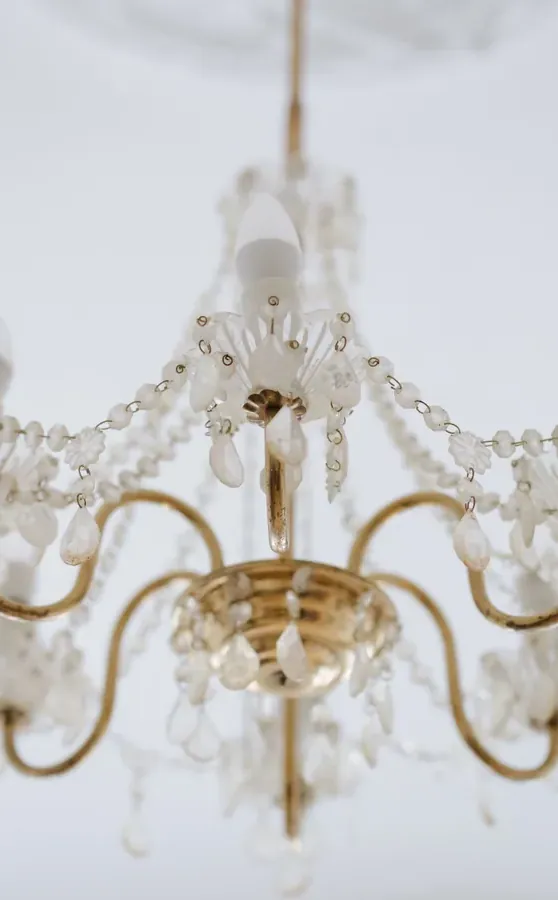
Al Rawabi is a dense popular apartment district in south Jeddah, and chandeliers here face dark oily dust from the port and heavy goods routes. Diesel soot and workshop fumes cling to the fixture, and coastal humidity adds mildew to it. The district sits between the sea and industry at once, so cleaning here is entirely different from every other neighbourhood.
Dust here is black and oily from diesel soot, metal dust and workshop fumes, and it clings to net curtains, window sills and the tops of kitchen cupboards. Chandeliers darken inside quickly, and metal frames blacken under the soot. For the method itself, see how we approach chandelier cleaning.
Al Rawabi sits between the coast and heavy goods routes and the industrial city, so dust is black and oily from diesel, metal and copper fragments. This soot adheres hard to glass, fabrics and metal. The chandelier traps soot and darkens from inside quickly, and cleaning needs a strong solution that dissolves both soot and grease.
South Jeddah is humid because it borders the sea, and oily soot mixed with humidity creates an unhealthy film. The chandelier holds this mixture, metal frames blacken and rust under the soot, and poor ventilation in dense blocks speeds moisture buildup.
Buildings stand very close together and ventilation is shared, so oily fumes from one flat rise into others. The chandelier traps diesel and heating fumes from below. Each flat picks up fumes from both the street and the neighbourhood stack at once.
A dense district in south Jeddah between the port and industrial city, with closely packed apartment blocks and small neighbourhood parks, high residential density and proximity to heavy goods roads.
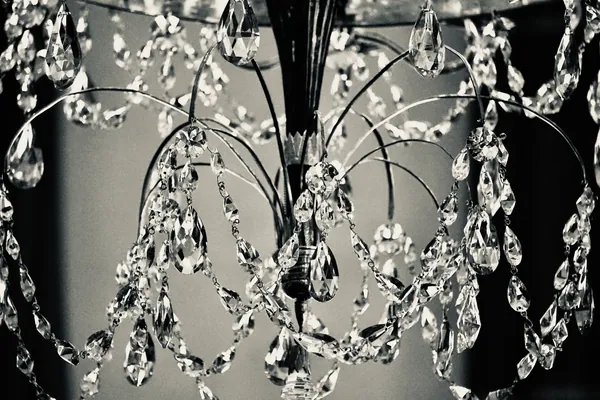
Chandeliers in Al Rawabi are mostly apartment types, simple to standard, and photographs before dismantling protect you from confusion when reassembling in a tall block.
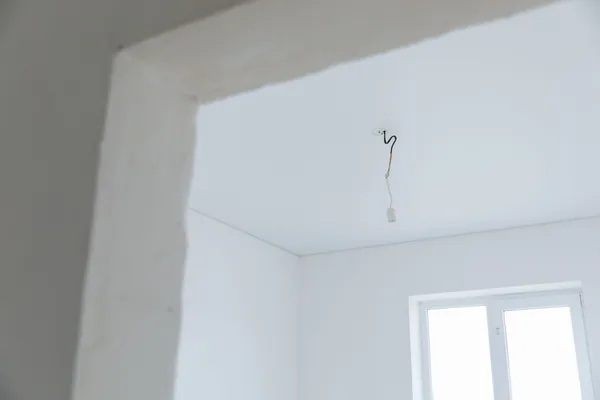
Safe electrical isolation in a dense building requires checking wire connections because humidity may have weakened insulation.
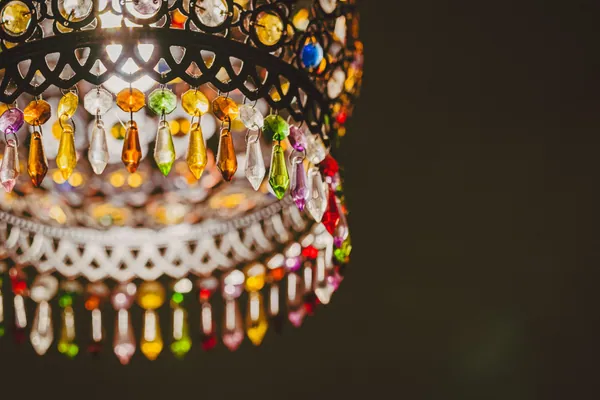
Oily soot needs to be photographed under strong light before dismantling, so you can see the thickness and grease content of the black layer.
Each piece is soaked in alkaline solution first for several hours, then brushed with a soft brush, then washed in warm fresh water.
Frames and metals are cleaned with a soft brush and fine grit for old oxidation, and tight gaps are cleaned with a flexible tool.
Lights are tested with a meter because humidity and soot may have weakened insulation, and the team leaves only when you approve the result.
The circuit is switched off before anything is touched, and warm bulbs are given time to cool.
We check how it is built, which crystals are loose, and how it comes apart before removing a thing.
The area under the fixture is covered before we start, so a dropped crystal lands soft and nothing marks the floor or table below.
Where the piece allows, crystals come off and are washed and dried individually.
With the crystals off or aside, the frame, arms, bulb holders and ceiling mount are wiped down, since that is where film and webs hide behind the glass.
Every crystal goes back to its place, the fixture is switched on and checked, and we walk the room with you.
Al Rawabi extends from Old Makkah Road in the north down to Al Khumrah in the south, and work is arranged from Bin Laden Road or from Bin Laden Park depending on the building's exact location between the shopping centre and the main highway.
A crystal fixture over a stairwell is not a job for a kitchen stool.
We send a team, not one person, so crystals come off, get washed and go back in one visit, without a lone worker hurrying a fragile piece to finish before dark.
Whether crystals come off or are cleaned in place depends on how the fixture is built.
Nothing is done until the fixture is back together, switched on, and you have seen it throw its light.
Photographs from real jobs carried out by the crew.












The commitment is simple enough to actually keep: we do not leave until the fixture is reassembled, lit, and you have seen it for yourself.
South Jeddah runs from the port and the industrial city down towards Al Khumrah, and homes here sit between the sea and the heavy goods roads. The dust is darker and oilier than in the north, a mix of diesel soot and workshop grit, and it clings to net curtains, window sills and the tops of kitchen cupboards. Floors in the older low rise housing are often plain cement or ceramic tile that darkens where soot is walked in. Humidity from the coast adds mildew in bathrooms and a musty smell in stored fabrics.
We provide these in Al Rawabi too, and more than one can share a single visit.



