
We treat where they live
The result comes from reaching the seams, joints and cracks, not from how much is sprayed.
Al Tilal is a residential district in east Jeddah named after its hilly terrain, meaning the ground shifts and walls crack differently than in flat neighbourhoods. Treating bed bugs here differs because cracks from ground movement offer deep shelters for bed bugs, and the infestation source may come from nearby Mareekh Mountains or areas near Wadi Al Qaws. Ground movement creates hiding places that expand and contract seasonally.
Foundations in the district may shift seasonally due to rainfall and water runoff from nearby mountains, increasing the cracks that bed bugs use as shelter. For the method itself, see our bed bug treatment service in detail.
Hilly terrain causes seasonal ground movement that creates cracks in foundations and internal walls. These cracks are not fixed and may widen or tighten with the seasons, offering bed bugs changing hiding places. Precise inspection must account for this ground movement and its seasonal pattern.
Mareekh Mountains and nearby Wadi Al Qaws may harbour wild insect colonies, and bed bugs can transfer from these natural areas to homes in the district. Water runoff from the mountains during rainfall can bring insects or open new cracks, creating pathways for infestation.
District residents often buy inexpensive used furniture from nearby popular markets, and this furniture may be infested with bed bugs from other homes. Inspection at purchase is essential to avoid bringing bed bugs into the home, and the frequency of furniture turnover in this district makes it a vector for infestation.
The district sits within the built-up area east of the city near Mareekh Mountains and Wadi Al Qaws, with hilly terrain that affects house foundations and internal walls.

Inspection of cracks from ground movement requires high precision, as these gaps may be very deep and may widen or tighten depending on seasons and moisture levels.

Mattresses in the district may be infested by bed bugs from old furniture or the surrounding environment, so seam and edge inspection includes looking for signs of age and heavy prior use.
Cracks and gaps from ground movement need deep and extensive treatment because they may not be fully known during the first inspection and may widen between visits.
Carpet and room edges may contain traces of bed bugs that sheltered in foundation cracks and the hilly terrain below, so thorough perimeter inspection is essential.
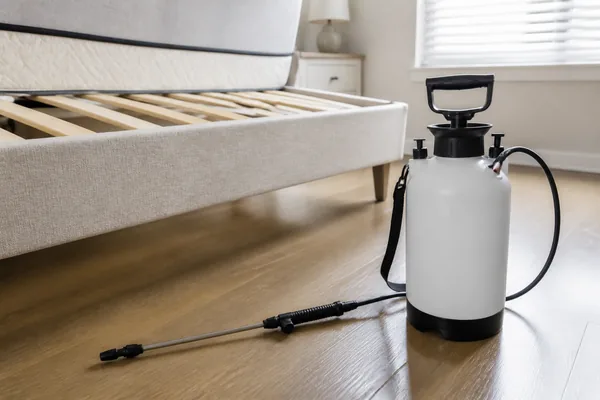
Treatment targeting eggs includes deep treatment of cracks from ground movement, and may require different methods to reach eggs in these deep shelters that widen and tighten seasonally.

The follow-up visit includes renewed inspection of cracks because seasonal ground movement may open new gaps between visits, and new bed bugs may arrive from the surrounding mountains or used furniture sources.
Before anything is applied, we inspect the seams, frame joints, headboard and skirting to locate the harborage points.
Visible bugs and eggs in reachable spots are removed physically first, which lowers the population immediately and makes the treatment work on less.
Applied into the seams, joints and cracks where they actually shelter, not misted across the open mattress where they never sit during the day.
We work outward from the bed to the surrounding furniture and skirting, because by the time you notice them they have usually started to spread.
Washing and hot-drying bedding, clearing clutter and keeping the layout stable between passes is half the result.
Eggs are shielded and survive the first treatment.
Mixed district: shops at street level with homes above them
The simple residential mixed district status means residents often buy cheap used furniture, and cracks from nearby hills create deep shelters for bed bugs. Treatment must account for both factors working together.
The result comes from reaching the seams, joints and cracks, not from how much is sprayed.
We do not pretend one visit ends it.
The company runs a large crew, and the team arrives with the materials and a plan for the layout, so the whole affected area is handled in the visit.
If it is early and contained we say so, and if it is advanced we say that too.
Photographs from real jobs carried out by the crew.












The commitment is one you can hold us to: an honest read of the situation, and no work or cost added without telling you first.
In Al Tilal, access to the district runs past Mareekh Mountains and Wadi Al Qaws, which mark the district's eastern boundary. Proximity to the Haramain High Speed Railway provides a modern geographical reference, and these natural and contemporary landmarks together define how treatment is organised and crack priorities are identified.
We provide these in Al Tilal too, and more than one can share a single visit.



