
We treat where they live
The result comes from reaching the seams, joints and cracks, not from how much is sprayed.

Al Majid is a mixed-use district in east Jeddah with commercial shops on the ground floor and residential flats above them. This layout means bed bugs can travel from the shops into the flats through shared walls and drainage systems, and effective treatment must account for both the commercial and residential spaces as a connected problem.
In mixed-use districts, bed bugs travel readily between shops and flats via shared walls and plumbing, a pattern specific to this building type. For the method itself, see how we approach bed bug treatment.
Commercial shops on the ground floor may store stock and boxes for long periods without close inspection. Bed bugs enter with incoming goods or customers, then spread through walls and openings into the flats above.
In this building type, walls between shops and flats are shared and sewage lines are connected. These shared utilities provide direct routes for bed bugs to travel easily from a shop to another flat without barriers.
Ground floor shops receive customers and staff in large numbers throughout the day. This constant movement increases the likelihood of bed bugs entering on clothing and bags, spreading from shop to neighbouring flats.
Al Majid is a simple residential extension in east Jeddah near the University of Jeddah road, with commercial use at street level creating a different environment for pests than residential-only areas.

Inspection begins at the junction between the flat and the shop, checking walls, plumbing and electrical openings where shared services pass through.

Mattress and bed seams may harbour larger numbers of bed bugs if the shop below is infested and an active source.
Cracks around shared pipes and drains are the primary routes for bed bugs to travel between floors.

Carpets and curtains in a flat above a shop are easily contaminated because insects travel upwards from street level.
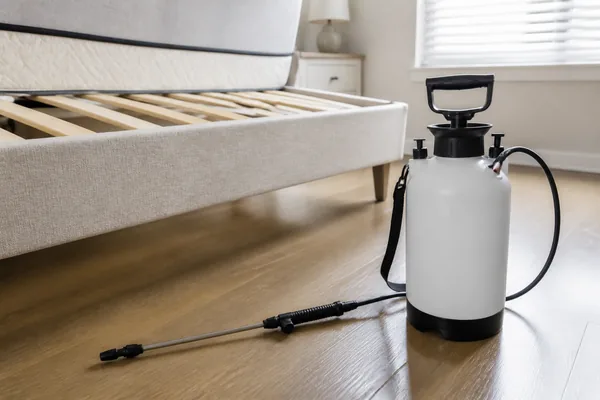
Treatment must reach every connection point between the floors and every shared wall.

Follow-up in mixed-use districts may be longer if the shop below has not been treated.
Before anything is applied, we inspect the seams, frame joints, headboard and skirting to locate the harborage points.
Visible bugs and eggs in reachable spots are removed physically first, which lowers the population immediately and makes the treatment work on less.
Applied into the seams, joints and cracks where they actually shelter, not misted across the open mattress where they never sit during the day.
We work outward from the bed to the surrounding furniture and skirting, because by the time you notice them they have usually started to spread.
Washing and hot-drying bedding, clearing clutter and keeping the layout stable between passes is half the result.
Eggs are shielded and survive the first treatment.
The result comes from reaching the seams, joints and cracks, not from how much is sprayed.
We do not pretend one visit ends it.
The company runs a large crew, and the team arrives with the materials and a plan for the layout, so the whole affected area is handled in the visit.
If it is early and contained we say so, and if it is advanced we say that too.
Photographs from real jobs carried out by the crew.












The commitment is one you can hold us to: an honest read of the situation, and no work or cost added without telling you first.
Mixed district: shops at street level with homes above them
Mixed-use means bed bugs can spread through shared walls and plumbing from shops to flats. This requires inspection of inter-floor connection points and may require coordination with the shop owner to achieve effective comprehensive treatment of the whole building.
We provide these in Al Majid too, and more than one can share a single visit.



