
We treat where they live
The result comes from reaching the seams, joints and cracks, not from how much is sprayed.
Al Hijaz is a mixed use district in east Jeddah near the university, where shops occupy the ground floors and residential flats sit directly above them. This arrangement means bed bugs can travel from a commercial space into a home through the gaps around wiring, pipes and structural joints that pierce the dividing floor.
New buildings in this area have smaller gaps than older construction, but bed bugs squeeze through them easily, and the space between a shop and the flat above becomes a main highway for spread. For the method itself, see how we approach bed bug treatment.
Shops receive used furniture or goods that carry bed bugs, and cracks around electrical conduits and pipes provide direct pathways to the flats above. Bed bugs climb higher when moving vertically, seeking the warmth of inhabited spaces.
Low humidity reduces moisture in old furniture and speeds up bed bug reproduction. Eggs hatch faster in dry conditions than in coastal areas, so the population grows more rapidly.
If bed bugs live in the shop beneath your flat, treating only your home will fail. Bugs will return from below through the shared structural gaps, so both spaces must be addressed together.
The district lies in the drier eastern part of Jeddah, away from coastal moisture, with fine and coarser dust blowing in from the open ground and the nearby Wadi Al Ghawla.
Inspection focuses on gaps around electrical outlets and pipes that connect the flat to the shop below, as these are the main routes bed bugs use to climb between levels.

Mattress seams and bed frame joints in flats above shops require careful attention, as bed bugs may originate from beneath the floor structure.
Cracks in the walls dividing the flat from the commercial space must be treated with precision, as they are the direct pathways bed bugs use to move upwards.
Carpet edges in bedrooms need special treatment, especially along the walls facing the shop below, where bed bugs first establish themselves in the flat.
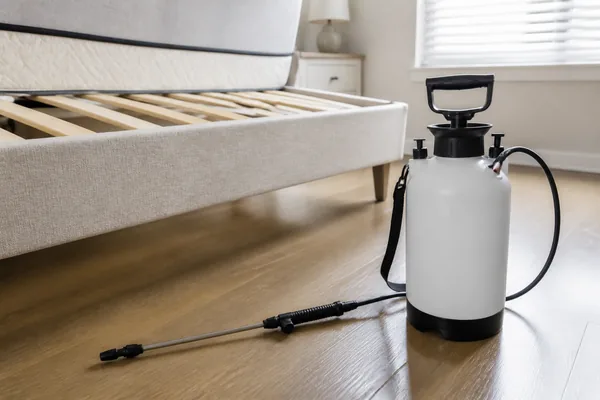
Treatment must reach eggs that hide in the voids between floor structures, as bed bugs may shelter in the gap between your floor and the shop's ceiling.
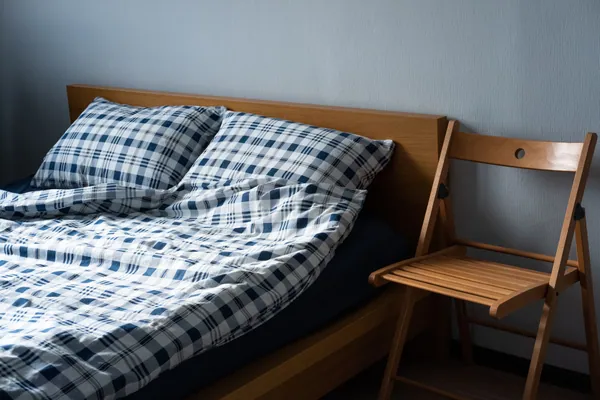
Follow-up visits are essential because bed bugs may return from the shop below if coordination with the commercial tenant was not achieved.
Before anything is applied, we inspect the seams, frame joints, headboard and skirting to locate the harborage points.
Visible bugs and eggs in reachable spots are removed physically first, which lowers the population immediately and makes the treatment work on less.
Applied into the seams, joints and cracks where they actually shelter, not misted across the open mattress where they never sit during the day.
We work outward from the bed to the surrounding furniture and skirting, because by the time you notice them they have usually started to spread.
Washing and hot-drying bedding, clearing clutter and keeping the layout stable between passes is half the result.
Eggs are shielded and survive the first treatment.
Treatment in Al Hijaz requires understanding how bed bugs spread through mixed-use buildings. The district sits near the University of Jeddah Road and Wadi Al Ghawla, which brings high foot traffic, making it more likely that bed bugs arrive through the commercial spaces and then climb into residential flats above.
The result comes from reaching the seams, joints and cracks, not from how much is sprayed.
We do not pretend one visit ends it.
The company runs a large crew, and the team arrives with the materials and a plan for the layout, so the whole affected area is handled in the visit.
If it is early and contained we say so, and if it is advanced we say that too.
Photographs from real jobs carried out by the crew.












The commitment is one you can hold us to: an honest read of the situation, and no work or cost added without telling you first.
East Jeddah lies furthest from the sea and closest to the open ground and hills beyond the ring roads, so the air is drier and the dust is coarser and paler than on the coast. It comes in under doors and settles on every flat surface overnight, making sofas, mattresses and curtains the heaviest part of the routine. Floors are mostly ceramic tile in the apartment districts and marble in the villa areas, both scratched by grit that is mopped rather than swept. Roof tank water leaves a grey film of sediment in baths and basins.
We provide these in Al Hijaz too, and more than one can share a single visit.



