
The gear reaches the scale
Proper descalers, matched to each surface, are what move mineral off glass and out of grout.
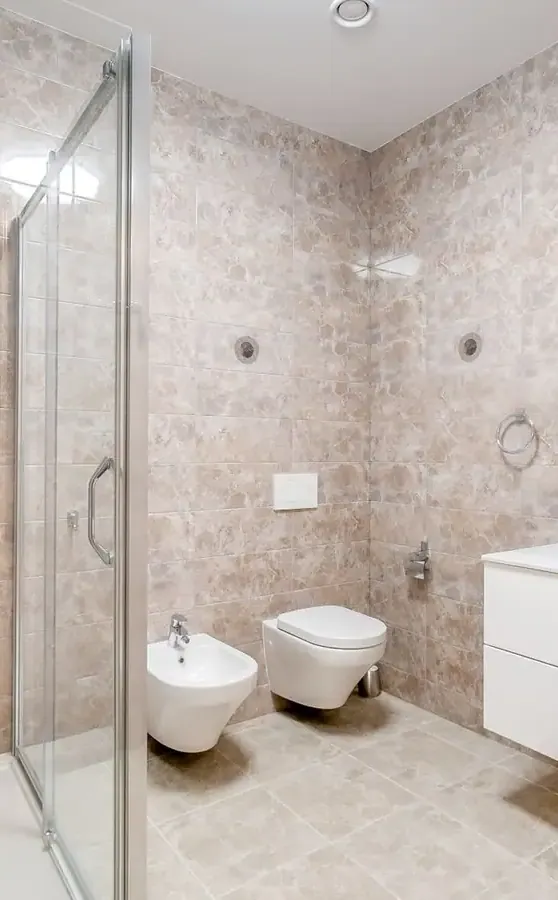
Um Al Salam is a mixed district with shops at street level and flats stacked above them. To the east, open ground and hills send coarser, paler dust than the coast; it drifts in under doors and settles overnight on every surface. The bathroom here gets dirty two ways: a grey sediment from the roof tank and dust that comes up from the street. Deep cleaning has to tackle both sources at once.
Roof tank sediment leaves a thick grey film in baths and basins unlike coastal limescale, and dust from the open ground settles on glass visibly faster than in beachside districts. For the method itself, see our guide to bathroom cleaning.
Water from the roof tank carries minerals that settle directly on sanitary ware, taps and basins as a grey sediment, not the white limescale of the coast. This deposit needs a different treatment that does not scratch the marble under old ceramic tile. Letting it soak is the first step, not rubbing it hard.
The open ground and hills east of the ring roads send dust coarser and paler than sea air. It drifts in under doors, settles on glass and mirrors as a thick layer overnight, and works deep into tile grouting where a mop alone cannot reach it. Sweeping must come before any wet work here.
When the bathroom sits above a shop, clothing store or paintwork dealer on the ground floor, the street sends air and odour upwards into the flat. High humidity in the bathroom draws these smells in through wall gaps and ventilation openings. Cleaning the bathroom removes the smell from surfaces but does not stop the air from coming in.
In south eastern Jeddah on the Old Makkah Road, a cluster of low-rise popular housing bordered by Al Harazat and Al Mahamid on the lorry route towards Makkah, where the air is drier and the dust coarser than on the coast.
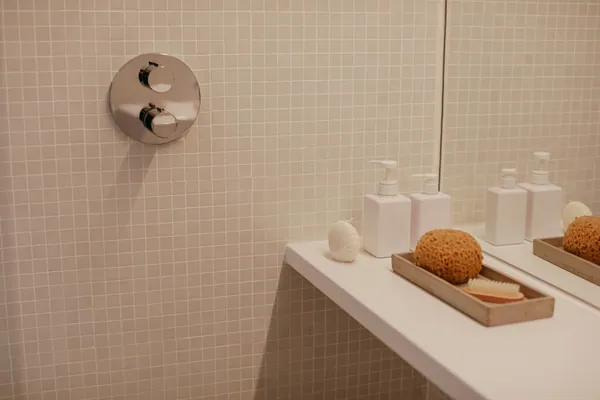
Coarse dust drifts in under doors and settles on every surface, so we check glass and mirrors first before we start to avoid scratching ceramic with grit left on the floor.
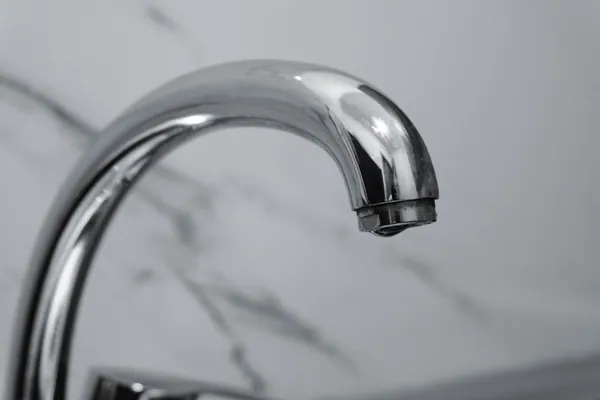
The grey mineral sediment from the roof tank needs a treatment for minerals, not white limescale, and we let it soak on taps and mirrors before rinsing to avoid damage.
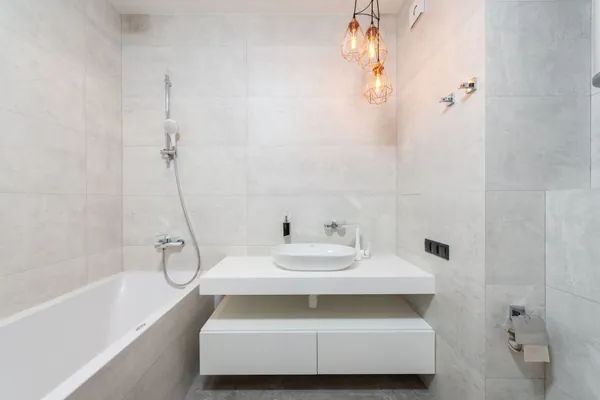
Grout that is black from soot and dust mixed is soaked and each joint is scrubbed separately with individual tools. We do not apply hard pressure if the grout is old or soft.
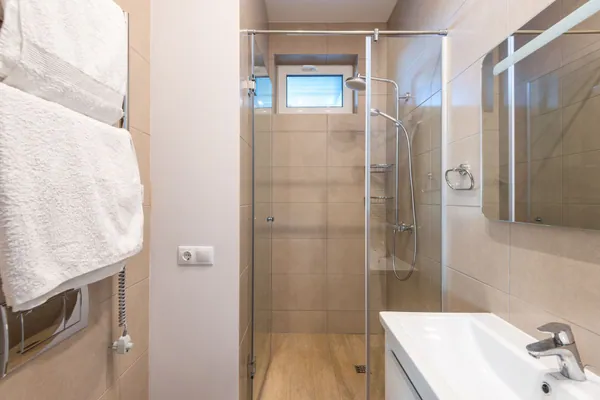
Glass and mirrors are wiped with a solution that does not leave dust streaks on the surface after drying, sometimes twice if the layer is thick.
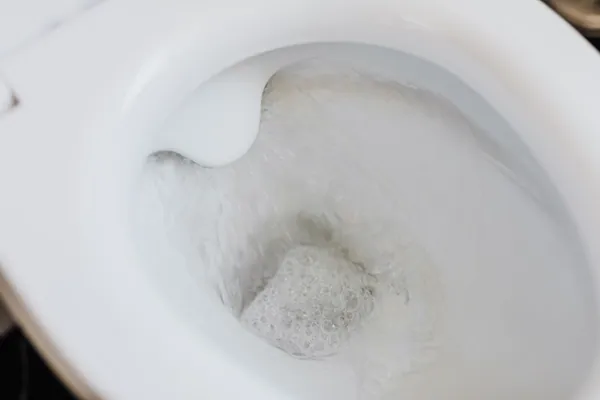
Sanitary ware inside and out is cleaned after we finish the walls and floor, because running water can drag dust back down onto surfaces if we start with the basin first.
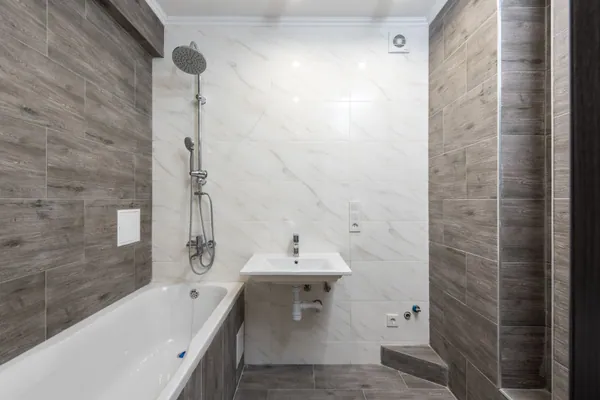
The floor drain has hair and sediment removed, and ventilation is left fully open to dry the bathroom completely before the door is closed for at least an hour.
We open the room, take everything off the ledges and shelves, and lift loose hair from the drains before any water or chemical goes down.
Scale on glass, taps and the shower head is not scrubbed off cold.
The joints are treated and scrubbed along the line, top to bottom, because film sits in the porous grout and a flat wipe never enters it.
The bowl, the base joint and the floor trap are done as one stage, since this is where odour lives.
What the products loosened is lifted off, and everything is rinsed downward so nothing dirty settles back onto a cleaned surface.
The damp low corners are dried so nothing feeds mould again, then we walk the room with you.
Mixed district: shops at street level with homes above them
A flat above a shop needs extra care: high humidity pulls street odours upward, and mould returns fast in a small bathroom because salt air enters through wall gaps.
Proper descalers, matched to each surface, are what move mineral off glass and out of grout.
We send a team, not a single person.
Where scale has already etched the glass or mould has stained the grout for good, we tell you at the inspection.
Nothing is called done until you have walked the room and said so.
Photographs from real jobs carried out by the crew.












The commitment is simple enough to actually keep: we do not leave until you have seen the result and told us what you think of it.
East Jeddah lies furthest from the sea and closest to the open ground and hills beyond the ring roads, so the air is drier and the dust is coarser and paler than on the coast. It comes in under doors and settles on every flat surface overnight, making sofas, mattresses and curtains the heaviest part of the routine. Floors are mostly ceramic tile in the apartment districts and marble in the villa areas, both scratched by grit that is mopped rather than swept. Roof tank water leaves a grey film of sediment in baths and basins.
We provide these in Um Al Salam too, and more than one can share a single visit.



